Why Van Rentals Vary in Price: 2026 Traveler Guide

Why Van Rentals Vary in Price: 2026 Traveler Guide
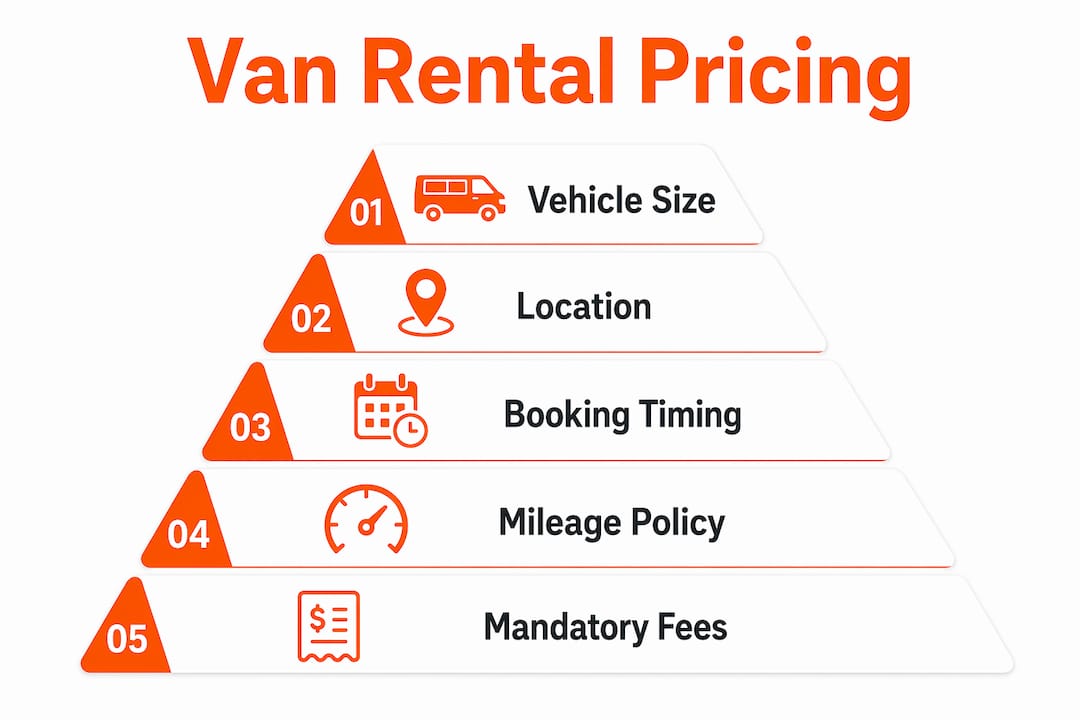
Van rental pricing is defined by a combination of vehicle size, pick-up location, booking timing, mileage terms, and mandatory fees that together push daily rates from $20 to $200 or more. These factors do not operate in isolation. They interact dynamically, so a 12-passenger van booked at an airport in Florida during spring break costs far more than the same vehicle reserved mid-week at an off-airport location in the off-season. Understanding why van rentals vary in price gives you real control over what you spend.
Why van rental prices vary so much
Van rental pricing operates on a tiered structure that the industry calls dynamic pricing. Base rates are the starting point, but they rarely reflect what you will actually pay. Mandatory fees, insurance, and fuel charges routinely add 20–45% to the quoted base rate, according to rental cost breakdowns. That gap between the advertised price and the final invoice is the single most common source of traveler frustration.
The core variables that drive van rental cost differences are vehicle category, location type, demand timing, mileage policy, and add-on fees. Each one can independently shift your total by tens of dollars per day. Together, they explain why two travelers booking the same trip on different days can pay prices that look nothing alike.

How vehicle type and size affect the base rate
Vehicle category is the most direct driver of base rental cost. A standard cargo van typically starts around $50–$80 per day, while a 12-passenger van in a high-demand market like Florida runs $120 to $250 daily, and even higher during peak periods. Luxury or premium passenger vans with upgraded interiors, entertainment systems, or captain’s chairs sit at the top of the pricing tier, often exceeding $250 per day before fees.
Size determines more than just the price tag. Larger vans carry higher insurance premiums, consume more fuel, and require more maintenance. Rental providers pass those costs directly to the traveler. Payload capacity and interior volume also affect which commercial license or deposit tier applies, which can add to your upfront costs.
Here is how the main van categories compare on base daily rates:
- Cargo van (small to mid-size): $20–$80 per day, suited for moving or small group gear transport
- Passenger van (7 to 9 seats): $60–$120 per day, common for family or small group travel
- 12-passenger van: $120–$250 per day, the standard for large group travel and airport transfers
- Luxury or premium passenger van: $200+ per day, includes upgraded seating, climate zones, and entertainment
Pro Tip: If your group is 6 or fewer travelers, a 7-seat passenger van often costs significantly less than a 12-passenger model. Always match vehicle size to actual need, not maximum capacity.
Why location affects van rental price
Pick-up location is one of the most underestimated factors in van rental cost differences. Airport rental locations impose extra concession fees, facility charges, and local taxes that off-airport locations do not. The base rate may look identical, but the airport surcharges can add $15–$30 per day to your total.
High-demand markets amplify this effect. Cities like Orlando, Miami, and Los Angeles see consistent demand from tourists, event attendees, and group travelers. That sustained demand keeps prices elevated year-round, with further spikes during local events, school breaks, and holiday weekends.
Seasonal demand patterns also shift pricing significantly:
- Peak season (summer, spring break, major holidays): Rates climb sharply, and availability drops fast
- Shoulder season (late fall, early winter): Moderate pricing with better availability
- Off-peak mid-week bookings: Rates can drop 30%–50% compared to weekend pricing
That 30%–50% weekend premium is not a minor fluctuation. On a $150-per-day van, it means paying up to $225 for the same vehicle just because you picked Friday instead of Tuesday. Booking mid-week and planning around off-peak periods is one of the most reliable ways to reduce your total cost.
How mileage policies change your final bill
Mileage terms are where many travelers get surprised. Local van rentals frequently cap daily mileage at 100–150 miles and charge $0.47 to $0.99 per mile after that allowance. On a 300-mile day, that overage adds $70–$150 on top of your base rate.
Long-distance and one-way van rentals handle mileage differently. Many bundle unlimited miles into the rate, which makes them cheaper per mile for extended trips. However, one-way pricing depends heavily on fleet balancing. Routes that move vehicles away from high-demand hubs cost more, while routes that return vehicles to those hubs may be priced lower regardless of distance.
| Rental type | Mileage structure | Best for |
|---|---|---|
| Local daily rental | Capped miles, per-mile overage fee | Short city trips under 100 miles |
| Long-distance rental | Bundled unlimited miles | Cross-state or multi-day road trips |
| One-way rental | Variable, route-dependent pricing | Relocations or point-to-point travel |
Pro Tip: Before booking, calculate your expected total mileage for the trip. If you will exceed the daily cap, a long-distance or unlimited-mileage rate often costs less overall, even if the daily base rate looks higher.
What mandatory fees add to your van rental cost
Mandatory fees are the biggest gap between the advertised rate and what you actually pay. These charges add 20–45% to the base rental cost and are not optional. Knowing them in advance prevents sticker shock at the counter.
The most common mandatory and near-mandatory fees include:
- Collision Damage Waiver (CDW) or Loss Damage Waiver (LDW): $14–$45 per day, depending on van size and provider
- Environmental and licensing surcharges: $3–$10 per day, applied in most states
- Fuel replenishment fee: If you return the van without a full tank, providers charge a per-gallon rate plus a service fee. Fuel service charges can reach $8 per gallon or more
- Young driver fee: Applies to renters under 25, typically $15–$30 per day
- Additional driver fee: $5–$15 per day per extra driver
- After-hours return fee: $25–$75 if you return outside staffed hours
- Cleaning fee: Charged when the van is returned in poor condition, often $100–$250
The fuel policy deserves special attention. The “full-to-full” policy, where you pick up a full tank and return it full, is generally the cheapest option. Prepaid fuel options sound convenient but charge a flat rate for a full tank whether you use it or not. Returning a van half-full on a prepaid plan means paying for fuel you never used.
How to get the best value on a van rental
The most effective approach to controlling van rental costs is comparing total all-in prices, not headline base rates. A $60-per-day van with $90 in daily fees costs more than an $80-per-day van with $40 in fees. Always request a full price breakdown before confirming any booking.
Here are five steps that consistently reduce van rental costs:
- Book early. Van inventory is tighter than passenger cars, and budget options disappear first. Booking two to four weeks in advance secures better rates and more vehicle choices.
- Choose off-airport pick-up. Off-airport locations skip the concession and facility fees that airport counters charge. The savings often cover the cost of a short rideshare to the location.
- Rent mid-week. Weekend demand spikes pricing by up to 50%. If your schedule allows, pick up on Tuesday or Wednesday and return before Friday.
- Return with a full tank. Fill up within a few miles of the drop-off point. This avoids the provider’s inflated per-gallon rate and service fees.
- Review mileage terms before you sign. If your trip exceeds the daily cap, negotiate an unlimited-mileage rate upfront. Overage fees accumulate fast.
Pro Tip: Ask the rental provider to email you a full fee schedule before you arrive at the counter. Seeing every charge in writing before you commit removes the pressure of making decisions on the spot.
Key Takeaways
Van rental pricing is driven by vehicle size, location type, booking timing, mileage terms, and mandatory fees that together determine your real total cost.
| Point | Details |
|---|---|
| Vehicle size sets the base rate | Cargo vans start around $50 per day; 12-passenger vans reach $250 or more in peak markets. |
| Location adds hidden fees | Airport pick-ups carry surcharges of $15–$30 per day that off-airport locations avoid. |
| Timing shifts price by up to 50% | Weekend and peak-season rates run 30%–50% higher than mid-week off-peak bookings. |
| Mileage overages add up fast | Per-mile fees of $0.47–$0.99 after the daily cap can add $70–$150 to a single day’s bill. |
| Mandatory fees inflate the total | Insurance, fuel penalties, and surcharges add 20%–45% on top of the base rate. |
What I’ve learned about van rental pricing the hard way
The single biggest mistake travelers make is treating the base rate as the price. It is not. It is a marketing number designed to get you to click. The real price lives in the fee schedule, the fuel policy, and the mileage terms.
I have seen travelers book a $70-per-day van and walk away paying $180 per day after CDW, environmental fees, a young driver charge, and a fuel replenishment penalty. None of those fees were hidden in a legal sense. They were all disclosed. But they were disclosed after the traveler was already committed to the booking.
Van inventory being tighter than passenger cars makes this worse. When supply is low, providers prioritize high-margin bookings and pull budget options from availability first. That means the longer you wait, the more you pay, and the fewer choices you have. Booking early is not just about price. It is about having options at all.
My honest advice: always calculate your expected total cost before you book, not after. Add up the base rate, CDW, fuel policy risk, mileage overage estimate, and any applicable surcharges. That number is your real price. If it fits your budget, book it. If it does not, keep looking.
— Gabriel
Plan your van rental with Myvanrentals
Knowing the factors behind van rental pricing is only useful if you can act on that knowledge quickly.

Myvanrentals covers major cities including Orlando, Miami, and Los Angeles with city-specific teams that know local pricing, availability, and routes. You can search vans by city and see full pricing details before you commit. The platform lists van categories from cargo to large passenger vans, with transparent fee structures so you know your total cost upfront. If you are planning group travel and want to understand how additional fees affect your group rental total, Myvanrentals provides the information you need to make a clear decision.
FAQ
Why do van rentals cost more than car rentals?
Vans carry higher insurance premiums, consume more fuel, and require more maintenance than standard passenger cars. Larger capacity and tighter inventory also push base rates higher.
What does a cheap van rental actually include?
A low base rate typically covers the vehicle only, with CDW, fuel policy, mileage limits, and environmental fees billed separately. Always request a full fee breakdown before booking.
How does booking timing affect van rental rates?
Dynamic pricing raises rates 30%–50% on weekends and during peak travel seasons. Booking mid-week and well in advance consistently secures lower rates.
Is it cheaper to pick up a van off-airport?
Yes. Off-airport locations avoid the concession fees and facility surcharges that airport counters add, which can save $15–$30 per day on the same vehicle.
What is the best fuel policy for van rentals?
The full-to-full policy is the most cost-effective option. You pick up a full tank and return it full, avoiding the provider’s inflated per-gallon rate and service fees.