Types of Corporate Van Rentals for Cities: 2026 Guide

Types of Corporate Van Rentals for Cities: 2026 Guide
Corporate van rentals for urban business events fall into distinct categories defined by vehicle size, rental duration model, and municipal compliance requirements. Choosing the wrong type of corporate van rental in cities like Orlando, Miami, or Los Angeles creates real operational problems: groups split across multiple vehicles, budgets blown on overtime fees, or vendors flagged for missing city licenses. This guide covers every major category so you can match the right vehicle and contract structure to your event before you book.
1. What are the main types of corporate van rentals in cities?
Corporate group transportation vehicles break into three primary size classes: standard passenger vans seating 7–9, mid-size sprinter vans seating 10–14, and full-size 15-passenger vans. Each class serves a different event profile and carries different urban operating considerations.
- Standard passenger vans (7–9 seats): Best for small executive teams, airport pickups, and client transfers. Easy to park in dense urban garages.
- Mid-size sprinter vans (10–14 seats): The most requested type for corporate events. Luxury sprinter vans seat 10–12 with leather seating, mood lighting, and climate control. Standard versions carry 10–14 in upright rows.
- Full-size 15-passenger vans: Designed for airport transfers and multi-stop shuttles. 15-passenger vans offer more group cohesion than multiple SUVs, with better urban maneuverability than a full charter bus.
- Cargo vans: Used for equipment transport at trade shows, product launches, and conference setups. No passenger seating.
- Long-term rental vans: Available for multi-week or multi-month corporate projects. Long-term rental options include small to large vans customized for logistics, trade services, and recurring event needs.
The right size depends on your group count, the city’s parking constraints, and whether you need amenities for client-facing transport.
2. How do rental duration models affect van selection and pricing?
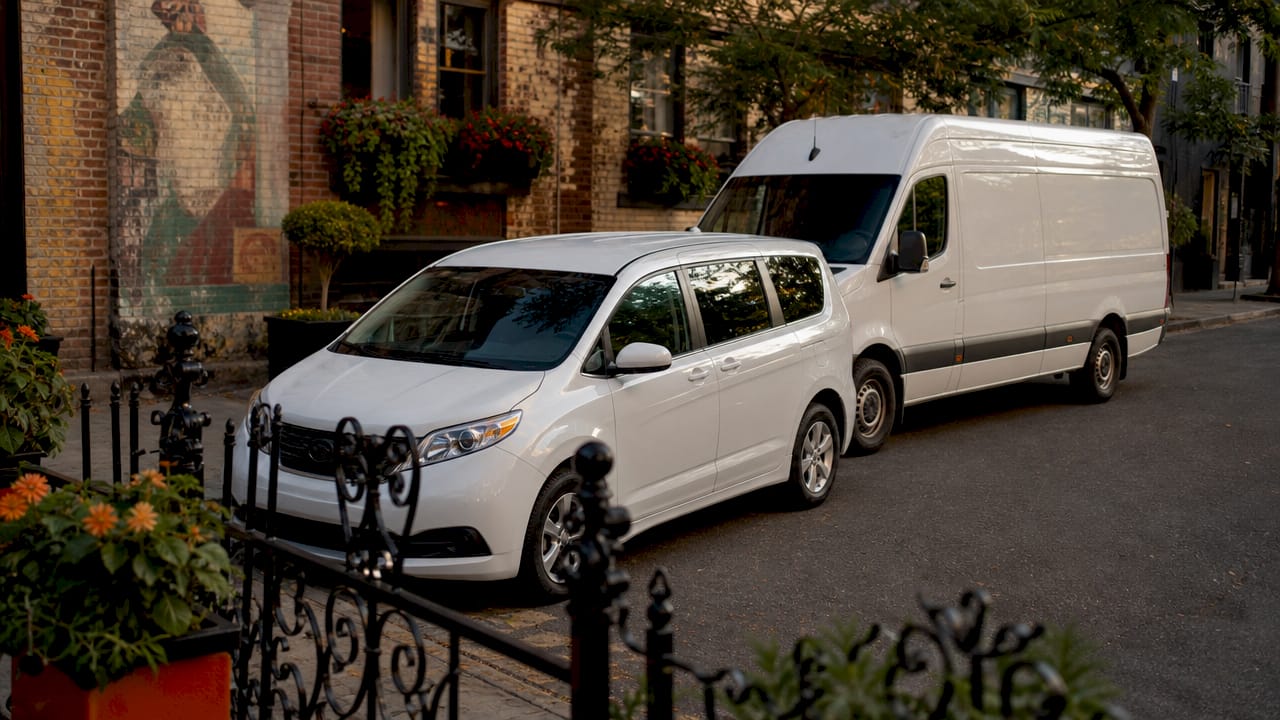
Rental duration is the most overlooked variable in corporate van planning. The three standard models are hourly, flat-rate point-to-point, and full-day charter. Each one changes your cost structure, contract terms, and scheduling flexibility.
Corporate rental duration models break down as follows:
- Hourly rentals: Best for multi-stop conference shuttles. Most vendors require a 3–4 hour minimum. Overtime fees apply per hour beyond the agreed window.
- Flat-rate point-to-point: Covers a single transfer, such as hotel to venue or airport to office. The fare is set before booking. No meter runs.
- Full-day charters: Covers conferences, trade shows, or multi-venue events. One daily rate covers the vehicle and driver for a defined window, typically 8–10 hours.
Pricing negotiations should address mileage caps, wait time charges, and overtime rates before you sign. Treating van rental as fleet configuration plus contract structuring gives planners direct control over final costs.
Pro Tip: Match your rental model to your itinerary complexity. A flat-rate booking saves money on a single airport transfer. A full-day charter saves money when your group makes four or more stops across the city.
3. How do city-specific regulations impact corporate van rentals?
Municipal licensing requirements directly affect which vendors you can legally use and how much lead time you need. Cities regulate commercial passenger vehicles through for-hire vehicle licenses, business licenses, and driver certifications. Ignoring these requirements does not just create legal exposure. It can pull a vehicle from your event on the day of.
Tacoma, Washington is a clear example of how detailed city requirements get. The City of Tacoma requires a $75 for-hire vehicle license, a $50 meter inspection fee, and an ASE certified safety certificate for commercial passenger vehicles. Flat-rate vehicles face additional rules: they must not display “taxi” signs or meters, and the fare must be disclosed before the booking is confirmed.
Driver requirements add another layer. Some cities mandate that drivers hold a city-specific for-hire license in addition to their state license. This affects how quickly a vendor can staff your event, especially if they are bringing drivers from outside the city.
| Regulatory element | Typical requirement | Impact on planning |
|---|---|---|
| For-hire vehicle license | City-issued, annual fee | Vendor must hold license before operating |
| Safety inspection | ASE certified certificate | Adds lead time for new vendor onboarding |
| Driver license | City-specific for-hire credential | Limits driver pool; affects staffing timelines |
| Flat-rate fare disclosure | Fare confirmed before booking | Required for non-metered corporate contracts |
| Business license | City-issued for commercial operators | Vendor qualification check before contracting |
Licensing variations across cities affect vendor readiness and event planning timelines. For multi-city corporate programs, verify each city’s requirements at least four weeks before your event date.
4. What are the top corporate van rental types by city and event use?
Major U.S. cities each have fleet compositions that reflect local demand. Orlando, Miami, and Los Angeles all show strong demand for sprinter vans and 15-passenger vehicles tied to convention centers, airports, and resort corridors. Matching the van type to the city context and event type is the practical decision.
- Airport transfer shuttles: 12–15 passenger vans dominate this use case. Groups stay together, costs stay lower than booking multiple rideshares, and the driver handles routing.
- Executive client transport: Luxury sprinter vans with captain’s chairs, USB charging ports, and climate control. Used for client arrivals, board meetings, and VIP dinners.
- Conference and trade show shuttles: Full-day charter vans running loops between hotels and convention centers. A group van rental keeps the team coordinated and eliminates the cost of multiple car rentals.
- Equipment and setup transport: Cargo vans for AV gear, branded materials, and event supplies. No passenger configuration needed.
- Multi-day project rentals: Long-term van rentals for construction oversight, film production, or recurring weekly events. Billed monthly rather than per trip.
- Hybrid group splits: Large groups of 20 or more often split between passenger vans and a full-size coach. Splitting groups between passenger vans and coaches optimizes cost and scheduling flexibility when group size exceeds a single van’s capacity.
Cities with major convention centers, like Orlando’s Orange County Convention Center or Miami Beach Convention Center, see the highest demand for full-day charter vans during peak conference months.
5. Why van rental beats charter buses for small corporate groups
Charter buses carry 40–55 passengers. For a corporate group of 10–20 people, that scale creates two problems: you pay for capacity you do not use, and the vehicle cannot access most urban drop-off points. A sprinter van or 15-passenger van solves both.
Passenger vans fit in standard parking garages, pull up to hotel entrances, and navigate city streets without the routing restrictions that apply to full-size coaches. For groups under 20, a van delivers the same group cohesion as a bus at a fraction of the cost. For groups over 20, the right answer is often two vans rather than one bus. Two vans also give you scheduling flexibility: one group can leave early while the other stays.
Pro Tip: If your group exceeds 15 people, price out two sprinter vans against one charter bus. Two vans typically cost less, give you split-schedule flexibility, and access more drop-off points in dense urban areas.
6. How to choose the right van type for your event and city
The right van type comes from four variables: group size, number of stops, trip duration, and the city’s regulatory environment. Run through these before contacting any vendor.
- Group size: Under 9 people, use a standard passenger van. 10–14 people, use a sprinter. 15 or more, use a full-size 15-passenger van or two sprinters.
- Number of stops: Multi-stop itineraries need hourly rentals. Single transfers work on flat-rate contracts.
- Trip duration: Events running more than 6 hours justify a full-day charter. Shorter events cost less on hourly or flat-rate models.
- City regulations: Confirm the vendor holds the correct for-hire vehicle license and that drivers carry city-specific credentials. Use the city compliance checklist to verify documentation before finalizing a contract.
- Amenities: Client-facing events require luxury interiors. Internal team shuttles do not.
- Budget: Factor in mileage caps, wait time fees, and overtime rates. These add up faster than the base rate on complex itineraries.
Understanding city regulations early prevents costly last-minute operational issues. Build vendor qualification into your planning timeline, not your day-of checklist.
Pro Tip: Always ask vendors for their city-specific for-hire license number before signing. A vendor who cannot provide it quickly is a vendor who may not be compliant.
Key takeaways
Corporate van rental decisions in cities come down to three factors: vehicle size, rental duration model, and municipal compliance. Get all three right and your event transportation runs without disruption.
| Point | Details |
|---|---|
| Match van size to group count | Use sprinter vans for 10–14 people; 15-passenger vans for larger groups. |
| Choose the right rental model | Flat-rate suits single transfers; hourly or full-day charter suits multi-stop events. |
| Verify city licensing early | Confirm for-hire vehicle licenses and driver credentials at least four weeks out. |
| Van beats bus for small groups | Two sprinter vans cost less than one charter bus and access more city drop-off points. |
| Long-term rentals suit ongoing projects | Monthly van rentals work for recurring events, trade services, and multi-week programs. |
What most planners get wrong about urban van rentals
Corporate event planners consistently underestimate two things: how specific city licensing requirements are, and how much the rental duration model affects total cost. Most planners focus on vehicle size and stop there. That gets you the right number of seats but the wrong contract.
The rental duration model is where budgets actually break down. A flat-rate booking on a multi-stop day turns into an expensive surprise when overtime fees kick in at hour four. A full-day charter on a single airport transfer wastes money on hours you never use. The fix is simple: map your itinerary before you call a vendor, not after.
Municipal compliance is the other blind spot. I have seen corporate programs in multiple cities get disrupted because a vendor’s driver did not hold the city-specific for-hire credential. The driver was qualified by state standards. The city disagreed. That distinction cost the planner a same-day scramble. Checking vendor credentials is a five-minute task that eliminates a category of risk entirely.
The planners who run the smoothest urban van programs treat vendor selection like contract negotiation. They ask for license numbers, confirm fare structures in writing, and build a 30-minute buffer into every transfer window. That discipline is not complicated. It is just consistent.
— Gabriel
Myvanrentals makes city van rental straightforward
Finding a compliant, correctly sized van for a corporate event in a new city takes time you often do not have. Myvanrentals operates city-specific fleets in major markets including Orlando, Miami, and Los Angeles, with local teams who know the routes, the regulations, and the right vehicle for each event type.
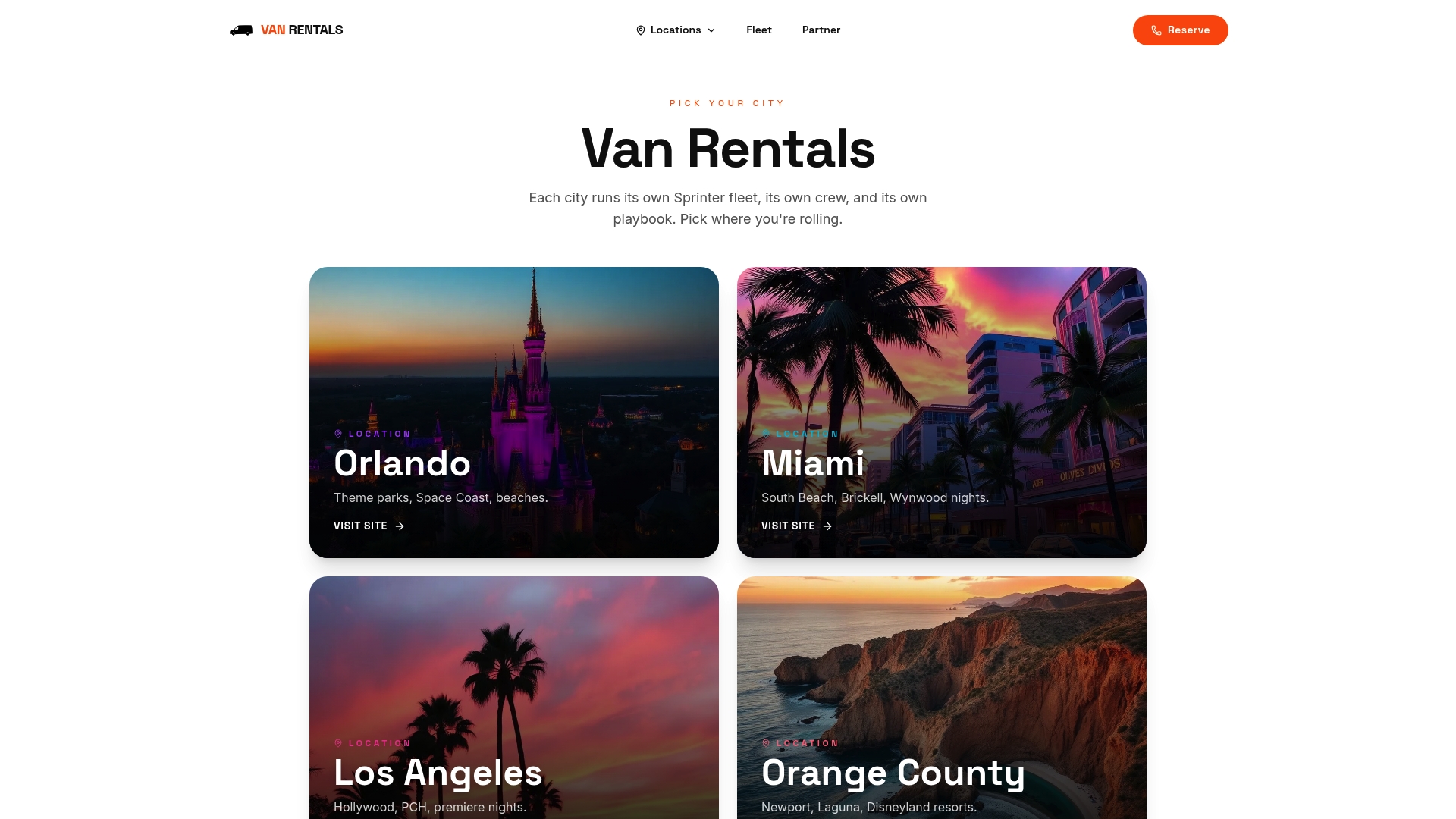
You can search van rentals by city and filter by group size and rental duration directly on the Myvanrentals platform. Pricing is transparent before you book. The local team handles the compliance side so you do not have to verify licensing from scratch in every market. Whether you need a luxury sprinter for an executive arrival or a 15-passenger van for a conference shuttle, Myvanrentals gives you the right options without the guesswork of building a fleet from scratch in an unfamiliar city.
FAQ
What size van do I need for a corporate group of 12?
A mid-size sprinter van seating 10–14 passengers is the right fit for a group of 12. Luxury configurations seat 10–12 with amenities; standard configurations seat up to 14.
What rental model works best for a conference shuttle?
A full-day charter works best for conferences with multiple stops or long operating windows. Hourly rentals with a 3–4 hour minimum suit shorter multi-stop programs.
Do corporate van rental vendors need a city license to operate?
Yes. Cities like Tacoma require vendors to hold a for-hire vehicle license and drivers to carry a city-specific credential. Verify both before signing a contract.
When does a van beat a charter bus for corporate transport?
A van beats a charter bus for groups under 20 people. Vans cost less, access more urban drop-off points, and give you scheduling flexibility that a single large bus cannot.
How far in advance should I book a corporate van rental in a major city?
Book at least two to four weeks out for standard events. Multi-city programs or events requiring specialized vehicles need more lead time to confirm vendor licensing and availability.