Group Van Rental Basics Explained for Group Travel

Group Van Rental Basics Explained for Group Travel
Group van rental is the process of renting a passenger vehicle that seats between 7 and 15 people, designed to move an entire group in one trip. Whether you are planning a family vacation to Orlando, a corporate event in Los Angeles, or a wedding weekend in Miami, renting a single van is almost always more practical than splitting your group across multiple cars. Models like the Ford Transit, Mercedes Sprinter, and Chevy Express define the standard fleet at most rental companies. Understanding the full picture before you book saves you money, stress, and surprises at the counter.
What are the van sizes available for group van rentals?
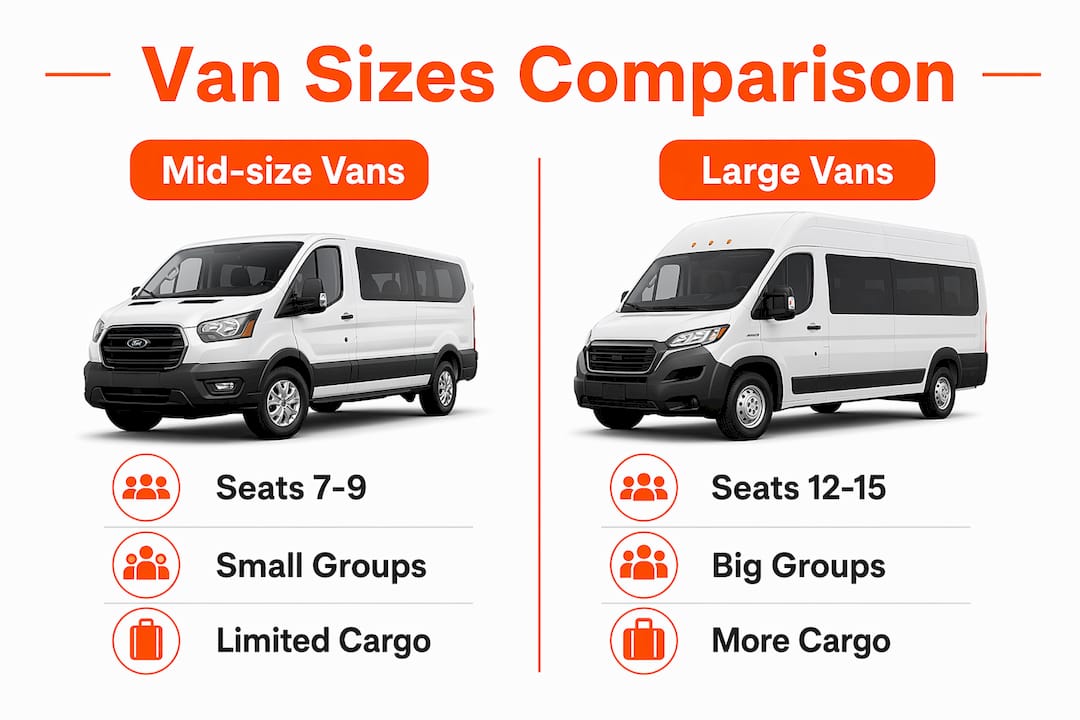
Typical passenger van categories break into three main sizes: mid-size vans seating 7–9 passengers, 12-passenger vans, and 15-passenger vans. Each size affects ride comfort, cargo room, and driving difficulty in different ways. Choosing the wrong size is one of the most common and costly mistakes groups make.
Mid-size vans (7–9 seats)
The mid-size category includes vehicles like the Ford Transit Connect and smaller Dodge Grand Caravan configurations. These work well for groups of six to eight with minimal luggage. They are easier to park and drive in city traffic, which matters a lot in dense urban areas like downtown Miami or Hollywood.
12-passenger and 15-passenger vans
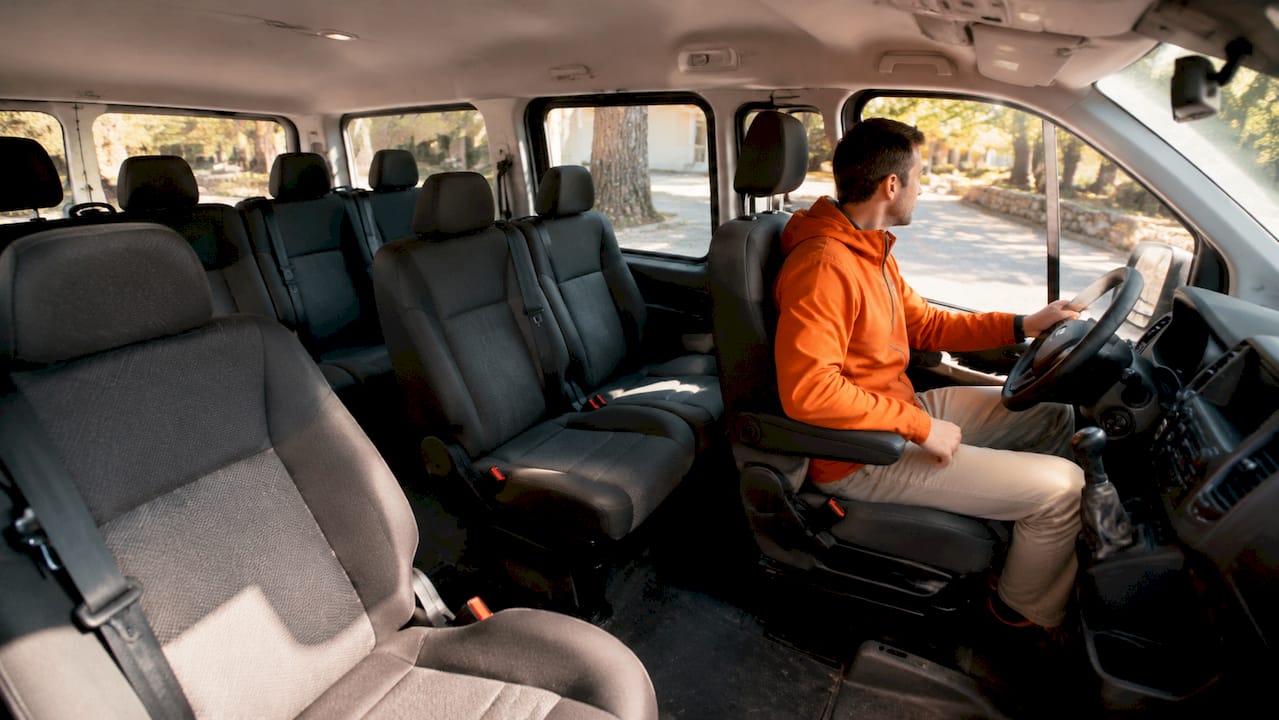
The Ford Transit 12-passenger and Chevy Express 15-passenger are the workhorses of group transportation. A 12-passenger van gives you more cargo flexibility because the rear row can often be folded or removed. The 15-passenger version maximizes headcount but leaves little room for bags, which is a real problem on airport runs or multi-day trips.
Seat count does not guarantee comfort or cargo space. A group of 12 adults with checked-bag-sized luggage will be cramped in a 12-passenger van. Always map out your actual passenger count and gear volume before selecting a size.
| Van Type | Seats | Best For | Cargo Space |
|---|---|---|---|
| Mid-size (7–9 seats) | 7–9 | Small groups, city trips | Moderate |
| 12-passenger van | 12 | Medium groups, mixed trips | Limited with full load |
| 15-passenger van | 15 | Large groups, minimal luggage | Very limited |
| Mercedes Sprinter | 12–15 | Premium comfort, long trips | Good with rear layout |
Pro Tip: Book one size larger than your headcount suggests. If you have 10 people with luggage, a 15-passenger van gives you the cargo room a 12-passenger van simply cannot.
What does a group van rental actually cost?
The base daily rate is only the starting point. Total rental costs include fuel, insurance, mileage overages, additional driver fees, young-driver surcharges, taxes, tolls, and parking. On a long road trip, fuel alone can rival the daily rental rate. That is not a small detail.
Here are the cost categories you need to budget for:
- Base daily rate. This is the advertised price. It rarely reflects what you pay at checkout.
- Fuel. Passenger vans are not fuel-efficient. A 15-passenger Chevy Express averages around 10–13 miles per gallon on the highway. Budget generously.
- Insurance and waivers. Collision Damage Waivers and Loss Damage Waivers add a daily fee. Skipping them without backup coverage is a real financial risk.
- Mileage overages. Many rentals include a daily mileage cap. Exceeding it triggers per-mile charges that add up fast on road trips.
- Additional driver fees. Each extra driver listed on the contract typically costs a daily surcharge.
- Young-driver surcharges and additional fees. Drivers under 25 pay extra at most agencies. Some agencies require drivers to be at least 25 for larger vans.
- Taxes and local fees. Airport pickup locations often add airport concession fees on top of standard taxes.
- Tolls and parking. Factor these in for city-heavy itineraries, especially in cities like New York or Chicago.
Get quotes from at least three companies and compare the full package: base rate, mileage allowance, deposit, insurance options, and penalty fees. Comparing base rates alone gives you a misleading picture. Booking off-peak can reduce overall rental costs significantly, especially during shoulder seasons or mid-week pickups.
How does insurance work for group van rentals?
Rental van insurance confuses most renters because the terminology is misleading. A Collision Damage Waiver (CDW) and a Loss Damage Waiver (LDW) are not insurance policies. CDW and LDW reduce your financial responsibility for damage, but they come with exclusions, deductibles, and conditions that void coverage. LDW typically includes theft protection, while CDW usually does not.
Before you pay for rental agency add-ons, check two things. First, call your personal auto insurance provider and ask specifically whether your policy covers rental passenger vans. Second, check your credit card’s rental coverage benefit. Many credit cards exclude passenger vans by vehicle class or seating capacity. That exclusion is buried in the fine print, and most renters never read it.
If your personal policy and credit card both cover the van, you may not need the agency’s CDW at all. If there are gaps, buying the agency’s LDW is the safer call. Personal Accident Insurance (PAI) is a separate optional add-on covering medical costs for you and your passengers. It is worth considering if your health insurance has high deductibles or limited travel coverage.
Pro Tip: Ask the rental agent one direct question: “Does this waiver have a deductible, and what voids the coverage?” The answer tells you everything you need to know before signing.
What documents and driver requirements do rental companies ask for?
Driver requirements for van rentals typically include a minimum age of 21–24, with surcharges applied for drivers under 25. Some agencies set the minimum at 25 for 12-passenger and 15-passenger vans. Confirm the age policy before booking, not at pickup.
Bring these documents to the rental counter:
- Valid driver’s license. This must be current and match the name on your reservation exactly.
- A second form of ID. A passport is the most accepted option. Some agencies also accept a government-issued photo ID.
- Proof of address. A bank statement or utility bill dated within the last three months satisfies most agencies.
- Credit card in the primary driver’s name. Debit cards are often rejected or require a larger security deposit.
- Driving license check code (where applicable). Some agencies in certain states require a digital check code valid for 21 days to verify your driving record.
The vehicle handover process typically takes 10–15 minutes once your documents are verified. Use that time to inspect the van carefully. Walk around the vehicle and photograph any existing damage before you drive off the lot. Report every scratch and dent to the agent and get it noted on the contract.
Additional drivers must be present at pickup in most cases. Each additional driver pays a daily surcharge. Limiting your group to one or two designated drivers keeps costs down and simplifies accountability.
Practical tips for managing your group van rental
One van beats multiple cars for group travel every time. Using a single vehicle with one or two designated drivers cuts coordination complexity, reduces arrival time variance, and eliminates the cost of multiple rentals. Splitting a group of 12 across two minivans costs more and creates logistical headaches at every stop.
Here are the most useful planning tips for your trip:
- Designate drivers before you book. Decide who will drive and add them to the contract at reservation time. Last-minute additions at the counter cost more.
- Plan fuel stops in advance. Large vans have big tanks but low fuel efficiency. Know where gas stations are on your route, especially in rural stretches.
- Monitor your mileage. Track daily mileage against your rental allowance. Overage fees are avoidable with basic attention.
- Practice parking the van before your trip starts. A 15-passenger van is significantly longer and wider than a standard car. Spend 10 minutes in an empty lot before heading into city traffic.
- Check rear climate controls and sliding doors. Passengers in the back of a large van often have no access to front climate controls. Vans with rear HVAC zones keep everyone comfortable on long trips.
- Book early and compare off-peak rates. Booking van rentals during lower demand periods reduces rates and gives you better vehicle selection.
Keeping your group in one vehicle also improves the trip experience. Groups that travel together arrive together, make decisions faster, and spend less time waiting for each other at every destination.
Key takeaways
Renting a group van requires matching your passenger count and luggage volume to the right van size, understanding the full cost breakdown, and verifying insurance coverage before you sign anything.
| Point | Details |
|---|---|
| Match size to actual needs | Count passengers and luggage before choosing between 12-passenger and 15-passenger vans. |
| Budget beyond the base rate | Add fuel, insurance, mileage, driver fees, and taxes to get your real total cost. |
| Verify insurance before buying | Check personal auto policy and credit card coverage for van exclusions before paying for agency add-ons. |
| Bring complete documentation | Carry your license, a second ID, proof of address, and a credit card in the driver’s name. |
| Use one van and two drivers | A single vehicle with designated drivers reduces fees, coordination issues, and overall trip complexity. |
What I have learned from booking group vans the hard way
The biggest mistake groups make is treating the base rate as the budget. I have seen groups arrive at the counter expecting to pay one number and leave having paid nearly double. Fuel on a 500-mile round trip in a 15-passenger Chevy Express is not a rounding error. It is a line item.
The second mistake is assuming credit card coverage applies. Most people do not read the fine print on their card’s rental benefit. Passenger vans are excluded more often than not. Finding that out after an accident is the worst possible time.
My honest advice: call your insurance company and your credit card company before you book. Ask both specifically about passenger vans. That 10-minute phone call has saved renters hundreds of dollars. The rental agency’s LDW is not a scam, but it is also not always necessary. Know what you already have before you pay for what you do not need.
The last thing I would tell any group: keep everyone in one vehicle. The coordination benefit alone is worth it. Groups that split across two cars spend the entire trip waiting for each other. One van, two drivers, one plan. That is the formula that actually works.
— Gabriel
Plan your group trip with Myvanrentals
Myvanrentals operates city-specific fleets in Orlando, Miami, and Los Angeles, with teams that know local routes, parking, and attractions. You get a van that fits your group and local knowledge that generic rental counters cannot offer.
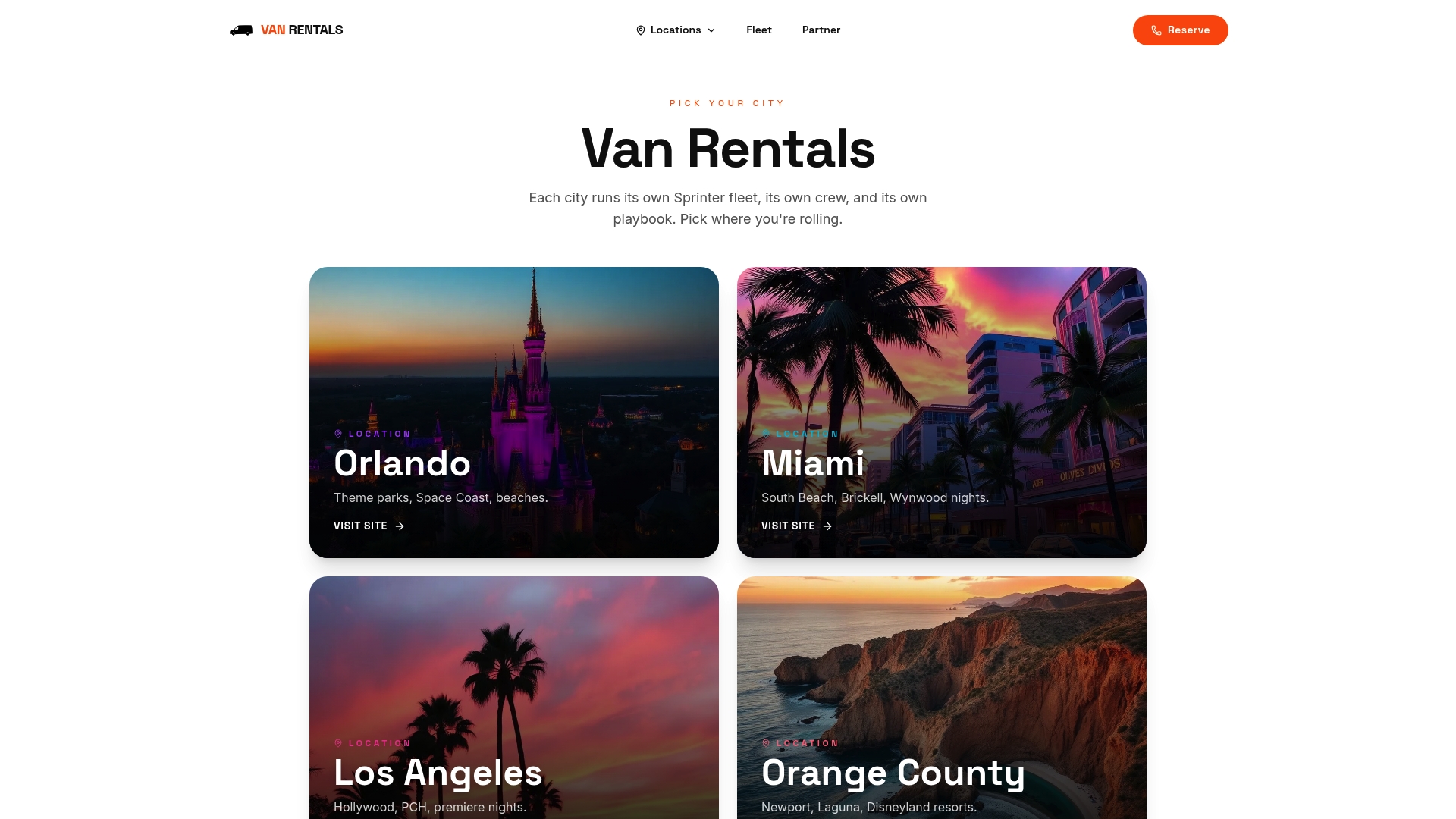
Whether you need a 12-passenger Ford Transit for a theme park day or a Mercedes Sprinter for a corporate event, Myvanrentals makes the selection and booking process straightforward. Check available van types, review rental requirements, and reserve your group van directly on the site. No guesswork on sizing or availability.
FAQ
What is the minimum age to rent a group van?
Most rental companies require drivers to be at least 21–24 years old, with daily surcharges applied for drivers under 25. Some agencies set the minimum at 25 for larger 12-passenger and 15-passenger vans.
How many people does a rental van hold?
Rental vans typically seat 7–15 passengers depending on the model. Seat count does not equal cargo capacity, so factor in luggage when choosing your van size.
Does my credit card cover rental van insurance?
Many credit cards exclude passenger vans by vehicle class or seating capacity. Call your card issuer before your rental to confirm whether your specific van type is covered.
What is the difference between CDW and LDW?
CDW reduces your financial liability for collision damage. LDW typically covers both collision damage and theft. Neither is a traditional insurance policy. Both come with exclusions and conditions that can void coverage.
How far in advance should I book a group van?
Book as early as possible, especially for peak travel periods like summer and major holidays. Booking during off-peak periods lowers rates and gives you access to a wider selection of van models.