One-Way Van Rental: What You Need to Know

One-Way Van Rental: What You Need to Know
A one-way van rental is defined as a rental where you pick up the van at one location and drop it off at a completely different location. This format gives travelers and families a flexible alternative to round-trip rentals, especially for long-distance moves, multi-city road trips, and relocations. You avoid the cost and fatigue of driving back to your starting point. Providers like U-Haul, Penske, Budget, Enterprise, and Hertz all offer this option, though each comes with its own fee structure, mileage policy, and eligibility rules. Understanding those details before you book saves you money and prevents surprises at the counter.
What is one-way van rental and how does it work?
A one-way van rental works differently from a standard round-trip rental in one key way: your contract specifies two separate locations, one for pickup and one for drop-off. You reserve the van in advance, confirm both addresses, and return the vehicle to the agreed destination only. Returning it anywhere else triggers unauthorized drop-off fees, which start at $45 and increase with distance.

The reservation process is straightforward. You select your pickup city, your drop-off city, your travel dates, and the van size you need. The rental company then checks fleet availability at both locations. Not every location accepts one-way returns, so confirming this before booking is critical.
Eligibility rules apply across all major providers. Drivers must generally be at least 21, and sometimes 25, depending on the van category. You need a valid driver’s license and a credit card in the primary driver’s name. Some companies charge a young driver surcharge for renters under 25.
Mileage policies vary by company. Penske, for example, includes unlimited miles on one-way contracts. Other providers set a mileage cap and charge roughly $1.00 per mile beyond it. Read this section of your contract carefully before signing.
Fuel is your responsibility. You pick up the van at a set fuel level and return it at the same level. Rental company refueling fees can run up to 50% higher than local gas prices, so filling the tank yourself before drop-off is always the better move.
Pro Tip: Take a photo of the fuel gauge and the odometer at pickup. This protects you against disputes over fuel charges and mileage overages at drop-off.
What are the typical costs and fees for one-way van rentals?
One-way van rental cost breaks down into two main components: the base rental rate and the one-way drop fee. The drop fee is the charge the rental company adds because the van needs to be repositioned after you leave it. Drop fees typically range from $100 to $500 for domestic US routes. Cross-country routes can push that fee to $1,000 or more depending on distance and fleet demand.
Total trip cost depends heavily on distance. A cross-country one-way rental of roughly 1,750 miles costs between $1,478 and $2,979. A shorter trip of around 450 miles runs $499 to $1,111. These ranges reflect the base rate plus fees but can shift based on season, route direction, and vehicle size.
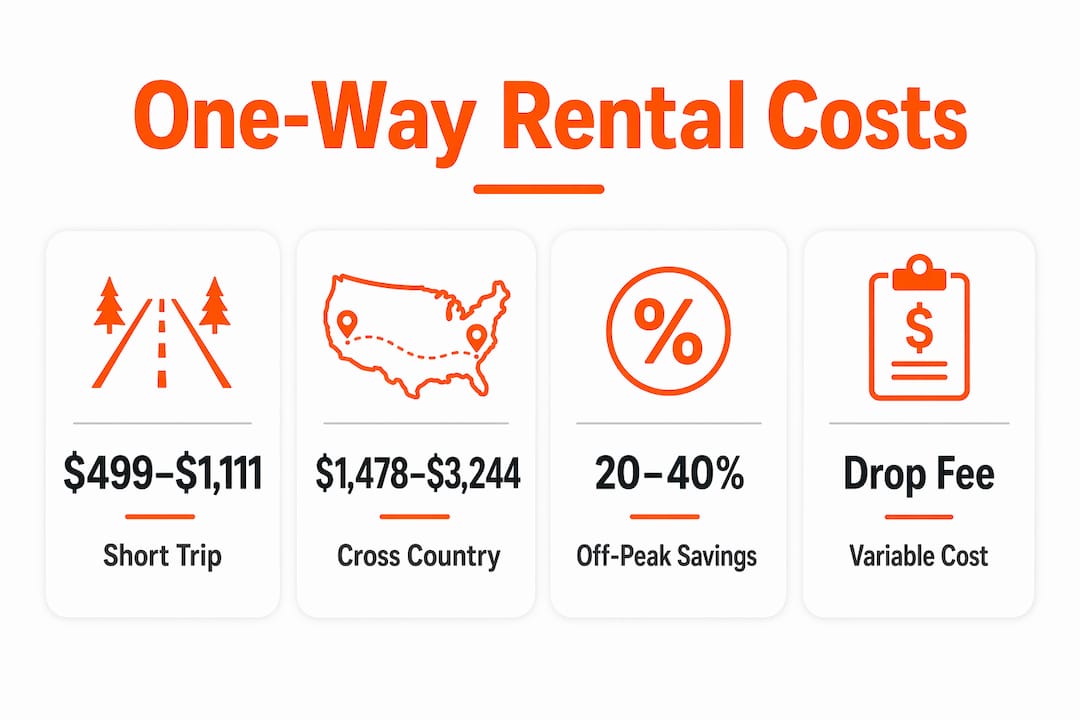
Drop fees are not fixed. They are dynamic and driven by fleet supply and demand. Moving a van from a city with high supply to a city with high demand often costs less than the reverse. A route from California to Texas, for instance, frequently costs less than the same route in the opposite direction because rental companies want their fleets repositioned westward.
Here is a summary of how major providers compare on key cost factors:
| Provider | Mileage Policy | Drop Fee Range | Notes |
|---|---|---|---|
| Penske | Unlimited miles included | $100–$500+ | Best for long-distance routes |
| U-Haul | Mileage cap applies | $100–$500+ | Charges ~$1.00/mile over cap |
| Budget | Varies by contract | $100–$500+ | Check included miles carefully |
| Enterprise | Varies by location | $45–$1,000+ | Unauthorized returns start at $45 |
| Hertz | Varies by contract | $100–$500+ | Confirm drop-off availability |
Additional costs to budget for include:
- Fuel: Fill the tank yourself to avoid rental company refueling surcharges.
- Insurance: Your personal auto policy may not cover rental vans. Verify coverage before declining the rental company’s plan.
- Young driver surcharge: Applies to drivers under 25 at most major providers.
- Taxes and fees: Airport pickup locations often add local surcharges.
Pro Tip: Booking during off-peak months, october through april, can reduce your total cost by 20–40% compared to peak summer rates.
What are the benefits of one-way van rentals?
One-way van rentals save significant time and fuel by removing the return trip entirely. On a trip longer than six hours, driving back to your starting point adds a full day of travel, extra fuel costs, and real physical fatigue. Eliminating that return leg is the core reason travelers choose this format.
The benefits are most pronounced in specific situations:
- Long-distance moves: You load up once, drive to your new home, and you are done. No second trip back.
- Multi-city road trips: Families can fly into one city, rent a van, and fly home from a different city without retracing their route.
- Delivery and transport: Businesses moving equipment or inventory between locations avoid deadhead miles.
- Relocation: Individuals moving across states get a practical, cost-effective alternative to hiring a full moving company.
“One-way rentals are economically wise when the time saved exceeds the drop fee, usually for trips longer than 3 hours.” — airportvanrental.com
For families and groups, the flexibility is especially valuable. One-way rentals offer more flexibility for group travel by removing the need to backtrack. A family of six driving from Orlando to New Orleans, for example, can stop at multiple destinations along the way without worrying about looping back to their starting point.
The tradeoff is the drop fee. That fee is worth paying when the alternative is spending two extra days driving. When the trip is short enough that a round trip adds only a few hours, a standard rental may be cheaper overall.
Pro Tip: Calculate your total one-way cost including the drop fee, then compare it to the round-trip rate plus fuel for the return drive. The one-way option wins on trips where the return drive exceeds four hours.
How to choose and book the best one-way van rental
Booking a one-way van rental requires more preparation than a standard local rental. Follow these steps to get the best rate and avoid problems:
-
Compare quotes from multiple providers. U-Haul, Penske, Budget, Enterprise, and Hertz all price one-way routes differently. A route that is expensive with one company may be significantly cheaper with another due to fleet positioning needs.
-
Confirm drop-off location availability. Not every branch accepts one-way returns. Call or check online before completing your reservation. An unauthorized return can cost you hundreds of dollars.
-
Check the mileage policy. If your route is long, an unlimited-mileage contract like Penske’s protects you from per-mile overage charges. On shorter routes, a capped policy may cost less overall.
-
Verify insurance coverage. Check whether your personal auto insurance or credit card travel benefits extend to rental vans. If they do not, purchase the rental company’s coverage.
-
Book 2–4 months in advance for peak travel periods. Availability drops sharply during peak seasons, and rates climb with demand. Booking early locks in lower rates and guarantees your preferred vehicle size.
-
Choose the right van size. A 12-passenger van works for large family groups. A cargo van suits moves and deliveries. Oversizing costs more and can complicate parking at your destination.
-
Read the contract for hidden fees. Look for charges related to additional drivers, equipment rentals like dollies or moving blankets, and late return penalties.
Timing your booking around seasonal and directional demand is one of the most underused strategies for cutting costs. Routes that move vehicles toward high-demand cities often carry lower drop fees because the rental company benefits from the repositioning.
Key Takeaways
A one-way van rental is the most practical choice for long-distance trips, relocations, and multi-city travel where a return drive would waste time and money.
| Point | Details |
|---|---|
| Core definition | Pick up a van at one location and drop it off at a different, pre-agreed location. |
| Drop fee range | Expect $100–$500 for most domestic routes; cross-country fees can reach $1,000. |
| Mileage policy matters | Penske includes unlimited miles; others charge ~$1.00 per mile over the cap. |
| Book early to save | Booking 2–4 months ahead during off-peak months can cut costs by 20–40%. |
| Fuel is your responsibility | Fill the tank yourself at drop-off to avoid refueling surcharges up to 50% above market price. |
Why I think most travelers underestimate the one-way rental
Most travelers I have seen plan their trips around the cheapest daily rate and ignore the drop fee entirely until checkout. That is the wrong approach. The drop fee is not a penalty. It is a predictable cost that you can plan around and sometimes reduce significantly by choosing the right route direction or booking during off-peak months.
The real value of a one-way rental shows up in the math most people never do. Add up the fuel, the extra hotel night, the meals, and the wear on your body from driving back to your starting point. On any trip over four hours, that return leg costs more than most drop fees. The one-way option is not a premium product. It is the practical choice for anyone who values their time.
Families benefit the most and use this format the least. A family road trip from Miami to Los Angeles does not need to end where it started. Book one-way, fly home, and use those two extra days for something worth remembering.
The one thing I would tell every traveler booking a one-way rental: call the drop-off location directly before you finalize the reservation. Websites are not always updated in real time. A quick phone call confirms availability and prevents a very expensive mistake on arrival day.
— Gabriel
Van rentals for your next one-way trip with Myvanrentals
Planning a one-way trip across cities like Orlando, Miami, or Los Angeles? Myvanrentals connects you with city-specific van options managed by local teams who know the routes, the traffic, and the best ways to get your group where it needs to go.
Myvanrentals offers transparent pricing with no guesswork on fees, making it straightforward to compare your options before you commit. Whether you are moving across the state, planning a group road trip, or need a van for a multi-stop itinerary, you can browse van rentals by city and book the right vehicle for your route. Check availability early, especially for summer and holiday travel dates, to lock in the best rate.
FAQ
What is a one-way van rental?
A one-way van rental lets you pick up a van at one location and return it to a different location. You pay a drop fee in addition to the base rental rate.
How much does a one-way van rental cost?
A shorter trip of around 450 miles typically costs $499–$1,111. A cross-country trip of roughly 1,750 miles runs $1,478–$2,979, including the drop fee.
Is a one-way van rental cheaper than a round trip?
A one-way rental costs more upfront due to the drop fee, but it is often cheaper overall when you factor in the fuel, time, and lodging costs of a return drive on trips longer than four hours.
What companies offer one-way van rentals?
U-Haul, Penske, Budget, Enterprise, and Hertz all offer one-way van rentals across US states. Each requires an advance reservation specifying the drop-off location.
Can I avoid the one-way drop fee?
Drop fees are standard, but you can reduce them by traveling in a direction that benefits the rental company’s fleet positioning, booking during off-peak months, or choosing a provider that bundles the fee into a flat rate.