Drive a Group Van on Coastal Routes: 2026 Guide
Drive a Group Van on Coastal Routes: 2026 Guide
Driving a group van on coastal routes is the most flexible and cost-effective way for friends or family to explore beaches, scenic overlooks, and coastal towns together. Group van road trips, also called coastal van tours in the travel industry, put your whole crew in one vehicle, cut per-person costs, and keep the experience social from start to finish. The key planning elements are vehicle size, route structure, shared budget, and driver safety. Get those four right, and the trip runs smoothly. Get them wrong, and you spend your vacation stuck in a parking lot arguing about who forgot to book a campsite.
How to drive a group van on coastal routes the right way
Preparation separates a great coastal van trip from a stressful one. Start with the van itself. A standard 12-passenger van fits 6–8 travelers comfortably with luggage, which is the sweet spot for most groups. Vans with roof racks, rear cargo space, and USB charging ports handle beach gear without turning the cabin into a storage unit. Check that your rental includes roadside assistance before you leave the city.
Route planning comes next. Apps like Google Maps and Roadtrippers let you map scenic coastal drives, identify legal overnight stops, and flag road closures in advance. Booking campgrounds and overnight stops early is critical on coastal routes, since many coastal campgrounds fill months ahead, especially in summer, and legal beach parking is limited. Plan your overnight stops first, then fill in sightseeing between them.

Collaborative budgeting prevents arguments mid-trip. Use a shared spreadsheet or a group expense app like Splitwise to track fuel, tolls, food, and accommodation costs in real time. Assign one person as the group treasurer for the trip.
Pro Tip: Book your first and last night’s accommodation before you finalize any other stop. Arrival and departure logistics are the hardest to change last minute.
Here is a quick checklist of pre-trip tasks:
- Confirm van size matches your group count and luggage volume
- Reserve campgrounds or hotels at least 6–8 weeks before peak-season travel
- Map your route with at least one inland fallback stop per coastal segment
- Set a shared daily budget and assign a group treasurer
- Verify driver eligibility and confirm all licensed drivers on the rental agreement
| Preparation task | Why it matters |
|---|---|
| Book overnight stops first | Coastal spots fill fast; inland fallbacks prevent scrambling |
| Confirm van features | Cargo space and charging ports reduce daily friction |
| Add all drivers to rental | Avoids insurance gaps if the primary driver needs a break |
| Set a contingency fund | Unexpected tolls, parking fees, or repairs happen |
How to plan an effective itinerary for a coastal van trip
The ideal trip length for a group coastal van trip is 5–14 days, with 7 days being the most balanced duration. Seven days gives you enough time to cover meaningful ground without group fatigue setting in. Routes like the Wild Atlantic Way, Costa Brava, and Portugal’s Algarve coast all work well in a 7-day window.
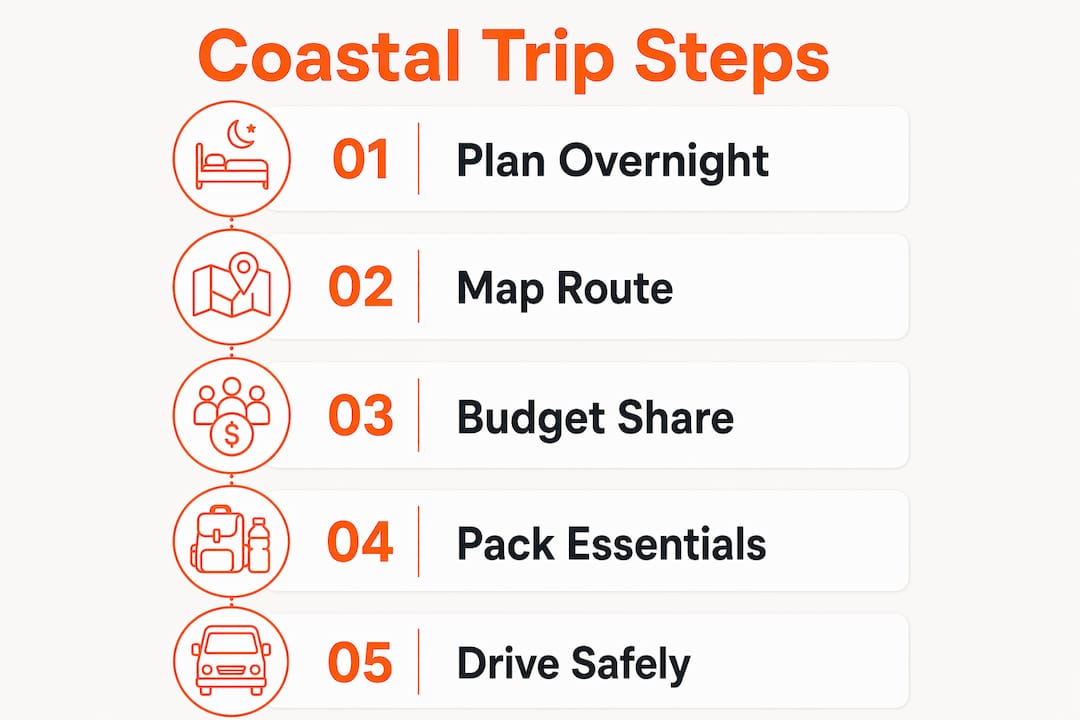
Structure each day around two main stops, not five. Two stops per day gives the group time to actually enjoy a beach or viewpoint instead of rushing through a checklist. Add one “wildcard” day per week with no fixed plan. Flexible wildcard days accommodate weather changes, group preferences, or unexpected delays without stress. They also prevent the decision fatigue that hits groups around day four.
Here is a proven 7-day structure for a scenic coastal van trip:
- Day 1: Depart from your pickup city, drive to your first coastal stop, check in early, and explore locally on foot.
- Day 2: Morning beach or viewpoint visit, afternoon drive to the next segment, evening at a coastal town.
- Day 3: Planned activity day (kayaking, wine tasting, or a lighthouse hike), with a professional driver if alcohol is involved.
- Day 4: Wildcard day. Let the group vote on the morning of this day.
- Day 5: Drive the most scenic stretch of your route. Keep driving time under 3 hours.
- Day 6: Final destination arrival, group dinner, and relaxed beach time.
- Day 7: Return drive with one last stop en route.
The Pacific Coast Highway (Highway 1) runs roughly 500 miles from San Francisco to San Diego and is one of the best coastal driving paths in the United States. Iconic stops include Bixby Bridge and Big Sur. Plan for slower speeds and frequent pullouts because the scenery demands it.
For groups larger than six, splitting into two vehicles improves group harmony and itinerary flexibility. One van with eight people and luggage for seven days is workable. One van with ten people is not.
Pro Tip: Plan your route based on overnight stops first, then add sightseeing in between. Trying to do it the other way around leads to impossible driving days.
What does a group coastal van trip actually cost?
Group costs for a coastal van trip average $50–$100 per person per day for accommodation, plus fuel, tolls, and food split among 4–6 travelers. That math makes a van trip significantly cheaper than individual hotel bookings and separate car rentals.
Typical daily lodging runs around $280 for a group of 4–6 people. Food costs add roughly $220 per day for the group. Fuel and tolls vary by route but budget an additional $30–$50 per day for a 12-passenger van on a coastal highway. A single van rental for the group costs far less than renting three or four separate cars.
Beachfront overnight stays cost more than inland alternatives. Budget $20–$40 extra per night for a campsite or hotel with direct beach access. Keep two or three inland fallback options mapped for each coastal segment. When beachfront spots are full or restricted, inland stops 10–15 miles from the coast cut costs without killing the experience.
Hiring a professional driver-guide costs around $250 per day for a group of six. That cost is worth it on days involving wine tastings, brewery visits, or long winding roads where fatigue is a real risk.
- Build a 10–15% contingency fund into your total trip budget
- Pay for campground reservations upfront to lock in rates
- Buy groceries at inland supermarkets rather than coastal tourist shops
- Split fuel costs weekly rather than daily to avoid small-payment friction
What safety practices should groups follow on coastal van roads?
Coastal roads require more attention than highways. Narrow lanes, sharp curves, and scenic pullouts create real hazards when drivers are tired or distracted. Sharing driving duties reduces fatigue and keeps the group safer, especially on winding scenic roads.
Designate drivers before the trip starts, not the morning of. Rotate every 2–3 hours on long driving days. Never let a driver continue past the point of fatigue just to hit a scheduled stop. The schedule can flex. A tired driver on a cliff road cannot.
Coastal van camping faces strict overnight parking regulations along many coastlines. Stealth camping on beaches or roadsides risks fines and towing. Use official campgrounds and designated motorhome stops. Costa Brava, for example, requires early arrival to secure legal parking and has specific restrictions for campervans near protected beach areas.
Group harmony often declines after three consecutive travel days together. Building in a wildcard day and keeping group size to six or fewer in a single van prevents the friction that turns a good trip into a tense one. Shared upfront planning of budgets and itineraries helps counter decision fatigue common on group trips, boosting overall enjoyment for everyone involved.
Specialized van-based coastal tours are growing in popularity precisely because they solve the drunk-driving problem on tasting days. Booking a professional driver for one or two days of the trip is a practical safety measure, not a luxury.
Key Takeaways
The most effective way to drive a group van on coastal routes is to plan overnight stops first, keep daily driving under three hours, and build in at least one flexible day per week.
| Point | Details |
|---|---|
| Book overnight stops first | Coastal campgrounds fill months ahead; secure spots before planning sightseeing. |
| Keep groups to six or fewer | Groups larger than six should split into two vehicles to maintain comfort and harmony. |
| Budget $50–$100 per person daily | Accommodation, fuel, tolls, and food split among 4–6 travelers keeps costs manageable. |
| Use wildcard days | One unplanned day per week reduces fatigue and improves group satisfaction. |
| Hire a driver on tasting days | A professional driver-guide at around $250 per day keeps everyone safe on activity days. |
Why I think most groups plan coastal van trips backwards
Most groups I have seen start with a list of must-see spots and then try to connect them with a route. That approach creates driving days that are too long, overnight stops that are too expensive or already full, and a group that is exhausted by day three.
The right approach starts with overnight stops. Find where you can legally and comfortably sleep for each night of the trip, then build sightseeing around those anchors. This sounds obvious, but almost nobody does it on a first trip.
The wildcard day is the second thing most groups skip. They feel like they are wasting a day. They are not. That unstructured day is usually the one everyone remembers most. It is when the group finds the unmarked beach, the roadside taco stand, or the sunset nobody planned for.
On driver safety, I have seen groups try to manage a wine tasting day with a rotating designated driver. It creates resentment and someone always ends up feeling left out. Spending $250 on a professional driver for that one day solves the problem completely. Everyone participates, nobody resents the role, and the drive home is safe.
Vehicle size matters more than most groups admit. A 12-passenger van with six people and a week of beach gear is comfortable. That same van with nine people is miserable by day two. If your group is larger than six, book two vans. The van rental basics are simple: match the vehicle to the actual headcount, not the maximum capacity on the spec sheet.
— Gabriel
Myvanrentals has the right van for your coastal trip
Planning a coastal group road trip is easier when you start with the right vehicle. Myvanrentals offers a fleet of passenger vans suited for groups of all sizes, with city-based pickup locations in Orlando, Miami, and Los Angeles. Each location is managed by a local team that knows the best coastal routes, parking spots, and beach access points in their area.
Whether your group is heading down the Pacific Coast Highway from Los Angeles or exploring Florida’s Gulf Coast from Miami, Myvanrentals connects you with a van that fits your crew and your gear. Booking is straightforward, and the local teams can point you toward the best coastal driving paths for your dates and group size. Check available vans and pickup cities directly on the Myvanrentals website.
FAQ
What is the ideal trip length for a group coastal van trip?
The ideal duration is 7 days, which balances driving distance, sightseeing, and group energy. Trips can range from 5–14 days depending on the route.
How many people fit comfortably in a group van for a coastal trip?
Six people is the comfortable maximum for a 12-passenger van when you include luggage for a week-long trip. Groups larger than six should split into two vehicles.
Do I need to book campgrounds in advance for coastal van trips?
Yes. Many coastal campgrounds fill months ahead, particularly in summer. Book overnight stops before you finalize your sightseeing plan.
Is it worth hiring a professional driver for a group van coastal trip?
A professional driver-guide costs around $250 per day for a group of six and is worth it on days involving tastings or long winding roads. It removes safety risk and keeps everyone included in the activity.
What are the best coastal driving routes in the United States for groups?
The Pacific Coast Highway (Highway 1) from San Francisco to San Diego is the top American option, covering roughly 500 miles with stops at Big Sur and Bixby Bridge. Florida’s Gulf Coast and the Oregon Coast are strong alternatives for groups based on the East Coast or Pacific Northwest.