What Does a Van Rental Agreement Include?

What Does a Van Rental Agreement Include?
What a U.S. van rental agreement covers
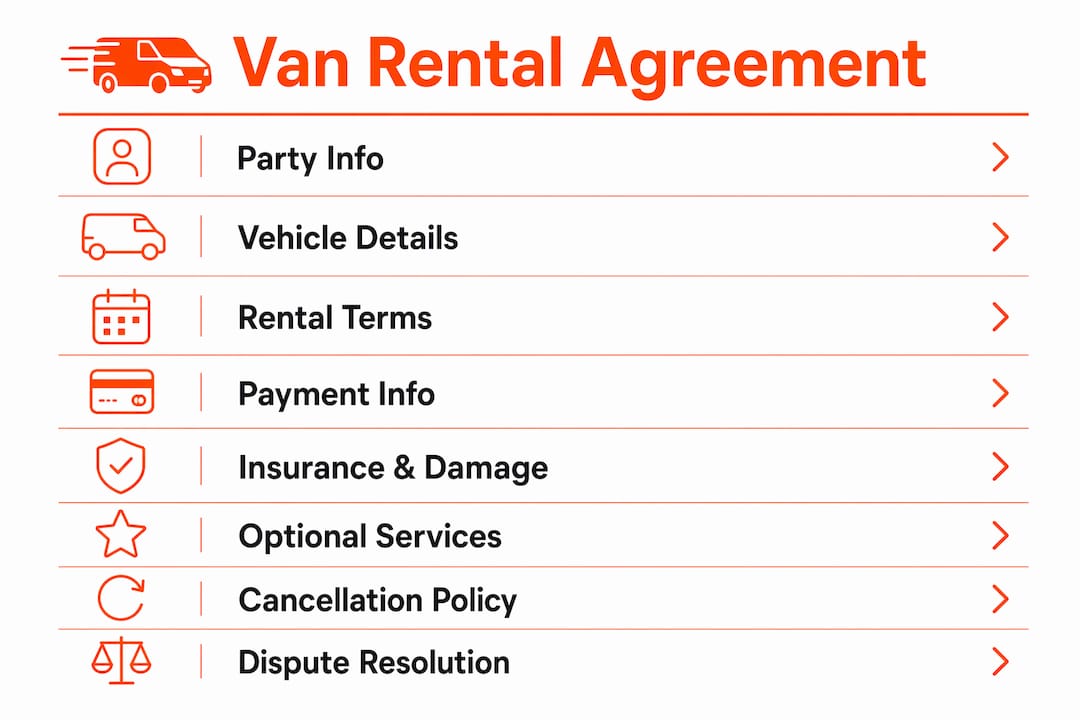
A van rental agreement is a legally binding contract that defines the rights and duties of both the van owner (lessor) and the renter (lessee). Before you sign, you need to know exactly what’s in it. Here’s what every standard U.S. van rental contract includes:
- Parties identification: Full legal names and contact details for both the lessor and lessee.
- Vehicle details: Make, model, year, VIN, and current mileage at pickup.
- Rental term: Exact start and end dates and times. Late returns trigger additional fees.
- Payment terms: Base rental rate, security deposit amount, excess mileage charges, and late return fees. Payment terms and fees are itemized so you know what you owe before you drive off.
- Insurance requirements: Proof of liability, comprehensive, and collision coverage. Deductibles are often capped, with limits set by the rental company.
- Usage restrictions: Mileage limits, geographic boundaries (typically U.S.-only), and a list of prohibited uses.
- Return conditions: Expected fuel level, vehicle cleanliness, and condition at drop-off.
- Signatures: Both parties sign to confirm acceptance of all terms.
Understanding these elements up front helps you avoid disputes and unexpected charges. For a closer look at how these terms apply to group or event bookings, see how van rental contracts work for events.
Table of Contents
- Key clauses you need to read carefully
- Optional services and add-ons in van rental contracts
- Deeper details U.S. renters often overlook
- Van rentals made straightforward with Myvanrentals
- FAQ
- Key Takeaways
Key clauses you need to read carefully
Beyond the basics, van rental terms include several clauses that directly affect your liability and your wallet. These are the sections most renters skim past and later regret.
- Driver eligibility: Most agreements require the primary driver to be at least 25 years old with a valid U.S. driver’s license. Younger drivers may be permitted with an added surcharge.
- Additional drivers: Additional drivers must meet the same age and license criteria. Many agreements limit you to one extra driver, though a spouse or domestic partner is sometimes added at no charge.
- Damage and accident reporting: You are typically required to report any accident or damage immediately, regardless of fault. Failure to report can void your coverage and make you liable for the full repair cost.
- Cancellation and amendment policies: Cancellation fees vary by how far in advance you cancel. Some agreements charge a flat fee; others retain the full deposit.
- Dispute resolution and governing law: The agreement will name the state whose laws govern the contract and specify whether disputes go to arbitration or court.
- Deposit refund conditions: Deposits are refunded after inspection, minus any deductions for damage, excess mileage, or fuel shortfalls. Timelines for refunds vary by provider.
- Prohibited uses: Common restrictions include no commercial driving, no off-road use, and no operation outside the approved geographic area. Violations can result in immediate termination of the rental and financial penalties.
- Breakdown and roadside assistance: The agreement should state whether roadside assistance is included or must be purchased separately, and what your obligations are if the vehicle breaks down.
The Federal Trade Commission’s guidance on vehicle rentals recommends reading every clause before signing, not after.

Optional services and add-ons in van rental contracts
Many van rental agreements go beyond the core terms to offer optional services. Knowing what’s available helps you decide what you actually need.
- Extra driver authorization: Adding a driver is a formal process. The additional driver must be listed in the contract and meet all eligibility requirements.
- Collision damage waiver (CDW): This optional add-on limits your financial exposure if the van is damaged. It does not replace liability insurance. Your personal auto insurance or credit card may already provide similar protection, so check before purchasing.
- GPS or navigation device: Some providers offer in-van GPS units for a daily fee. Confirm whether it’s included or an add-on.
- Fuel service options: Prepaid fuel packages let you return the van without refueling. If you skip this and return with less fuel than required, you’ll pay a refueling charge, often at a premium rate.
- Equipment rentals: Child safety seats, moving ramps, dollies, and cargo straps may be available for an additional daily fee. Confirm availability when booking.
- Cleaning fees: Agreements typically define acceptable return condition. Returning a van that requires professional cleaning results in a cleaning fee deducted from your deposit.
- Roadside assistance plans: If not included in the base agreement, a standalone roadside assistance plan covers towing, flat tires, and lockouts. Worth adding for long-distance trips.
For context on how these add-ons affect overall pricing, the van rental pricing guide breaks down what drives cost differences across van types and rental terms.

Deeper details U.S. renters often overlook
Van rental policy details get more specific depending on the type of van you’re renting. The agreement reflects those differences directly.
- Van category distinctions: Passenger, cargo, and moving vans are not standardized across providers. A “cargo van” from one company may have a different payload capacity than the same label from another. Compare actual dimensions and payload rather than relying on category names alone, since mileage limits and usage rules in the agreement often differ by van type.
- Verify seating and payload in writing: If you need a van for a specific group size or cargo weight, confirm those specs are documented in the agreement. A verbal assurance from a rental agent carries no legal weight.
- Camper van operational responsibilities: Camper van agreements assign full operational responsibility to the renter for water, propane, and electrical systems. Treat the pre-departure walkthrough as a required training session, not a formality.
- Equipment inclusions in camper vans: Many camper van rentals do not include bedding, towels, or kitchen supplies unless the listing explicitly states otherwise. Confirm the equipment list before you book, not after you’ve driven two hours from the rental lot.
- Man-and-van logistics: If you’re renting for a move, understanding man and van hire agreements can give you useful context on how loading responsibilities and damage liability are typically handled in transport-focused rentals.
Pro Tip: During the vehicle walkthrough, photograph every existing scratch, dent, and interior stain before you drive away. Send those photos to the rental company by email immediately. That timestamp is your best protection if there’s a dispute at return.
Van rentals made straightforward with Myvanrentals
Reading through a van rental contract is the right first step. The next step is booking with a provider whose terms are clear and whose fleet matches what you actually need.
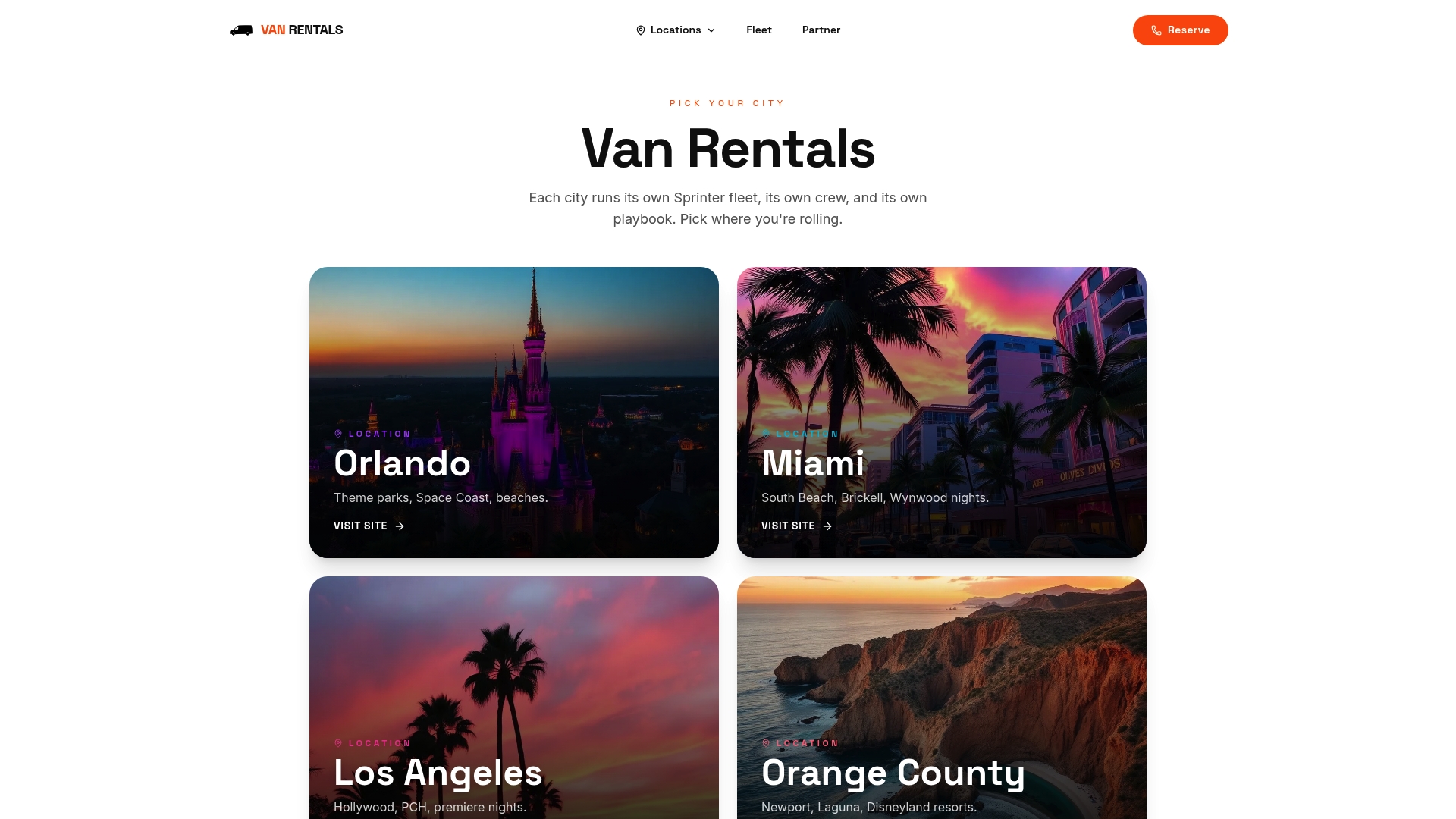
Myvanrentals operates city-specific fleets in Orlando, Miami, Los Angeles, and other major U.S. cities. Each location is managed by a local team that knows the routes, the parking, and the practical details that generic national chains miss. Whether you need a passenger van for a group trip, a vehicle for a school outing, or a church van rental for your congregation, the agreement terms are straightforward and the fleet options are clearly listed. Browse available vehicles and reserve your van to see exactly what’s included before you commit.
FAQ
What should a van rental agreement include?
A van rental agreement must include the names of both parties, vehicle details (make, model, VIN), rental dates, payment terms, insurance requirements, usage restrictions, and return conditions. Both parties sign to make it legally binding.
What are red flags in a rental agreement?
Watch for vague damage clauses, missing deposit refund timelines, no stated dispute resolution process, and blanket language that makes you liable for pre-existing damage. Always document the vehicle’s condition at pickup.
Can you write your own van rental agreement?
Yes, but using a van rental contract template is strongly recommended. A template helps you include all legally necessary terms and makes the agreement enforceable under your state’s laws.
What parts of a rental agreement matter most for renters?
The insurance clause, damage reporting requirements, mileage limits, and cancellation policy have the most direct financial impact on renters. Read these sections before anything else.
Key Takeaways
A van rental agreement is a legally binding contract that protects both parties by specifying vehicle details, payment terms, insurance requirements, and usage restrictions before the rental begins.
| Point | Details |
|---|---|
| Core contract elements | Every agreement must name both parties, list the VIN, set exact rental dates, and detail all fees. |
| Insurance coverage | Deductibles are often capped; check your personal auto insurance before buying add-ons. |
| Usage restrictions | Most U.S. agreements prohibit commercial use, off-roading, and travel outside the U.S. |
| Camper van specifics | Operational responsibility for water, propane, and electrical systems falls on the renter; confirm equipment inclusions before booking. |
| Myvanrentals | Offers city-managed fleets in Orlando, Miami, and Los Angeles with clear agreement terms and multiple van types to match your trip. |