How to Split Van Rental Costs With Friends Fairly

How to Split Van Rental Costs With Friends Fairly
The fastest fair default is an equal per-person split for fixed costs (base rental rate, taxes, mandatory insurance) plus a usage-based split for variable costs (fuel, mileage overages, tolls). This hybrid approach works for most groups because it keeps the math simple while still rewarding lighter users.
Three quick alternatives if your group wants something simpler:
- Equal split: Grand total ÷ number of people. Fast, zero friction, works best for short trips where everyone uses the van equally.
- Per-seat split: Total ÷ occupied seats. Useful when group size changes mid-trip or families take more space.
- Per-mile usage split: (Individual miles driven ÷ total miles) × total cost. Fairest when driving is heavily uneven.
Two operational steps to lock in before you leave: designate one person as treasurer (the group’s single payer), and set a 48-hour settlement deadline so no one is chasing payments a week later.
Table of Contents
- What are the best ways to split van rental costs with friends?
- Which expenses should you include in the group split?
- How do you calculate each person’s exact share?
- How should you collect payments and handle deposits?
- Which apps make splitting and collecting payments easier?
- What ground rules prevent arguments after the trip?
- How do you handle no-shows, damage, and other awkward situations?
- Key Takeaways
- Why project management beats perfect math for group trips
- Planning a group van trip? Myvanrentals keeps it simple
- Useful sources and tools
- FAQ
What are the best ways to split van rental costs with friends?
Choosing a method takes two minutes if you know the trade-offs. Here is a plain-language breakdown.

Equal per-person split
Everyone pays the same amount regardless of who drove or how much space they used. It is the recommended default for short trips where everyone benefits equally. The math is instant, and no one needs to track anything.

Works best when: the trip is a weekend or less, everyone knows each other well, and no single person is driving significantly more than others.
Watch out for: a solo driver covering 80% of the miles while passengers sleep. That person will feel the split is unfair, and they are right.
Per-seat or per-occupant split
Divide the total by the number of occupied seats rather than the number of people. This matters when a family of four takes three rows of a 12-passenger van while two friends share the front.
Works best when: subgroups within the party have very different space needs, or when someone joins only for part of the trip.
Per-driver (flat driver premium) and per-mile usage-based split
The mileage-log formula is: (individual miles driven ÷ total rental miles) × total rental cost. You need starting and ending odometer readings plus each driver’s shift mileage.
A flat driver premium is a simpler version: agree that each driver pays an extra fixed amount (say $10–$15) on top of their equal share to compensate for the added responsibility and wear.
Works best when: one or two people drive the majority of the miles on a long road trip.
Income-weighted or opt-in splits for optional add-ons
Optional extras like collision damage waivers (CDW), child seats, or GPS units should be split only among the people who opted in. Splitting a $25/day CDW across six people when only two wanted it creates friction fast.
Quick comparison
| Method | Best for | Effort | Fairness |
|---|---|---|---|
| Equal split | Short trips, equal use | Very low | Good |
| Per-seat | Families, uneven group sizes | Low | Better |
| Per-mile usage | Long trips, uneven driving | Medium | Best for drivers |
| Opt-in for extras | Optional add-ons | Low | Avoids subsidizing others |
Which expenses should you include in the group split?
Itemizing every charge before the trip starts is the single most effective way to prevent arguments. Here is how to sort costs into three buckets.
Always split equally
- Base rental rate
- Taxes and mandatory rental fees
- Mandatory insurance or protection required by the rental company
- Fuel to return the van to the level it was picked up at
- Tolls incurred during group travel
- Permitted mileage fees and any overage charges
- Drop-off or one-way fees
Split only among those who opted in
- Optional CDW or loss damage waiver (LDW)
- Child seats, GPS units, or bike racks
- Parking fees for group activities
- Cleaning fees (if the group caused the mess)
- Additional driver fees for drivers who joined voluntarily
Exclude from the group split entirely
- Personal food and snacks
- Individual traffic or parking fines
- Detour costs that benefit only one person
- Any purchase that only one person uses
A note on deposits and refunds
Rental companies typically place a hold on the primary renter’s credit card at pickup. That hold is not a charge, but it ties up the renter’s available credit. Record it as a provisional line item in your group ledger. When the hold is released (usually 7–14 days after return), remove it. If any portion is actually charged (damage, cleaning), add it to the final settlement. Understanding why van rental prices vary helps you budget for these holds before you book.
How do you calculate each person’s exact share?
Start by defining your grand total:
Grand total = base rental + insurance + fuel + tolls + parking + mileage overage + cleaning + other shared fees
Formula A: Equal split
Grand total ÷ number of people
Formula B: Usage-based (mileage)
(Individual miles driven ÷ total miles) × grand total
Required inputs: odometer at pickup, odometer at return, and each driver’s shift miles.
Formula C: Mixed method (recommended)
Equal split for fixed items + usage-based for variable items
Split the base rental and insurance equally. Apply the mileage formula only to fuel and mileage overage fees.
Worked example
One van, 400 total miles, three drivers: Person A drove 200 miles, Person B drove 150 miles, Person C drove 50 miles.
Fixed costs (base rental + insurance): $300 total → $100 each
Variable costs (fuel + mileage overage): $120 total
| Driver | Miles driven | Share of variable costs | Fixed share | Total owed |
|---|---|---|---|---|
| Person A | 200 (50%) | — | $100 | — |
| Person B | 150 | — | $100 | — |
| Person C | 50 | — | $100 | — |
| Total | 400 | 120 | $300 | — |
Spreadsheet template
Build a reusable sheet with these columns: Payer | Item | Total cost | Split method | Person A share | Person B share | Person C share | Paid? | Receipt link. A group spreadsheet template with those columns lets you enter one trip’s numbers, share the link, and reuse it for every future trip. Save it as “Group Van Template” in a shared Google Drive folder so everyone can view it in real time.
Pro Tip: Photograph the odometer at pickup and return. Fuel and odometer disputes are among the most common post-rental arguments, and a timestamped photo resolves them immediately.
How should you collect payments and handle deposits?
Designate a treasurer
Pick one person to book the van, front all costs, and collect reimbursements. Choose someone with a credit card that has enough available limit to absorb the rental hold ($200–$500) without stress. That person’s name goes on the rental agreement, and the named renter must be present to sign at pickup. Everyone else reimburses the treasurer, not the rental company.
Payment timeline
- Before pickup: Treasurer shares a cost estimate. Each person transfers their estimated share via app or bank transfer.
- At pickup: Treasurer photographs the rental confirmation, odometer, fuel gauge, and vehicle condition. All photos go into a shared album.
- During the trip: Log every shared expense (tolls, fuel, parking) in the shared spreadsheet as it happens.
- At return: Photograph odometer and fuel gauge again. Note any damage claims.
- Within 48 hours of return: Treasurer reconciles all receipts, posts final amounts, and each person settles the difference. The 48-hour settlement rule keeps memories fresh and prevents costs from growing in people’s minds.
Recordkeeping
- Photograph every receipt immediately and upload to a shared Google Photos album.
- Store the rental confirmation, insurance documents, and damage photos in the same folder.
- Keep the shared spreadsheet open during the trip so everyone can see running totals.
Handling deposits in the ledger
Record the deposit hold as a provisional line item. Do not ask group members to contribute to it upfront unless the treasurer requests it. Once the hold clears, remove it. If a charge posts (cleaning fee, damage), add it to the final reconciliation and split it per your pre-agreed rules.
Which apps make splitting and collecting payments easier?
Digital payment records are far more reliable than cash or IOUs. Here are the tools that work best for group van trips.
-
Splitwise: Tracks group expenses across multiple trips, handles unequal splits, sends automatic payment reminders, and maintains running balances between the same friends over time. The free version covers most group rental scenarios. Best for road trips with many receipts or recurring travel groups.
-
Settle Up: Similar to Splitwise with a clean interface. Works well for one-off trips where you want a simple tally without setting up a long-term group. Good for groups of 3–6 people on a single weekend trip.
-
Venmo: Fast peer-to-peer transfers with a social feed. No fee for standard bank-funded transfers. Best for quick same-day settlement when everyone is in the same place. Avoid it for large amounts where you want a formal record.
-
PayPal: Slightly more formal than Venmo, with better dispute resolution and the option to send payment requests with notes. Useful when the group includes people who do not use Venmo or when amounts are large enough to warrant a paper trail.
-
Zelle or direct bank transfer: Instant settlement with permanent bank records. No app fees. Best when the group wants the most reliable proof of payment, especially if any dispute might escalate.
-
Google Sheets + shared folder: The no-app fallback. One shared spreadsheet plus a Google Photos album handles tracking and receipts without requiring anyone to download anything. Works for any group size.
Which tool to pick:
| Scenario | Best tool |
|---|---|
| Quick weekend trip, 4 people | Venmo or Splitwise |
| Long road trip, many receipts | Splitwise |
| Group prefers bank records | Zelle or bank transfer |
| No one wants to download an app | Google Sheets |
For groups that also need on-demand help during the trip (roadside assistance, last-minute cleaning), local service platforms can connect you with providers in your area without a long search.
What ground rules prevent arguments after the trip?
Clear roles and documented ground rules prevent post-trip resentment more reliably than any formula. Set these before anyone touches the steering wheel.
Pre-trip agreement checklist
- [ ] Who books the van and holds the deposit?
- [ ] Who are the approved drivers?
- [ ] Which costs are shared by everyone?
- [ ] Which extras are opt-in only?
- [ ] What is the settlement deadline (48 hours recommended)?
- [ ] How are surprise charges handled?
Documentation rules
- Photograph the rental confirmation and forward it to the group chat.
- Record odometer and fuel gauge at pickup and return.
- Save all receipts to a shared album immediately, not at the end of the trip.
- Keep written records of any damage noted at pickup.
Settlement rules
- 48-hour payment deadline after the trip ends, no exceptions.
- Late payers get one reminder message, then the treasurer escalates to a group chat note.
- Template message to paste into chat:
Pro Tip: Add a 10–20% contingency buffer to your estimated total before the trip. Agree upfront whether any leftover goes back to everyone as a refund or rolls into a credit for the next trip. Groups that plan for surprises handle them without drama.
How do you handle no-shows, damage, and other awkward situations?
No-shows or last-minute joiners
Set a clear policy before the trip: full refund of their share if they cancel more than 48 hours before pickup, partial refund (50%) if they cancel within 48 hours, no refund if they cancel day-of. State this in the group chat so everyone agrees in writing.
For last-minute joiners, add their share to the spreadsheet and recalculate. Do not retroactively adjust what others already paid unless the group agrees.
Damage or cleaning fees
Photograph the vehicle at pickup and return. If the rental company files a damage claim, the group covers it collectively only if the cause is unclear. If one person clearly caused the damage, that person pays. Keep all communication with the rental company in writing. Claims can arrive weeks after the trip, so preserve your photo evidence.
Uneven driving or mid-trip vehicle swaps
Apply the per-mile formula to the person who drove most. If the group switches between a rented van and a personal vehicle, account for the personal vehicle owner’s contribution using an agreed per-mile rate. The IRS standard mileage rate is a common reference point for this calculation.
Early returns or unused rental days
If the group returns the van early, check whether the rental company offers a prorated refund. If they do, distribute it proportionally. If they do not, the group absorbs the cost as agreed. Do not assume a refund will come automatically.
Key Takeaways
Splitting van rental costs fairly comes down to one hybrid rule: equal shares for fixed costs, usage-based shares for variable costs, a designated treasurer, and a 48-hour settlement deadline.
| Point | Details |
|---|---|
| Use the hybrid split | Equal shares for base rental and insurance; per-mile formula for fuel and mileage overages. |
| Itemize before you leave | List every shared line item and agree on the split method for each category before pickup. |
| Designate a treasurer | One person books, fronts costs, and collects reimbursements; choose someone with sufficient credit capacity. |
| Settle within 48 hours | Transfer payments within 48 hours of return while receipts and memories are still fresh. |
| Book with Myvanrentals | Myvanrentals offers group-friendly van options in Orlando, Miami, and Los Angeles with city-specific teams to help estimate fuel and toll costs upfront. |
Why project management beats perfect math for group trips
Most groups spend too much time arguing about the formula and not enough time agreeing on roles. A trip where everyone knows who books, who drives, and when to pay will go smoother than one where the math is perfect but no one is in charge.
The 48-hour settlement rule is the single most underrated piece of advice here, because costs that linger in a group’s memory grow larger and more contentious over time. A $15 discrepancy that gets resolved on Monday is forgotten by Wednesday. The same $15 unresolved for two weeks becomes a grievance.
The documentation habit matters just as much. Photographing the odometer and fuel gauge takes 30 seconds. It eliminates the most common post-rental disputes entirely. Treat the van like a shared asset that everyone is responsible for, and the financial side takes care of itself.
Myvanrentals makes the logistics side easier for groups heading to cities like Orlando, Miami, or Los Angeles. City-specific teams know local routes, toll structures, and fuel costs, which means your contingency estimate is grounded in real numbers rather than guesswork.
Planning a group van trip? Myvanrentals keeps it simple
Groups heading to Orlando, Miami, or Los Angeles get a concrete advantage with Myvanrentals: city-specific teams who know local toll roads, fuel costs, and the best pickup logistics for group travel. That local knowledge translates directly into more accurate cost estimates before you even leave the driveway.
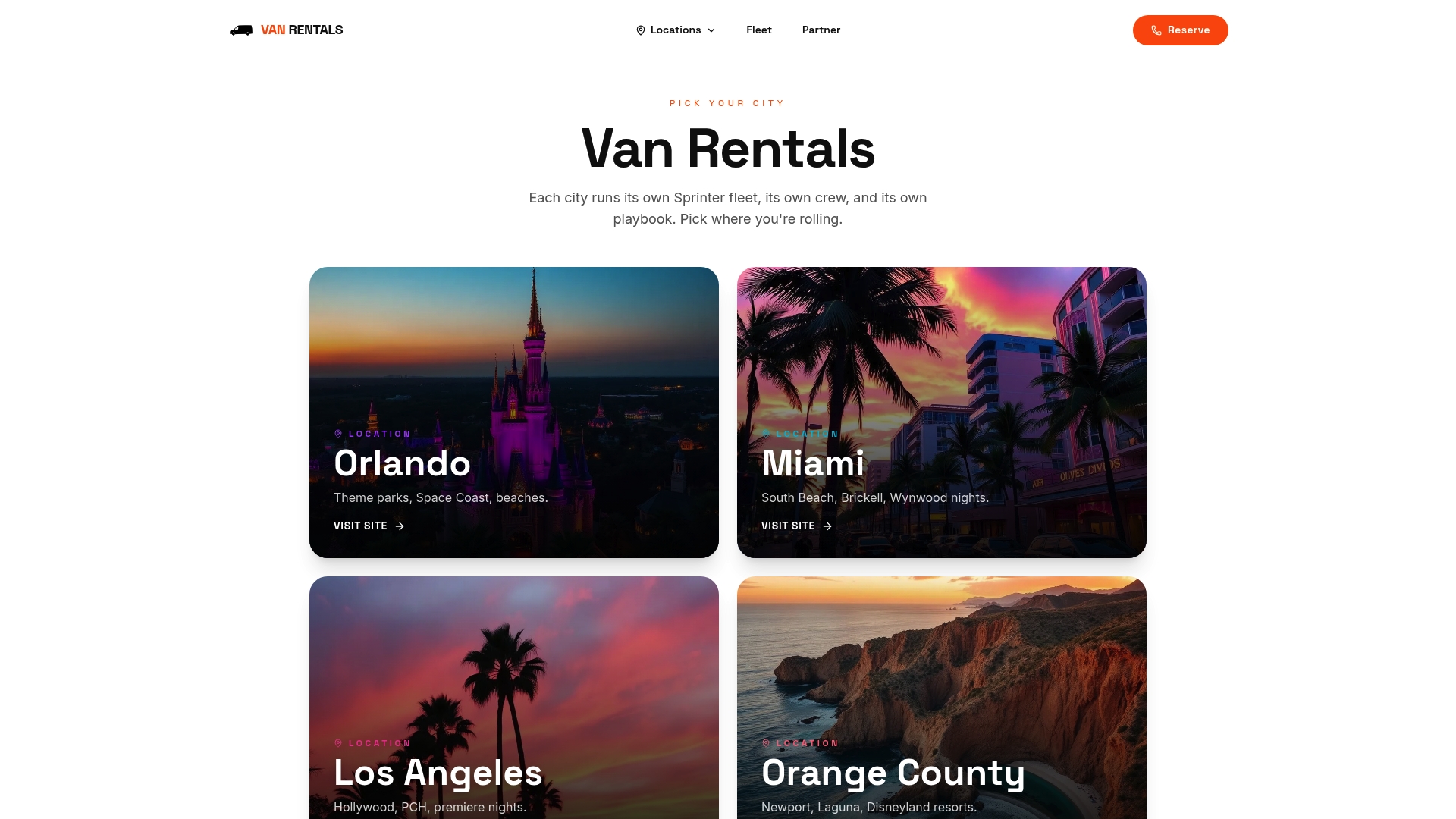
The van fleet covers a range of passenger capacities, so your group pays for exactly the space it needs. No upsizing to a vehicle that costs more than your split can absorb. Clear invoicing means the treasurer gets one clean document to share with the group, not a stack of line items to decode.
Ready to book? Check availability and configure your van at myvanrentals.com.
Useful sources and tools
- Splitwise (splitwise.com): Free group expense tracker with automatic reminders and multi-trip balance tracking.
- Settle Up (settleup.io): Simple one-trip expense splitting for small groups.
- Venmo / PayPal / Zelle: Payment rails for fast, documented transfers between group members.
- Google Sheets: Build your reusable group van cost template with columns for payer, item, split method, individual shares, and receipt links. Save it to a shared Google Drive folder.
- Myvanrentals blog: Practical guides on van rental vs. flying for groups and a family van rental budget checklist for pre-trip planning.
- On-demand local services: Lumo connects groups with local providers for roadside help, cleaning, and delivery during or after the trip.
FAQ
How do you split expenses fairly with friends on a group trip?
The most reliable method is an equal split for fixed shared costs (rental rate, insurance, taxes) and a usage-based split for variable costs like fuel and mileage. Designate one person as treasurer, use Splitwise or Venmo to track payments, and settle within 48 hours of the trip ending.
Can you pay for a friend’s rental van or car?
The named renter must sign the rental agreement and present their own credit card at pickup. You can reimburse them afterward, but the person whose name is on the contract is legally responsible for the vehicle and the deposit hold.
What is the best way to split a vacation rental or van trip?
For most groups, the hybrid method works best: divide the base rental rate and mandatory insurance equally, then apply a per-mile formula to fuel and mileage overages. Use a shared Google Sheet to track every line item and a payment app like Splitwise or Venmo to collect reimbursements.
How do you handle a no-show when splitting van rental costs?
Set a cancellation policy before the trip: full refund for cancellations more than 48 hours before pickup, partial refund within 48 hours, and no refund for same-day cancellations. State this in the group chat so everyone agrees in writing before any money changes hands.
What costs should never go into the group split?
Personal food, individual traffic or parking fines, and any purchase that benefits only one person stay off the shared ledger. Optional add-ons like CDW or child seats should be split only among the people who chose them.