How Van Rental Beats Public Transport for Groups

How Van Rental Beats Public Transport for Groups
Van rental is the most effective transportation option for groups seeking efficient, cost-controlled travel compared to public transport. When your group numbers eight or more, a single van consolidates fuel, parking, tolls, and entry fees into one shared bill. Public transport splits your group across schedules, platforms, and transfers. Myvanrentals serves cities like Orlando, Miami, and Los Angeles with city-specific fleets and local route knowledge, giving groups a direct advantage from the moment they leave the hotel.
How van rental beats public transport on group costs
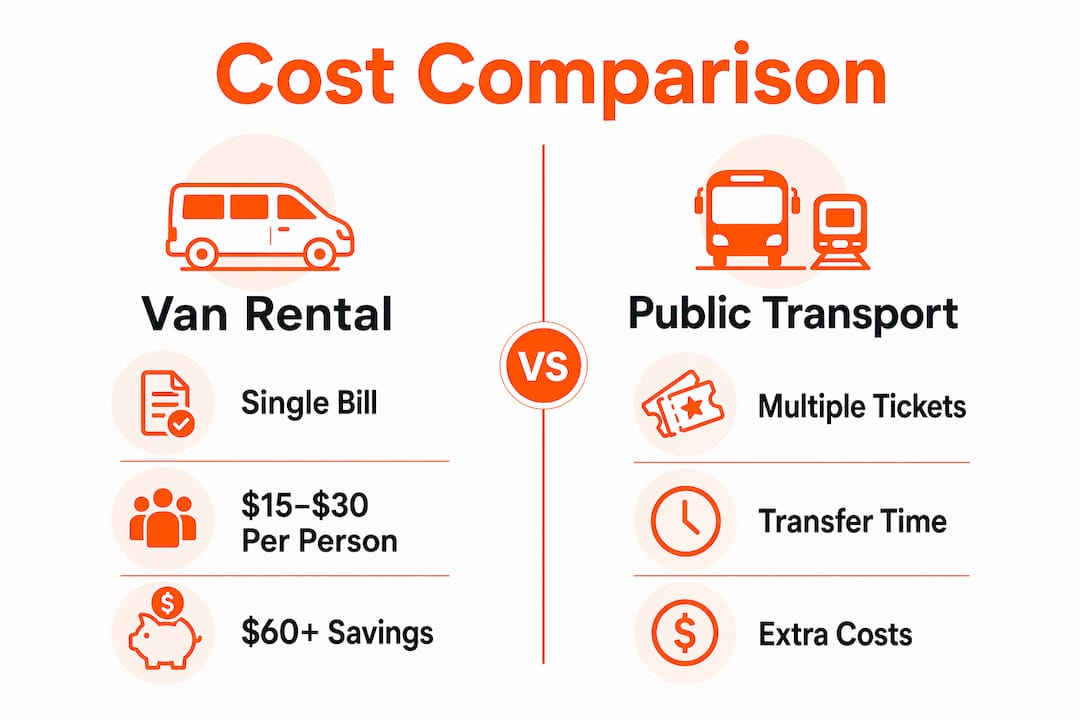
The core cost argument for van rental is simple: one vehicle means one bill. A 15-passenger van for groups of eight or more eliminates duplicate fees like parking and fuel that multiply fast when you split into smaller vehicles or use rideshare apps. National park entries, bridge tolls, and attraction parking get paid once, not per car.
The savings add up faster than most travelers expect. A single van can save over $60 per day in major tourist areas compared to running multiple vehicles. That figure does not include the time cost of coordinating separate cars or the stress of split arrivals.

Rideshare costs compound the problem further. A chauffeured luxury Sprinter van for a group often runs $83–$146 per person for a five-hour booking. During surge pricing, individual rideshare fares for the same group can push to $180–$320 per person. The math strongly favors the van.
Pro Tip: Factor in hidden costs before booking. Airport rental surcharges add 35–45% to base rates, and parking near major landmarks can exceed $200 per hour. A chauffeured service often costs less in total once you account for these extras.
One important caveat: the cost advantage depends on a stable group size. Splitting costs among fewer travelers can erase the savings versus public transport or rideshare. Lock in your headcount before you book.
Here is a straightforward cost comparison for a group of ten traveling for a full day:
| Transport option | Estimated cost per person |
|---|---|
| 15-passenger van rental (self-drive) | $15–$30 |
| Chauffeured Sprinter van | $83–$146 |
| Rideshare (surge pricing) | $180–$320 |
| Public transit (multi-transfer) | $10–$25 |
Public transit looks cheapest on paper. The real cost appears when you add transfer time, missed connections, and the logistical friction of keeping ten people together across three subway lines.
Why van rental simplifies group coordination
One vehicle means one driver, one departure time, and one arrival point. That single fact removes the coordination overhead that breaks group trips apart. With public transport, your group splits across platforms, waits for different trains, and reassembles at the destination, often losing 30–60 minutes per leg.
Group togetherness in a single van reduces navigation fatigue and creates better shared experiences. Everyone hears the same directions, makes the same stops, and arrives ready for the activity rather than drained from the commute.
The benefits of van rental over public transit show up clearly in specific trip types:
- Family theme park trips: One van loads strollers, coolers, and gear. No one carries a backpack through three train transfers.
- Airport group transfers: A single pickup beats coordinating multiple rideshare windows and flight-arrival timing.
- Beach days: Wet towels, chairs, and coolers fit in the van. They do not fit in a subway car.
- Nightlife groups: Everyone leaves together. No one gets stranded waiting for the last train.
“Van rental is an investment in time and energy, removing navigational friction and keeping groups energized. It is not just a budget item.” Source: Altitude Transportation
Pro Tip: For maximum convenience, consider a chauffeured van service with a professional driver. You skip parking stress, navigation, and liability entirely. The per-person cost is often comparable to rideshare without the surge risk.
Environmental efficiency: when does a van actually win?
Switching a group from individual cars to a shared van cuts total energy consumption by up to 70% compared to a one-person-per-car scenario. That is a significant reduction in per-person fuel use and emissions for any group trip.
The efficiency threshold matters here. The environmental gain becomes meaningful when your group reaches six or more travelers. Below that number, a standard car or public transit often performs better on a per-person energy basis.
- Groups of 2–4: A standard sedan or public transit typically wins on energy efficiency.
- Groups of 5–7: A minivan or seven-passenger vehicle starts to show clear advantages over multiple cars.
- Groups of 8–15: A full-size passenger van delivers the strongest per-person efficiency gains.
- Suburban and low-density areas: Public transit runs infrequently and covers limited routes. A van fills that gap directly.
Public transit performs best in dense urban cores where buses and trains run at high capacity. In suburban areas, off-peak hours, or destinations with limited transit coverage, a van reduces both per-person energy use and total trip time. Fewer vehicles on the road also means less traffic congestion at popular destinations, a benefit that extends beyond your group.
When does public transport win, and how do you combine both?
Public transport beats van rental in specific, well-defined situations. Recognizing those situations helps you plan a smarter trip rather than defaulting to one option for every leg.
Car rental is disadvantageous in high-density city centers where parking near landmarks can exceed $200 per hour and metro systems move faster through traffic than any vehicle. Dense urban cores like downtown Miami or central Los Angeles reward transit users with speed and parking savings.
The best group travel strategy combines both options:
- Use public transit for dense urban core legs where parking is expensive and traffic is heavy.
- Use a van for airport transfers, suburban destinations, theme parks, and beach trips where transit coverage is thin.
- Book your van for full-day excursions outside the city center and rely on metro or bus for short in-city hops.
- Plan your daily travel based on destination type, not habit.
Self-driving a large van adds responsibilities worth considering. Driving a large van in traffic requires attention to blind spots, height clearance limits, and liability. If your group is unfamiliar with large vehicles, a chauffeured option removes that burden entirely. The airport surcharges and transit time to off-airport rental facilities also add hidden costs that belong in your budget from day one.
The right answer is not always “van only” or “transit only.” It is the combination that matches your specific itinerary, group size, and destination.
Key Takeaways
Van rental beats public transport for groups by consolidating costs, keeping everyone together, and covering routes where transit falls short.
| Point | Details |
|---|---|
| Cost advantage for large groups | A single van eliminates duplicate parking, fuel, and toll fees that multiply across multiple vehicles. |
| Rideshare savings | Chauffeured van costs $83–$146 per person versus $180–$320 per person during rideshare surge pricing. |
| Energy efficiency | Switching from individual cars to a shared van cuts total energy consumption by up to 70%. |
| Group coordination | One vehicle means one departure time, one driver, and zero split arrivals at the destination. |
| Hybrid strategy | Use public transit for dense urban cores and a van for airports, theme parks, and suburban destinations. |
Gabriel’s take: the hidden cost of splitting up
Groups consistently underestimate what fragmented travel actually costs them. Not just in dollars, but in energy and mood. I have seen families arrive at a theme park already exhausted from three subway transfers and a 15-minute walk from the station. They spent less on transit. They also spent the first hour of their day recovering instead of enjoying it.
The overlooked expense is not always financial. When you split a group across two rideshares or three train cars, you lose the shared momentum that makes group travel worth doing. Someone always gets separated. Someone always waits. Someone always misses the first five minutes of the experience.
My honest advice: if your group is six or more, the van pays for itself in logistics alone before you even count the dollar savings. The group travel efficiency argument is not theoretical. It shows up in how your group feels at the end of the day.
Choose a chauffeured van when your destination involves heavy traffic or unfamiliar roads. Choose self-drive when you have a confident driver and a straightforward route. Either way, keep the group together. That decision alone changes the quality of the trip.
— Gabriel
Myvanrentals: van rental options for your next group trip
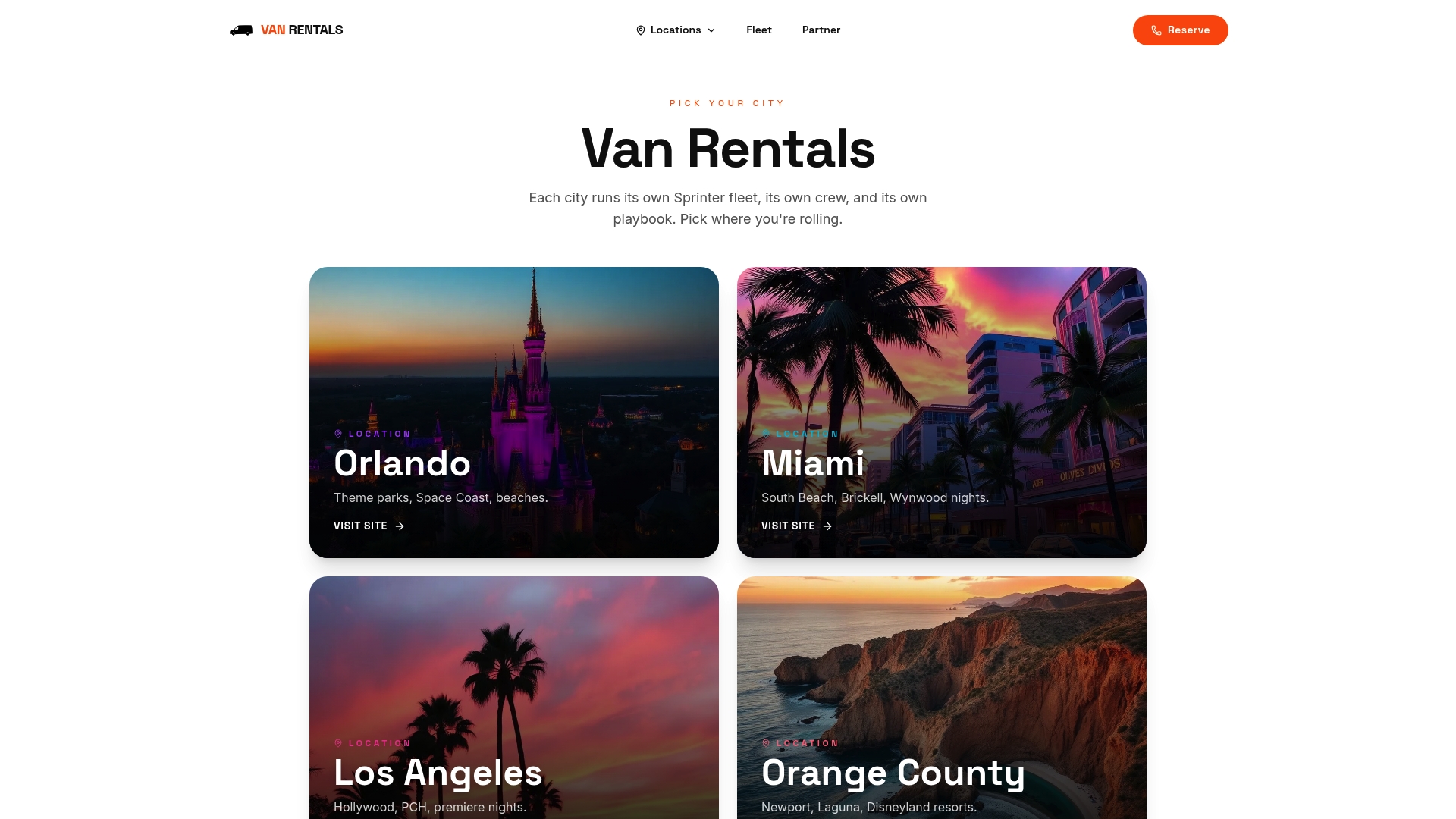
Myvanrentals operates city-specific fleets in Orlando, Miami, and Los Angeles, managed by local teams who know the best routes, parking spots, and attractions in each area. That local knowledge means you get more than a vehicle. You get practical guidance that saves time on every leg of your trip.
Whether your group is heading to a theme park, a beach, or an airport, Myvanrentals offers vehicle options sized for your group and priced to make the per-person cost work. Browse available vans by city and date at myvanrentals.com and see which options fit your itinerary. You can also review the family van rental budget checklist to plan your total trip cost before you book.
FAQ
How does van rental save money for large groups?
A single van consolidates parking, fuel, and toll costs into one shared bill. Groups of eight or more can save over $60 per day compared to running multiple vehicles in major tourist areas.
When does public transport beat a van rental?
Public transit wins in dense urban centers where parking exceeds $200 per hour and metro systems move faster than road traffic. Use transit for city-center legs and a van for airports, theme parks, and suburban destinations.
Is a chauffeured van worth the extra cost?
A chauffeured Sprinter van typically costs $83–$146 per person for a five-hour booking. During surge pricing, individual rideshare fares for the same group can reach $180–$320 per person, making the chauffeured option more economical.
What are the risks of self-driving a large van?
Large vans require attention to blind spots, height clearance limits, and liability. Travelers unfamiliar with large vehicles should consider a chauffeured service to avoid stress and reduce risk.
How many people does a group need for van rental to make sense?
The cost and efficiency advantages become clear at six or more travelers. Below that number, a standard car or public transit often performs better on both cost and energy use per person.