Van Comfort for Long City Trips: A Group Travel Guide

Van Comfort for Long City Trips: A Group Travel Guide
Van comfort is defined as the combination of ergonomic seating, climate control, noise insulation, and adaptable interior design that determines how well passengers endure extended travel. The role of van comfort in long city trips is direct: it reduces fatigue, protects physical health, and shapes whether a group trip feels manageable or miserable. For families and groups covering multiple city stops in Orlando, Miami, or Los Angeles, comfort is not a luxury feature. It is the difference between arriving ready to explore and arriving exhausted. Myvanrentals builds its fleet selection around exactly this principle, matching travelers to vans that fit their trip length and group size.
How does van comfort affect long city trips for groups?
Ergonomic seating and interior layout are the most important comfort factors on extended urban routes. Adjustable lumbar support and reclining seats prevent the static posture fatigue that builds over hours of city driving. Static posture compresses the spine and restricts circulation, which is why passengers feel stiff and drained after long rides even when they have not physically exerted themselves.
Seat cushioning layers and air-ride suspension systems reduce vibration impact from urban road surfaces. City roads deliver more frequent stops, turns, and surface changes than highways, which means passengers absorb more cumulative vibration per mile. Ergonomic seating systems reduce pressure points and vibration transfer, which are the two primary sources of discomfort in vans.

Modular seating configurations add another layer of benefit for groups. Seats that shift between forward-facing travel mode, angled conversation mode, and flat rest mode let passengers change their posture without stopping the trip. This flexibility is especially valuable for families with children or groups on multi-hour city tours.
Key ergonomic features that matter most for long trips:
- Adjustable lumbar support with multiple contour settings
- Reclining seat backs with at least three positions
- Seat cushions made from moisture-wicking, antimicrobial fabric
- Headrests with forward and lateral adjustment
- Sufficient legroom for passengers over 5’10"
Pro Tip: Test any van seat for at least two hours on your typical route type before committing to a rental. Short test drives miss the pressure point buildup and vibration fatigue that only appear after sustained travel.
What climate control features improve comfort on city van trips?
Thermal control is the second most critical comfort system after seating. Thermal control and adaptable interiors transform a van from a transport box into a livable space for extended trips. A cabin that swings between hot and cold forces passengers to constantly adjust, which drains energy and increases irritability over a long day.
Multi-zone climate systems let the driver and rear passengers set independent temperatures. This matters for groups because body temperature preferences vary widely, especially between adults and children. A single-zone system forces compromise, and someone always ends up uncomfortable.
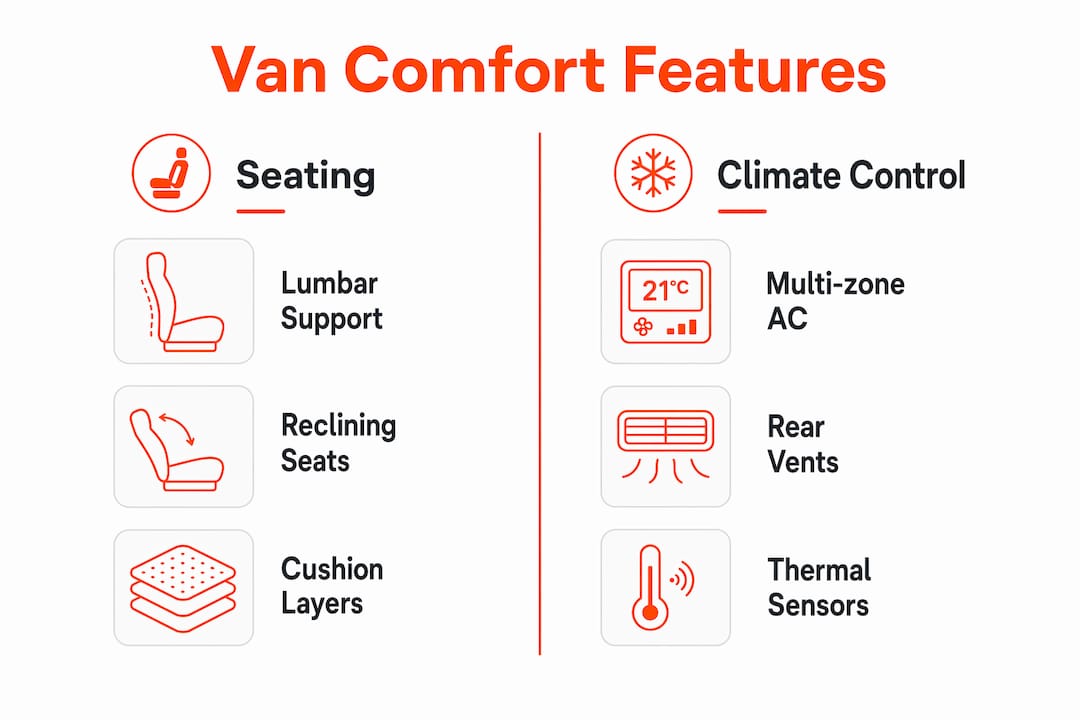
Noise insulation works alongside climate control to reduce passenger fatigue. Road noise from city traffic, engine sound, and tire contact with pavement creates a constant low-level stress load. Proper airflow strategies maintain cabin comfort without relying solely on air conditioning, which reduces fuel consumption and keeps the cabin quieter.
Additional features that support a healthy cabin environment:
- Roof vents or passive ventilation to prevent stuffiness
- Moisture control to reduce condensation on windows
- Air filtration systems that reduce particulates from city traffic
- Cleanable, moisture-resistant materials that support hygiene on long trips
Pro Tip: On hot city days, crack a rear roof vent slightly while running the AC. This creates airflow that removes stale air without forcing the system to work harder.
Premium vs. budget van comfort: what are the real trade-offs?
Comfort depends more on trim level and specifications than on brand name alone. Premium models like Mercedes V-Class offer multi-contour massage seats, THERMOTRONIC dual-zone climate control, and acoustic engineering that produces a genuinely quiet cabin. That level of engineering reduces driver fatigue and improves passenger well-being on trips lasting four or more hours.
Budget vans serve a different purpose. Ram ProMaster City seats are firm and practical but cause fatigue over long distances due to limited lumbar support and a utilitarian suspension. Road noise is noticeable in budget models, and aftermarket upgrades like soundproofing panels and seat cushions can improve comfort but add cost and planning time.
The table below compares key comfort features across van categories to help you match the right van to your trip.
| Feature | Premium vans | Mid-range vans | Budget vans |
|---|---|---|---|
| Lumbar support | Multi-contour, adjustable | Basic adjustable | Fixed or absent |
| Climate control | Multi-zone with filtration | Single-zone AC | Basic AC or none |
| Noise insulation | Acoustic engineering | Partial insulation | Minimal |
| Suspension | Independent, air-ride option | Standard coil | Utilitarian |
| Seating material | Leather, antimicrobial fabric | Fabric | Vinyl or basic fabric |
| Driver assist features | Adaptive cruise, lane assist | Cruise control | Minimal |
Driver-assist features deserve specific attention for long city trips. Adaptive cruise control and lane-keeping assist reduce the cognitive load on the driver, which directly lowers fatigue over multi-hour urban routes. Driver aids reduce fatigue on extended drives, and this benefit applies equally to city driving as to motorway travel.
Budget vans can be improved. Aftermarket lumbar cushions, seat covers with memory foam, and adhesive soundproofing panels address the most common comfort gaps. For a family van rental on a tight budget, these additions cost far less than upgrading to a premium model.
How can groups optimize van comfort for extended city travel?
Selecting the right van is the first step, but how you configure and use it matters just as much. The following steps give groups and families the most control over their comfort on long urban trips.
-
Prioritize seating configurations with legroom. Measure the distance between rows before booking. Adults need at least 34 inches of seat pitch for trips over two hours. Children need less, but they move more, so extra space prevents conflict.
-
Add lumbar supports and seat cushions for budget vans. A $30 memory foam lumbar cushion eliminates the most common complaint in entry-level vans. Pack one per adult passenger for trips over three hours.
-
Plan rest stops every 90 minutes. Standing and walking for five minutes resets circulation and reduces the muscle tension that builds from sustained sitting. City trips with multiple destinations naturally create these breaks, but plan them deliberately if your route is continuous.
-
Choose vans with flexible storage. Luggage stored in the passenger area reduces legroom and creates a cramped feel. Vans with dedicated cargo separation or roof storage keep the cabin open. Check the city exploration checklist for packing strategies that work with van layouts.
-
Use infotainment and connectivity to reduce passenger restlessness. Rear-seat screens, Bluetooth audio, and USB charging ports keep passengers engaged and reduce the “are we there yet” dynamic that makes long trips feel longer. This is especially effective for families with children on trips over two hours.
-
Match the van size to your actual group. Overcrowding a van reduces comfort faster than any other factor. A seven-passenger van carrying seven adults with luggage is far less comfortable than the same van carrying five. Affordable passenger van rentals come in multiple configurations, so size up when the cost difference is small.
Common misconceptions about van comfort on long trips
Not every van marketed as comfortable actually meets the demands of extended city travel. Short drives miss critical comfort shortcomings that only appear after sustained use. A van that feels fine for a 20-minute airport run may produce significant back pain on a four-hour city circuit.
Trim level matters more than model name. Two vans from the same manufacturer can have completely different comfort profiles depending on whether they carry base or premium trim. Always confirm the specific trim and its features before booking, not just the model name.
Several other comfort factors are frequently overlooked:
- Static posture risk: Sitting in the same position for over 90 minutes increases spinal compression regardless of seat quality. Seat adjustability only helps if passengers actually use it.
- Cargo versus comfort trade-off: Larger cargo areas often come at the cost of rear passenger legroom. Confirm the seating layout before assuming a larger van means more comfort.
- Urban versus highway comfort: City driving involves more frequent braking and acceleration, which increases passenger fatigue relative to highway miles. A van rated comfortable for highway travel may feel rougher on stop-and-go city routes.
- Factory seats and ergonomic strain: Worn or factory-standard seats often lack the support needed for lengthy driving, causing strain on the neck, shoulders, and lower back.
Key Takeaways
Van comfort directly determines how well groups and families endure long city trips, with ergonomic seating, climate control, and noise insulation being the three features that matter most.
| Point | Details |
|---|---|
| Seating quality drives endurance | Adjustable lumbar support and reclining seats prevent fatigue on trips over two hours. |
| Climate control affects the whole group | Multi-zone systems let passengers set independent temperatures, reducing discomfort for everyone. |
| Trim level, not brand, determines comfort | Confirm specific trim features before booking, not just the van model name. |
| Budget vans can be improved | Aftermarket lumbar cushions and soundproofing panels address the most common comfort gaps at low cost. |
| Rest stops are a comfort strategy | Planning breaks every 90 minutes resets circulation and reduces muscle tension for all passengers. |
What I have learned from long city trips in different vans
After spending time in vans ranging from stripped-down cargo conversions to fully appointed passenger models on urban routes across cities like Miami and Los Angeles, one thing stands out clearly. Comfort is not about luxury. It is about how long a van lets you keep going before your body starts demanding a stop.
The biggest shift I noticed came from seat adjustability, not seat quality. A mid-range van with a well-adjusted lumbar support and a slightly reclined seat back outperformed a premium van where the driver sat in the default position for hours. The van does not do the work. The micro-adjustments do. Most travelers never touch the seat controls after the first five minutes, and that is where comfort breaks down.
For groups, the cabin environment matters more than any single feature. A quiet cabin where people can talk without raising their voices changes the social dynamic of a trip. Passengers stay engaged, conversations happen naturally, and the trip feels shorter. Noise-fatigued groups go quiet, and that silence is a signal that the van is working against you.
My honest advice: do not let budget be the only filter when choosing a van for a long city trip. The cost difference between a base model and a mid-range trim is often small relative to the total trip cost. The comfort difference over four or five hours is not small at all. Spend the extra amount on the trim, and save the accessories budget for the destinations.
— Gabriel
Comfortable van rentals for your next city trip
Planning a long city trip with a group or family means comfort should be part of your booking criteria from the start.
Myvanrentals offers van options across cities like Orlando, Miami, and Los Angeles, with fleets that range from practical budget models to well-equipped passenger vans suited for full-day urban travel. City-specific teams know local routes and can help you match the right van to your itinerary and group size. Booking is straightforward, and availability covers the major urban markets where group travel is most common. Visit Myvanrentals to browse options by city and find a van that fits your group’s comfort needs before your next trip.
FAQ
How does van comfort affect travel experience for groups?
Van comfort directly reduces fatigue and keeps passengers engaged longer. Ergonomic seating, quiet cabins, and stable temperatures make multi-hour city trips manageable for groups of all sizes.
What van features matter most for long city trips?
Adjustable lumbar support, multi-zone climate control, and noise insulation are the three features with the greatest impact on comfort during extended urban travel.
Is a premium van worth the cost for a one-day city trip?
For trips over three hours with multiple passengers, a mid-range or premium trim van delivers enough comfort improvement to justify the cost difference over a base model.
Can budget vans be made comfortable for long trips?
Yes. Aftermarket lumbar cushions, memory foam seat covers, and adhesive soundproofing panels address the most common comfort gaps in budget vans at a fraction of the upgrade cost.
How often should groups stop on long city van trips?
A rest stop every 90 minutes is the standard recommendation. Standing and walking for five minutes resets circulation and reduces the muscle tension that builds from sustained sitting.