Passenger Van Features for Families: City Rental Guide
Passenger Van Features for Families: City Rental Guide
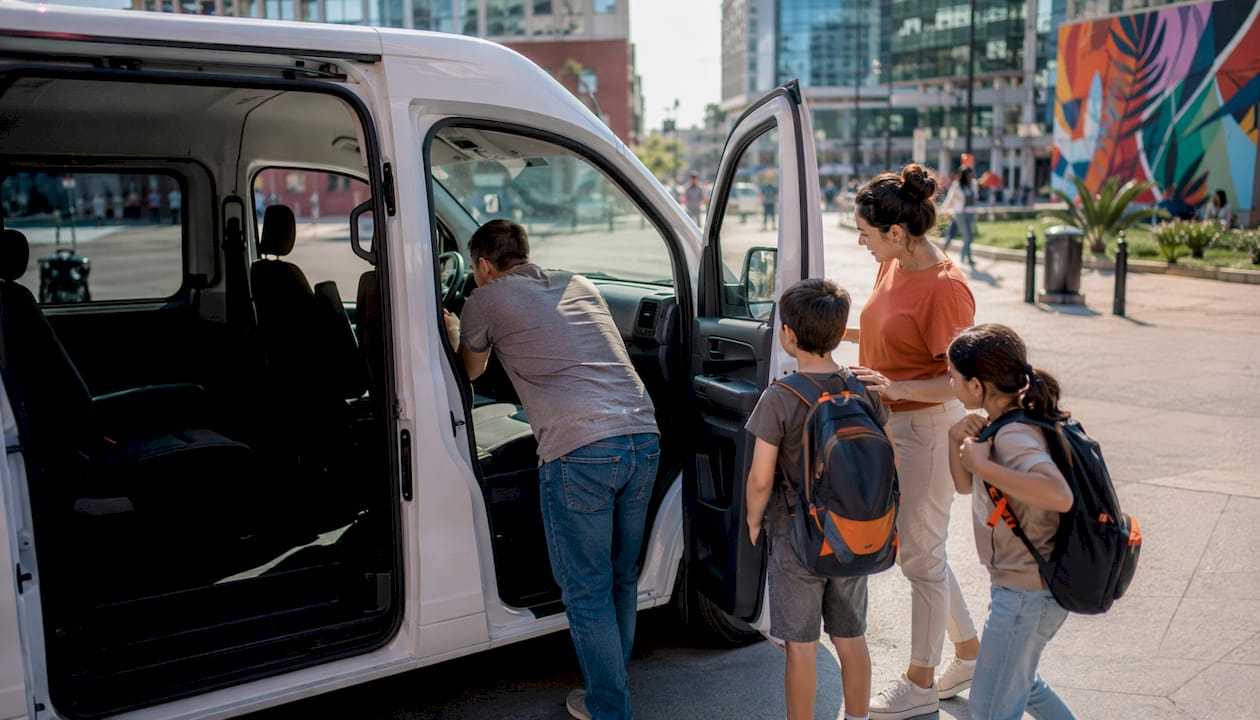
When renting a passenger van for urban family travel, seven features determine whether the trip runs smoothly: a full safety suite (rear camera, parking sensors, stability control, LATCH anchors); sliding side doors with a low step-in; the right seat count for your group with various options available; cargo space for strollers and luggage; multi-zone climate control; USB and power ports at every row; and parking aids for tight city streets. For families keeping everyone in one vehicle, Myvanrentals operates city-specific fleets in Orlando, Miami, Los Angeles, and other major U.S. cities with local teams who know the routes.
The single most important feature cluster for urban family rentals: safety equipment plus ease of entry. Everything else is secondary.
- Safety suite: rearview/360 camera, front and rear parking sensors, electronic stability control, LATCH/tether anchors
- Entry and access: sliding side doors, low step-in height, wide aisle
- Seating suitable for smaller families or larger groups with varying capacities
- Cargo: foldable or removable rear seats, under-seat storage, stroller clearance
- Climate: multi-zone A/C with rear vents
- Infotainment: USB ports per row, 12V sockets, optional rear screens
- Parking aids: blind-spot monitoring, 360-degree cameras for city garages
Table of Contents
- Safety features families must have in city driving
- Seating capacity and layout: how many seats you actually need
- Access and urban maneuverability: what actually matters in a city
- Comfort and in-van conveniences for multi-stop city days
- Cargo solutions: fitting strollers, luggage, and family gear
- Minivan vs. passenger van for families: when to choose each
- What to confirm with the rental company before you book
- Pre-booking checklist for families renting a passenger van
- How city-specific fleets make family travel easier
- Car seat compatibility in passenger vans
- Fuel type and efficiency for city van rentals
- Emergency and roadside assistance for family van rentals
- Key Takeaways
- What families get wrong when they pick a passenger van
- Myvanrentals has the right van for your city trip
- FAQ
Safety features families must have in city driving
Urban driving puts specific pressure on a van’s safety systems. Tight curbside stops, parallel parking, and frequent short trips with children in the back make every one of these features count.
- Rearview and 360-degree cameras: The Ford Transit offers an optional 360-degree camera system alongside a standard rear-view camera. Both reduce blind-zone risk when pulling away from a curb with pedestrians nearby.
- Front and rear parking sensors: Alert you to obstacles at low speed. Especially useful in crowded urban garages.
- Blind-spot monitoring: The Ford Transit’s BLIS system with Cross-Traffic Alert is available on higher trims. Check whether your rental unit has it.
- Automatic emergency braking (AEB): Standard on the Ford Transit XL via Ford Co-Pilot360. Reduces rear-end collision risk during stop-and-go city traffic.
- Electronic stability control (ESC): Standard across full-size passenger vans. Helps prevent rollovers when a loaded van corners quickly.
- Airbags: Driver, passenger, and side-curtain airbags are standard on most current passenger van models.
- LATCH and tether anchors: Required by federal law in passenger vehicles. Locations vary by row and model. Confirm anchor positions before you load car seats.
Check NHTSA and IIHS ratings for the specific model year in your rental fleet. Ask the rental agent for the vehicle’s most recent maintenance and inspection record at pickup.
Pro Tip: Ask the agent to show you the LATCH anchor locations and confirm the rear camera is calibrated before you leave the lot. A two-minute check at pickup prevents a 20-minute problem at a busy city curb.
Seating capacity and layout: how many seats you actually need
Minivans typically seat 7–8 and prioritize a car-like driving experience, while full-size passenger vans seat 10–15+ and prioritize raw capacity. Choosing the wrong count is the most common booking mistake.
| Group size | Recommended van type | Luggage/stroller notes |
|---|---|---|
| 4–7 people | 7–8 passenger minivan | 3–4 large bags + 1 stroller fits easily |
| 7–10 people | 10–15 passenger van | 4–6 bags; stroller in rear cargo area |
| 10–15 people | 10–15 passenger van | Rooftop carrier or trailer may be needed |
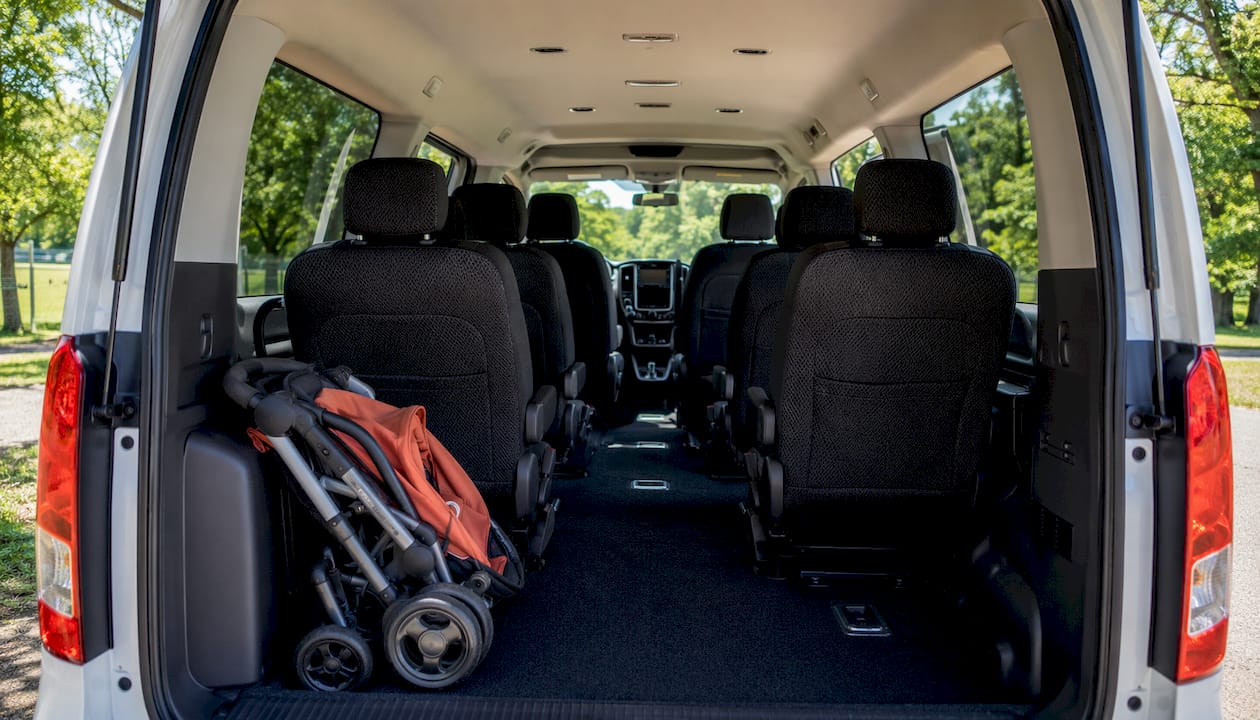
Layout features to confirm before booking include removable or folding rear seats for cargo flexibility, aisle width to ease child safety seat installation, choice of captain’s chairs versus bench rows for comfort or capacity, and ensuring all seats have proper seatbelts.
For a detailed look at van size and budget trade-offs, Myvanrentals publishes a practical sizing guide for city trips.
Access and urban maneuverability: what actually matters in a city
For families, ease of entry often matters more than interior volume. Minivans win on low step-in height and sliding doors, which simplify loading children and installing car seats. Full-size passenger vans have a higher step-in, which can slow curbside loading with toddlers or strollers.
Access features to check:
- Sliding side doors: Standard on most passenger vans. Confirm both sides open if you need simultaneous loading.
- Step-in height: Ask the rental company for the measurement. Lower is better for young children and older family members.
- Rear door configuration: The Ford Transit offers 180-degree and optional 253-degree rear door opening, which helps when loading a stroller into a tight parking spot.
- Aisle width between rows: Affects how easily you can reach rear-row passengers to buckle them in.
On urban maneuverability: full-size vans have a larger turning radius and longer overall length than minivans. Before booking, ask for the vehicle’s approximate height (the Ford Transit XL ranges from 82.4" to 107.7" depending on roof height) and confirm it clears the parking garages on your itinerary. Many urban garages cap clearance at 6’8" (80"), which rules out high-roof configurations.
Pro Tip: Call your hotel or venue garage ahead of time and ask for their height clearance. A medium-roof Transit at roughly 100" will not fit in most standard urban garages.
Comfort and in-van conveniences for multi-stop city days
Short, repeated urban trips are harder on families than long highway drives. Children get restless between stops, and the van’s interior layout either helps or creates friction.
- Multi-zone climate control: The Toyota Sienna offers 3-zone or 4-zone independent climate control depending on trim, so rear passengers can adjust their own temperature. Look for rear-zone controls in any van you rent.
- Rear vents: Confirm they exist and work. Front-only A/C rarely reaches the back rows in a full-size van on a hot day.
- USB ports per row: The Ford Transit includes a USB port in each row. Prioritize this for families with devices to charge between stops.
- 12V sockets: Useful for portable coolers, fans, or charging larger devices.
- Reclining seats or captain’s chairs: The Sienna’s super long-slide captain’s chairs are a comfort benchmark. Full-size vans typically offer bench seating, which is less adjustable.
- Cupholders and accessible storage: Count them. A 12-passenger van with two cupholders for ten people creates constant friction.
Pro Tip: For city comfort on long days, prioritize rear climate control and per-row USB ports over rear entertainment screens. Kids on short urban hops need cool air and charged tablets more than a built-in screen.
Cargo solutions: fitting strollers, luggage, and family gear
Cargo planning prevents the most common rental regret: arriving at the lot and realizing the luggage does not fit.
- Count bags in advance: distinguish hard-shell suitcases (fixed volume) from soft duffels (compressible). A 12-passenger van with all seats occupied leaves limited rear cargo space.
- Measure your stroller folded. A full-size double stroller folded is roughly 30"×20"×15". Confirm it fits in the rear cargo area with seats in place.
- Use under-seat storage for small bags, snacks, and day-pack items you need during stops.
- For groups of 10+, ask about rooftop cargo carriers or trailer hitches. The Ford Transit supports towing packages; confirm the rental unit is equipped.
- Secure valuables in the locked glove box or under-seat compartments when leaving the van at city attractions. Do not leave bags visible on seats.
Minivan vs. passenger van for families: when to choose each
The choice comes down to group size and trip profile, not preference. Minivans prioritize comfort and car-like handling; full-size passenger vans prioritize capacity and utility.
Choose a minivan (Toyota Sienna, Kia Carnival) when:
- Your group is 7 or fewer people
- You have young children who need frequent, easy entry and exit
- City parking and maneuverability are top priorities
- You want integrated sliding doors, rear entertainment, and a refined ride
Choose a full-size passenger van (Ford Transit, Mercedes-Benz Sprinter, Chevrolet Express/GMC Savana, Ram ProMaster) when:
- Your group is 9 or more and must stay together
- You need maximum cargo volume alongside passenger capacity
- The trip involves airport runs, sports equipment, or large gear
- Splitting into two vehicles would create coordination problems
The Kia Carnival’s available slide-flex seating and the Sienna’s configurable third row show how minivans have closed the flexibility gap. But for groups above 8, a full-size van remains the only practical single-vehicle option.
Pro Tip: If your group is exactly 8–9 people, rent a 10–15-passenger van. The extra seats give you luggage room and prevent the van from feeling packed on a full city day.
What to confirm with the rental company before you book
Rental terms vary more than vehicle specs. Confirm every item on this list before you pay.
- Driver age and license class: Many companies require drivers to be 25+ for full-size vans. Some charge a young-driver fee for ages 21–24.
- Additional driver fees: Typically charged per day per extra driver. Ask upfront.
- Insurance options: Confirm collision damage waiver (CDW) and liability coverage. Check whether your personal auto policy or credit card covers rentals before paying for duplicate coverage.
- Fuel policy: Most rentals use a full-to-full policy. Return the tank full to avoid refueling surcharges.
- Mileage limits: City rentals often include unlimited miles, but confirm. Per-mile fees on capped plans add up quickly on multi-day trips.
- Security deposit: Full-size vans typically carry a higher hold than standard cars. Confirm the amount and how long it takes to release.
- Roadside assistance: Ask whether it is included or requires an add-on. Confirm the 24-hour contact number before you leave the lot.
Cost generally scales with vehicle size: minivans cost less per day than 12-passenger vans, which cost less than 15-passenger configurations. Peak-season pricing in cities like Miami and Orlando can push rates significantly higher. Book early and ask about multi-day discounts.
Pro Tip: Ask whether the rental depot offers airport pickup vs. a downtown location. Downtown depots often have shorter queues and easier access to city parking passes.
Pre-booking checklist for families renting a passenger van
Use this before you reserve. It takes five minutes and prevents most pickup-day problems.
- Confirm final headcount, including children and infants.
- Count car seats needed and note installation type (rear-facing, forward-facing, booster).
- Measure strollers folded and estimate total luggage volume.
- Identify your city parking plan: garage height limits, street parking zones, venue drop-off points.
- Confirm all drivers meet the rental company’s age and license requirements.
- Verify the van has LATCH anchors in the rows where car seats will be installed.
- Estimate daily miles to check against any mileage cap.
- Confirm roadside assistance is included and save the contact number.
- Call the rental team to request a specific seat layout or rooftop cargo option.
- Ask the agent at pickup to show you LATCH locations, camera operation, and spare tire access.
A family van rental budget checklist from Myvanrentals covers cost items alongside this configuration list.
How city-specific fleets make family travel easier
A local fleet team knows things a national booking engine does not: which downtown garages clear a medium-roof Transit, which city blocks have reliable drop-off zones, and which van configurations work best for theme-park days vs. beach runs.
Myvanrentals operates city-specific fleets in Orlando, Miami, Los Angeles, and other major U.S. cities. Their local teams manage 8, 12, and 15-passenger configurations and can advise on layout before you book. That means you can request a specific seat arrangement, confirm LATCH-equipped rows, and get parking guidance for your exact itinerary.
- Local teams can flag low-clearance garages on your route before you encounter them.
- Rapid vehicle swaps are available when a mechanical issue arises mid-trip.
- Pre-configured family layouts reduce setup time at pickup.
Pro Tip: When you call to book, ask the city team: “Can you stage the van with rear seats configured for X passengers and Y cargo space?” A two-minute conversation at booking saves 15 minutes of seat-shuffling at the lot.
For city-specific fleet options, the Las Vegas van rental page shows available configurations as a representative example.
Car seat compatibility in passenger vans
Federal law requires LATCH anchors in all new passenger vehicles, but the number of anchor positions and their row locations vary by model. In a 12 or 15-passenger van, LATCH anchors are typically present in the first two or three rows, not throughout.
- Rear-facing infant seats: Fit most second-row positions. Confirm the seat does not block the aisle when installed.
- Forward-facing convertible seats: Require a top tether anchor in addition to lower LATCH. Ask the rental agent to show you tether anchor locations for the specific rows you plan to use.
- Booster seats: Use the vehicle’s lap-and-shoulder belt. Confirm the belt geometry fits the booster correctly before the trip.
- Installation ease: Families frequently discover LATCH locations only at pickup, which creates delays. Request anchor location details from the rental company in advance.
For accessible entry and car-seat installation guidance, the caregiver transportation guide from Paraguay Transport covers practical loading logistics applicable to families with mobility considerations.
Fuel type and efficiency for city van rentals
Most rental passenger vans in the U.S. run on gasoline. The Ford Transit is available with a 3.5L V6 or a 3.5L EcoBoost V6. The Mercedes-Benz Sprinter offers both gasoline and diesel configurations, though diesel availability in rental fleets varies by city.
City driving is harder on fuel economy than highway driving. Stop-and-go traffic, frequent idling, and full passenger loads all reduce efficiency. For urban trips, expect lower real-world fuel economy than the EPA estimate. Budget accordingly and use the full-to-full fuel policy to avoid refueling surcharges.
The Toyota Sienna’s hybrid-electric powertrain offers the best fuel economy in its class for a family van, making it a practical choice when your group fits within 7–8 seats. For larger groups requiring a full-size van, gasoline remains the standard option in most U.S. rental fleets.
Emergency and roadside assistance for family van rentals
Confirm roadside assistance before you leave the lot. Most major rental companies include basic roadside coverage, but the scope varies.
- What to confirm: 24-hour phone number, towing coverage distance, flat tire service, and whether a replacement vehicle is provided if the van is disabled.
- What to do if the van breaks down: Pull safely off the road, activate hazard lights, keep children away from traffic, and call the rental company’s roadside number immediately.
- Credit card coverage: Some premium credit cards include rental car roadside assistance as a cardholder benefit. Check your card terms before the trip.
- AAA membership: If you hold an AAA membership, confirm whether it extends to rental vehicles. Coverage rules differ by membership tier.
Save the roadside assistance number in your phone at pickup. Do not wait until you need it to find it.
Key Takeaways
For urban family van rentals, safety equipment and ease of entry are the features that matter most. Everything else supports those two priorities.
| Point | Details |
|---|---|
| Safety first | Confirm rear camera, parking sensors, ESC, and LATCH anchors before you book. |
| Right seat count | 8-passenger for groups of 7 or fewer; 10–15-passenger for groups of 9 or more. |
| Cargo planning | Measure strollers folded and count bags before booking to avoid rooftop-carrier surprises. |
| Rental terms | Confirm driver age rules, insurance, fuel policy, and roadside assistance before you pay. |
| Myvanrentals | City-specific fleets in Orlando, Miami, and Los Angeles with local teams who can configure layouts and advise on parking before you arrive. |
What families get wrong when they pick a passenger van
The most common mistake is choosing a van based on seat count alone. A 15-passenger van with all seats occupied has almost no cargo space. A family of six in a 12-passenger van, on the other hand, has room for luggage, a stroller, and a cooler without removing a single seat.
The second mistake is assuming a full-size passenger van drives like a large SUV. It does not. Renters are often surprised by the more industrial driving experience and the higher step-in height of a commercial-grade van. If your group is 8 or fewer, a minivan almost always delivers a better daily experience in a city. The sliding doors, lower step-in, and car-like handling reduce friction on every stop.
For groups of 9 or more, the passenger van is the right call. But go in with accurate expectations: plan for the step-in height, confirm the parking garage clearances, and use the local rental team’s knowledge to avoid the avoidable problems.
Myvanrentals has the right van for your city trip
Choosing the right van is straightforward when you have a local team behind the booking. Myvanrentals operates city-specific fleets across major U.S. cities, including Orlando, Miami, and Los Angeles, with 8, 12, and 15-passenger configurations available. Local teams can advise on layout, confirm LATCH-equipped rows, and share parking guidance specific to your itinerary before you arrive.
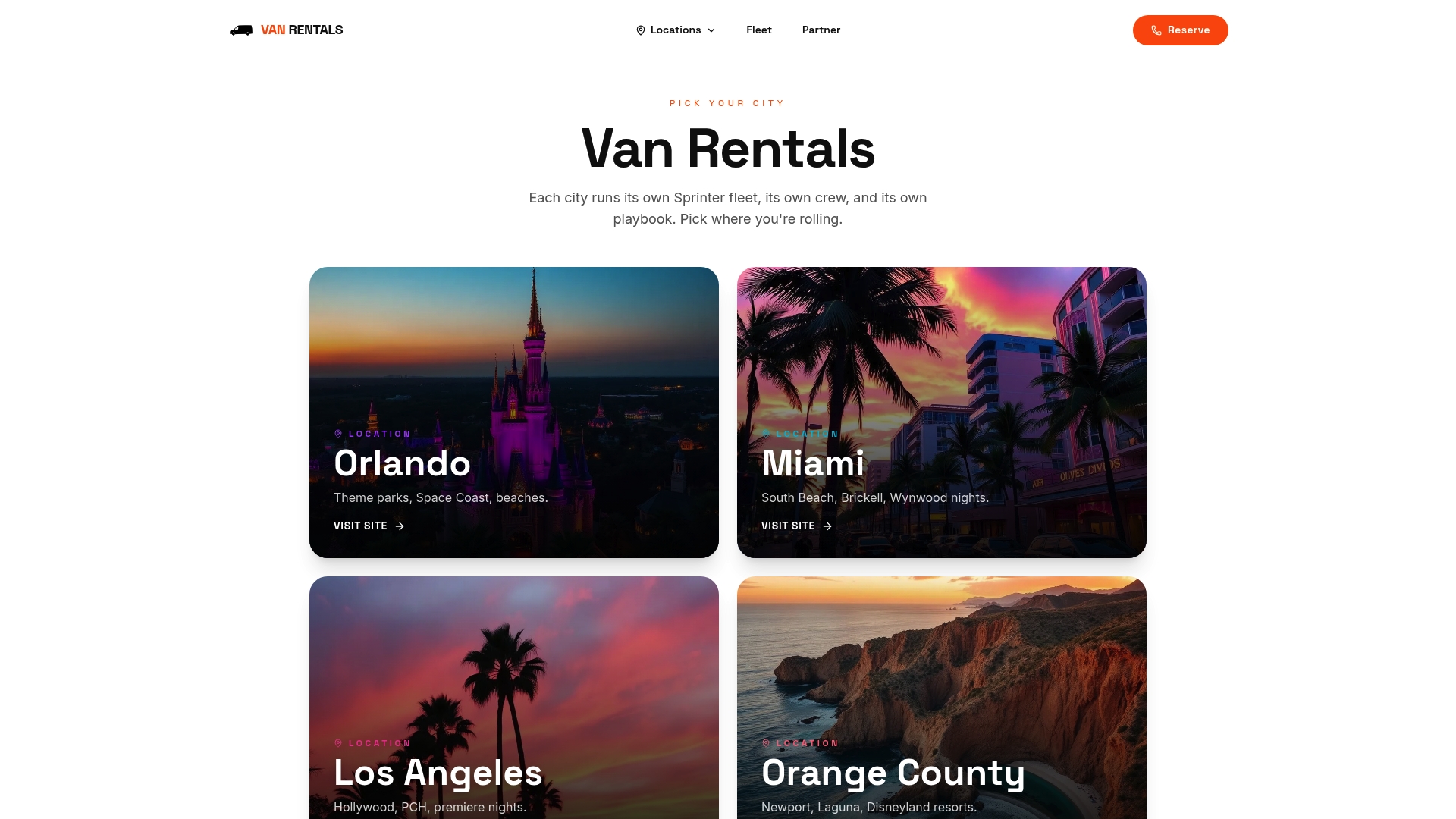
That local knowledge is the practical difference between a smooth city day and a stressful one. Check availability for your city and confirm your van configuration directly with the team.
Check availability for your city at Myvanrentals and book the right size for your group.
FAQ
What are the most important passenger van features for families?
The top priorities are a rear or 360-degree camera, parking sensors, electronic stability control, LATCH anchors for car seats, sliding side doors, multi-zone climate control, and USB ports at every row.
When should a family choose a passenger van over a minivan?
Choose a full-size passenger van when your group is 9 or more people and needs to travel together. For groups of 7 or fewer, a minivan typically offers better city maneuverability and easier entry.
How many car seat LATCH anchors does a passenger van have?
LATCH anchors are typically available in the first two or three rows of a full-size passenger van, not throughout all rows. Confirm anchor locations with the rental company before your pickup date.
Does Myvanrentals offer family-configured vans in major U.S. cities?
Yes. Myvanrentals operates 8, 12, and 15-passenger fleets in cities including Orlando, Miami, and Los Angeles, with local teams who can advise on seat layout and parking before you arrive.
What fuel type do rental passenger vans use in U.S. cities?
Most U.S. rental passenger vans run on gasoline. Diesel options exist on some Mercedes-Benz Sprinter configurations but are less common in rental fleets. The Toyota Sienna hybrid is the most fuel-efficient option for groups of 7 or fewer.