Multi-Van Event Rental: A Complete Planning Guide
Multi-Van Event Rental: A Complete Planning Guide
Multi-van event rental is the coordinated rental of multiple passenger vans as a unified fleet to transport groups for events, conferences, festivals, or large gatherings. Rather than booking vehicles separately, you manage them as a single operation with shared scheduling, driver assignments, and routing. Fleet sizes typically scale from 2 to 20+ vehicles depending on passenger volume and equipment needs. Myvanrentals supports this type of group event transportation across major cities including Orlando, Miami, and Los Angeles, with city-specific teams who know local routes and venues.
What is multi-van event rental and how does it work?
Multi-van event rental is best understood as a logistics project, not a collection of individual bookings. Centralized coordination covers vehicle assignments, driver schedules, pickup times, and contingency plans under one operational plan. That single-point approach prevents the miscommunication and missed pickups that happen when each vehicle is booked and managed independently.
The foundation of any coordinated fleet is a master transportation document. This document lists every vehicle, every driver, every pickup location, and every time window. Professional operators also build communication trees so drivers, dispatch, and event staff share the same real-time information.
A key decision in multi-vehicle event rental is whether to use dedicated or shared-load vehicles. Dedicated vehicles are assigned exclusively to your event with no other stops or clients. Shared-load vehicles may carry other clients’ freight and can arrive late or leave early. For live events where timing is fixed, dedicated vehicles are the only reliable choice.
- Master schedule: Lists all vehicles, drivers, routes, and pickup windows in one document.
- Communication tree: Defines who contacts whom when a change occurs, from dispatch to driver to event coordinator.
- Contingency vehicles: At least one backup vehicle is reserved for breakdowns or last-minute passenger additions.
- Staging locations: Designated areas where vans wait before and after pickups to avoid congestion at the venue.
Pro Tip: Add a 15-minute buffer between your last scheduled pickup and the event start time. That single buffer absorbs most real-world delays without requiring a full schedule rebuild.
How to choose the right type and number of vans
The right fleet composition depends on three factors: total passenger count, equipment volume, and the mix of VIP and general transport needs. A mixed fleet approach using sedans, SUVs, Sprinter vans, and standard 12 to 15-passenger vans handles diverse requirements better than relying on one vehicle type. Trying to move VIP guests and crew equipment in identical vans creates unnecessary friction.

Use the table below to match vehicle types to common event roles.
| Vehicle type | Passenger capacity | Typical event use |
|---|---|---|
| Standard 12-passenger van | 12 | General staff and guest shuttles |
| 15-passenger van | 15 | Large group transfers, crew transport |
| Sprinter van | 8–14 | VIP guests, airport transfers |
| SUV | 5–7 | Executive transport, small VIP groups |
| Cargo van | Varies | Equipment, décor, and supply runs |
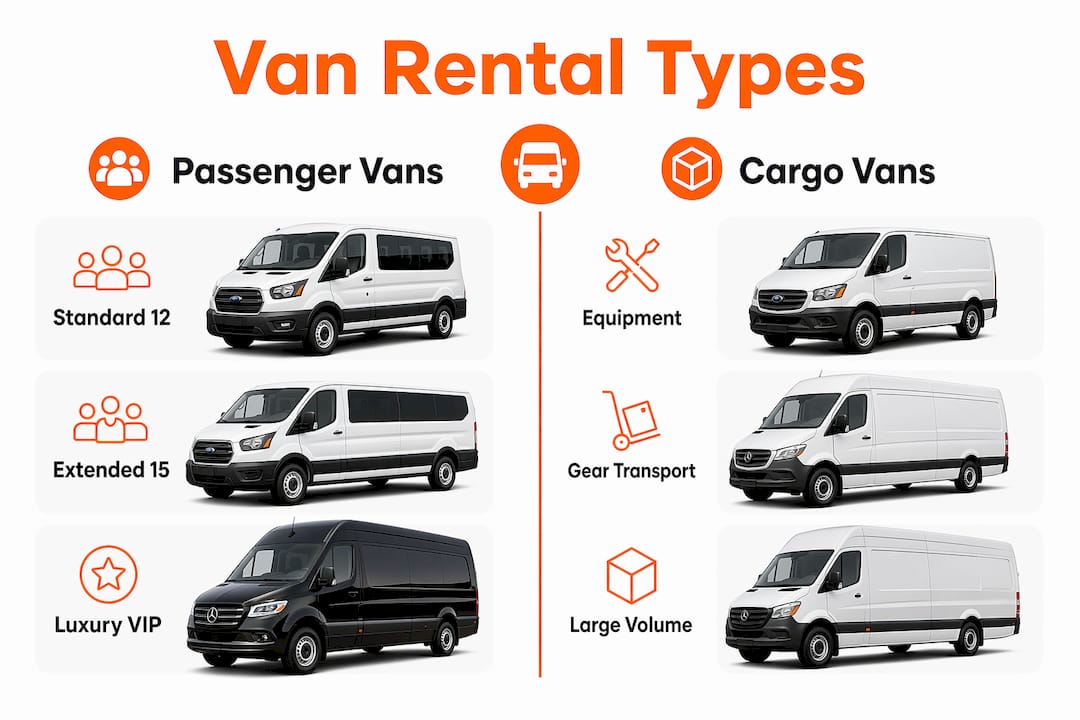
For events with both guests and gear, plan separate vehicles for each category. Mixing passengers and heavy equipment in the same van creates loading delays and reduces comfort. Check the types of corporate van rentals available in your city before finalizing your fleet plan.
To calculate the number of vans you need, divide your total passenger count by the usable capacity of your chosen vehicle type. Usable capacity is typically 80% of the stated maximum to allow for luggage, comfort, and last-minute additions. Round up, then add one backup vehicle for every five vans in the fleet.
Pro Tip: Separate your VIP transport list from your general guest list before you book. VIP guests often have different pickup times, locations, and comfort expectations. Treating them as one group leads to scheduling conflicts and complaints.
What logistics challenges arise in multi-van event rentals?
The most common failure points in multi-vehicle event rental are timing delays, site congestion, and driver miscommunication. Each one is preventable with the right planning.
Dock access coordination is one of the most overlooked logistics steps. Without a marshalled vehicle yard, drivers self-marshal at the venue, blocking access lanes and slowing load-in. A staffed marshalling area directs each van to its designated bay in sequence, cutting load-in time significantly.
Staggered arrival windows of 30 to 60 minutes between vehicles prevent the pileup that occurs when every van arrives at once. Scheduling arrivals in reverse dependency order means the last item needed is loaded first, so teardown runs in the correct sequence without backtracking.
Technology closes the gap between planning and execution. GPS tracking gives dispatch real-time vehicle locations. Digital manifests let coordinators update passenger lists without phone calls. Real-time status updates allow quick responses to flight delays, traffic incidents, or venue access changes.
Top challenges and how to manage them:
- Timing delays: Schedule buffer times and staggered arrivals to absorb disruptions without cascading failures.
- Site congestion: Book dock access in advance and use a marshalled yard with a dedicated coordinator.
- Driver miscommunication: Issue written instructions to every driver before the event, not just verbal briefings.
- Passenger no-shows: Build 10 to 15% extra seat capacity into your plan to handle last-minute headcount changes.
- Vehicle breakdown: Reserve at least one backup van and confirm its availability 24 hours before the event.
- Confirm venue access rules and dock booking windows at least two weeks before the event.
- Distribute written driver instructions including addresses, contact numbers, and contingency protocols.
- Assign one person as the sole point of contact between drivers and event staff on the day.
- Test GPS tracking and digital manifest tools the day before, not the morning of the event.
What practical steps help you coordinate a successful multi-van rental?
Successful coordination starts with a single master transportation plan. This document covers every vehicle, every driver, every pickup location, every time window, and every contingency. Master scheduling documents form the backbone of multi-van operations because they give every team member the same information at the same time.
- Build the master plan first. List all vehicles, drivers, routes, and schedules in one shared document before you contact any vendor.
- Assign an onsite coordinator. For fleets of three or more vans, one person should manage only transportation. That person handles driver check-ins, monitors arrivals, and resolves issues without pulling the event manager away from other duties.
- Set communication protocols. Define the chain of contact: driver calls dispatch, dispatch calls coordinator, coordinator calls event manager. Skipping steps creates confusion.
- Build in flexible routing. Identify at least one alternate route for each van in case of road closures or traffic. Share these alternates with drivers in writing.
- Work with specialist partners for large events. For fleets above ten vehicles or events with complex logistics, specialist logistics partners provide onsite managers, real-time guest manifesting, and contingency support that general rental providers cannot match.
Review the master plan with all drivers at a pre-event briefing, even a short 15-minute call the evening before. Drivers who understand the full picture make better decisions when something unexpected happens.
How does coordinated multi-van rental differ from separate vehicle hires?
Booking multiple vans through one coordinated rental is fundamentally different from renting individual vehicles from separate sources. Centralized operations consolidate billing, scheduling, and communication under one point of contact. That structure reduces the administrative load and eliminates the version-control problems that arise when five different rental agreements are managed by five different people.
Coordinated fleet rental also improves reliability. Synchronized scheduling means all vehicles follow the same master plan. A change to one pickup time updates the entire schedule, not just one booking. Separate rentals require you to contact each vendor individually, which creates lag time and increases the chance of errors.
Coordinated fleet rental vs. separate vehicle hires:
- Billing: One invoice vs. multiple invoices from multiple vendors.
- Communication: One point of contact vs. multiple vendor contacts.
- Schedule changes: One update propagates across all vehicles vs. manual updates to each booking.
- Contingency planning: Backup vehicles are pre-arranged vs. sourced ad hoc on the day.
- Reliability: Synchronized timing vs. independent schedules with no shared accountability.
The advantages of renting vans as a group rather than booking separately become most visible when something goes wrong. A single coordinator can redirect resources in minutes. Separate vendors have no obligation to coordinate with each other.
Key Takeaways
Multi-van event rental succeeds when you treat it as a centralized logistics project with a master plan, dedicated vehicles, and a single onsite coordinator.
| Point | Details |
|---|---|
| Centralize coordination | Use one master document covering all vehicles, drivers, routes, and contingency plans. |
| Choose dedicated vehicles | Dedicated vans assigned only to your event prevent delays caused by shared-load schedules. |
| Use a mixed fleet | Combine Sprinters, passenger vans, and cargo vans to match VIP, general, and equipment needs. |
| Build in buffer time | Schedule arrivals 30–60 minutes apart and add a 15-minute buffer before the event start. |
| Assign an onsite coordinator | One person managing only transportation prevents miscommunication and speeds up issue resolution. |
What I’ve learned from coordinating multi-van event fleets
The biggest mistake I see planners make is treating multi-van rental like a hotel room block. You pick a number, send a request, and assume the vendor handles the rest. That approach works for accommodations. It fails for transportation.
The events where I’ve seen the smoothest operations share one trait: someone built a master plan before they contacted a single vendor. Not after. Before. The plan shapes the vendor conversation, not the other way around. When you arrive at a rental provider with a clear schedule, vehicle types, and contingency requirements already defined, you get better pricing, better vehicle assignments, and fewer surprises.
I’ve also learned that the backup vehicle is not optional. Every planner I know who skipped the backup vehicle eventually regretted it. A single breakdown during load-in can delay an entire event by hours. One extra van on standby costs a fraction of what a delayed event costs in labor, vendor penalties, and reputation.
The other lesson is about communication trees. Verbal briefings feel sufficient in the planning room. On the day of the event, with noise, crowds, and last-minute changes, verbal instructions evaporate. Written instructions, shared digitally with every driver the night before, are the only reliable format. Keep them short, specific, and free of ambiguity.
— Gabriel
Myvanrentals for your next group event
Planning group event transportation across multiple cities gets easier when you work with a provider that knows local routes, venues, and access requirements.
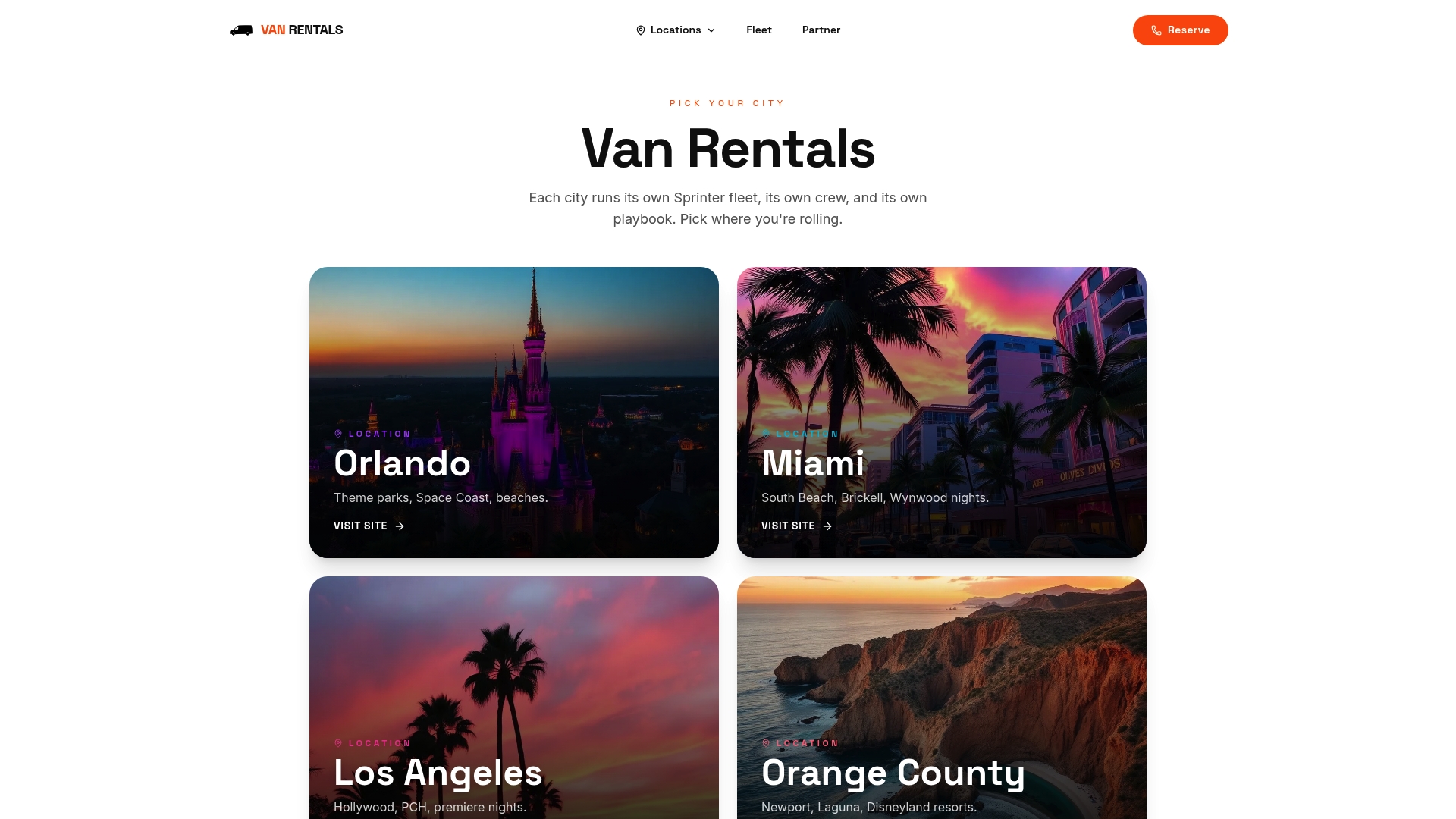
Myvanrentals offers passenger vans for rent across Orlando, Miami, Los Angeles, and other major cities, with city-specific teams who understand local logistics. Whether you need two vans for a corporate shuttle or a larger fleet for a festival, you can browse van options by city and book directly. Flexible fleet options, centralized booking, and local support make Myvanrentals a practical starting point for event planners who need reliable group transportation without the complexity of managing multiple vendors. Check availability for your event dates and get your fleet plan started today.
FAQ
What is multi-van event rental?
Multi-van event rental is the coordinated rental of multiple passenger vans as a single fleet to transport groups for events, conferences, or large gatherings. It differs from individual vehicle rentals by centralizing scheduling, billing, and communication under one plan.
How many vans do I need for my event?
Divide your total passenger count by 80% of each van’s stated capacity, then round up and add one backup vehicle for every five vans. A fleet of 12-passenger vans serving 60 guests requires at least six vans plus one backup.
What is a multi-day van rental contract for events?
A multi-day van rental contract covers vehicle use across several consecutive days, typically including daily mileage limits, fuel terms, and driver requirements. Review the event contract terms carefully to confirm cancellation policies and contingency vehicle provisions.
Why use dedicated vehicles instead of shared-load vans?
Dedicated vehicles are assigned exclusively to your event with no other stops, which prevents delays caused by other clients’ freight or schedule changes. Shared-load vehicles are unsuitable for live events where timing is fixed.
How do I coordinate multiple vans on event day?
Assign one onsite coordinator to manage all transportation, distribute written driver instructions the night before, and use GPS tracking to monitor vehicle locations in real time. Stagger arrivals 30 to 60 minutes apart to prevent site congestion.