City Transport Options for Business Groups: 2026 Guide

City Transport Options for Business Groups: 2026 Guide
Selecting the right city transport options for business groups is the single most important decision a corporate travel planner makes before any conference, team offsite, or client event. The difference between a smooth group arrival and a logistical failure often comes down to vehicle choice, program enrollment, and how early you lock in a quote. This guide covers every major option, from executive vans to managed transportation systems, so you can match the right solution to your group size, budget, and sustainability goals.
1. What are the primary city transport options for business groups?
Business group transport, also called corporate group mobility, covers any coordinated vehicle arrangement for two or more employees traveling together on a shared itinerary. The three core vehicle categories cover group sizes from 8 to 55+ passengers, each with distinct cost and logistics profiles.
- Executive vans (8–16 passengers): Best for small teams, airport transfers, and client pickups. They offer door-to-door flexibility and fit standard urban parking.
- Mini-coaches (20–30 passengers): The standard choice for mid-size conference groups. They balance comfort with maneuverability on city streets.
- Full-size motor coaches (50+ passengers): Built for large corporate events, trade shows, and multi-stop shuttle circuits. Routing and staging require more lead time.
Matching vehicle type to your itinerary matters as much as matching it to headcount. A 15-person team attending a one-day conference in Miami needs a different solution than a 50-person group shuttling between hotel, venue, and dinner across three days in Los Angeles.
2. How do Transportation Management Associations benefit business groups?
Transportation Management Associations, commonly called TMAs, are nonprofit organizations that coordinate between employers and local governments to reduce solo-car commuting and cut group travel costs. TMA efforts include outreach programs, safety audits, and travel training across urban and suburban regions.
The practical benefits for business groups are direct:
- Group transit passes give employees unlimited access to public transit, bike-share, and vanpool networks under a single employer account.
- Vanpool coordination reduces per-person fuel and parking costs compared to individual car use.
- Talent retention improves when transportation perks are part of the compensation package.
- Congestion reduction lowers the risk of late arrivals at corporate events.
Group-pass programs active in regions like Treasure Valley and New Jersey show that centralized mobility benefits cost less per employee than subsidizing individual parking.
Pro Tip: Contact your regional TMA before booking any large group transport. They often have pre-negotiated rates with local shuttle and vanpool operators that are not publicly listed.
3. How managed transportation services cut costs for large corporate groups
Managed transportation is the practice of outsourcing your group’s full travel logistics to a third-party provider that uses a Transportation Management System, or TMS, to plan routes, fill vehicles, and report on emissions. Managed services reduce overhead and transit time, increase load fill rates by 15%, and cut Scope 3 carbon emissions through optimized routing and biofuel conversion.
The operational benefits break down into three areas:
- Load optimization: A TMS fills each vehicle closer to capacity, which reduces the number of trips and lowers cost per passenger.
- Carbon reporting: Scope 3 emissions data is generated automatically, which satisfies corporate sustainability reporting requirements without manual tracking.
- Expense processing: Digital ticketing reduces communication overhead and speeds up expense audit cycles, a measurable gain for finance teams managing large events.
Managed transportation works best for organizations running recurring group travel, such as weekly shuttle circuits between offices or monthly all-hands meetings. For one-off events, a chartered vehicle with a fixed quote is usually simpler and cheaper.
Pro Tip: Ask any managed transport provider for a sample carbon report before signing a contract. If they cannot produce one, their TMS integration is likely incomplete.
4. How to plan and quote city group transport without hidden fees
Accurate group transport quoting requires complete data upfront. Providing passenger counts, stops, and time windows at the start of the quoting process is the only way to get a price that holds through the day of travel.
Follow this sequence when requesting a quote:
- Confirm your headcount. Give the exact number, not a range. Providers size vehicles and calculate costs on firm numbers.
- List every stop. Include hotel pickup, venue drop-off, lunch location, and any post-event transfers. Each additional stop can carry a fee if added after booking.
- Set your time windows. Specify pickup times and expected durations. Driver wait time beyond the agreed window is a common source of extra charges.
- Ask for an all-inclusive quote. Request that parking, tolls, fuel surcharges, and gratuity be itemized or bundled. Hidden fees for parking and tolls are the most frequent complaint from corporate planners.
- Confirm cancellation and change policies. Group travel plans shift. Know the cost of a headcount change or a schedule adjustment before you sign.
Pro Tip: Request quotes from at least two providers using identical itinerary details. Price differences above 20% usually signal that one provider has excluded fees the other included.
5. Comparing flexible city group transport options
Different transport formats serve different business priorities. The table below compares the main options across the criteria that matter most to corporate planners.
| Transport type | Capacity | Cost structure | Sustainability | Best use case |
|---|---|---|---|---|
| Executive van | 8–16 | Fixed charter rate | Low to moderate | Airport transfers, small team moves |
| Mini-coach | 20–30 | Fixed charter rate | Moderate | Conference shuttles, city tours |
| Full-size motor coach | 50+ | Per-trip or daily rate | Moderate | Large events, multi-stop circuits |
| TMA group pass | Unlimited employees | Per-employee monthly fee | High | Daily commuting, recurring travel |
| Managed transport (TMS) | Scalable | Contract or per-trip | High | Recurring corporate shuttle programs |
Scalability and sustainability favor managed transport and TMA programs for organizations with ongoing group travel needs. For event-based or one-time group moves, chartered vehicles offer the clearest pricing and the most scheduling control.
6. Why sustainable transport is now a business requirement
Sustainable urban transport is no longer optional for competitive businesses. Transport advocacy groups and business organizations now push for long-term public-private funding to maintain urban infrastructure, including rail extensions and road user charging, because connectivity directly affects where companies can recruit and retain talent.
The business case is straightforward. A company that offers employees a group transit pass or a managed shuttle spends less on parking subsidies and reports lower Scope 3 emissions. Both outcomes matter to investors, regulators, and job candidates. Sustained investment in urban transport infrastructure keeps cities accessible, which keeps business costs predictable.
For corporate travel planners, this means sustainability is not a separate workstream. It is a factor in every vehicle and program decision you make.
7. How to choose the right city travel logistics for your team
The right group transport solution depends on three variables: group size, travel frequency, and budget structure. Small groups traveling once or twice a year get the most value from a chartered van or mini-coach with a fixed quote. Large organizations with weekly group travel needs get better returns from a TMA program or a managed transport contract.
City travel logistics for teams also depend on the city itself. Orlando, Miami, and Los Angeles each have different traffic patterns, parking costs, and transit infrastructure. A provider with local knowledge of those cities will route more efficiently and avoid delays that a national booking platform cannot anticipate. Myvanrentals operates city-specific fleets in exactly those markets, with local teams who know the routes. You can review corporate van rental types to match vehicle format to your group’s specific itinerary.
Pro Tip: For multi-day corporate events, book your ground transport at the same time you book your venue. Transport availability in cities like Miami and Los Angeles tightens significantly in the weeks before major conferences.
Key takeaways
The most effective city transport solution for business groups combines the right vehicle size, transparent pricing, and a sustainability component that satisfies both budget and reporting requirements.
| Point | Details |
|---|---|
| Match vehicle to group size | Use executive vans for 8–16, mini-coaches for 20–30, and motor coaches for 50+ passengers. |
| Get all-inclusive quotes | Request itemized fees for parking, tolls, and wait time before signing any transport agreement. |
| Use TMAs for recurring travel | TMA group-pass programs lower per-employee costs and support sustainability goals. |
| Apply managed transport for scale | TMS-based services increase load fill rates by 15% and automate carbon reporting. |
| Plan early in high-demand cities | Transport availability in cities like Miami and Los Angeles tightens weeks before major events. |
My take on business group transport in 2026
After years of watching corporate travel plans fall apart at the ground transport stage, I am convinced that most problems trace back to one mistake: treating transport as the last item on the planning checklist.
The planners who get this right do one thing differently. They treat the transport quote like a contract negotiation, not a commodity purchase. They provide full itinerary details on day one, ask for itemized pricing, and confirm change policies before signing. That discipline alone eliminates the majority of surprise costs.
The other shift I have seen is that sustainability has moved from a nice-to-have to a hard requirement. Finance teams now ask for Scope 3 data. HR teams use transport perks to close job offers. The organizations that have already enrolled in TMA programs or signed managed transport contracts are ahead. The ones still booking ad hoc are paying more per trip and producing no emissions data.
My honest advice: if your group travels more than four times a year in the same city, a managed transport contract or a TMA program will pay for itself within two quarters. If you travel less frequently, a local provider with fixed-rate charter pricing and genuine city knowledge is the better call. Do not let a national booking platform substitute for local expertise.
— Gabriel
Van rentals for your business group in any city
Planning group transport for a conference or corporate event does not have to be complicated. Myvanrentals provides city-specific van fleets in Orlando, Miami, and Los Angeles, managed by local teams who know the fastest routes and the best staging areas for group pickups.
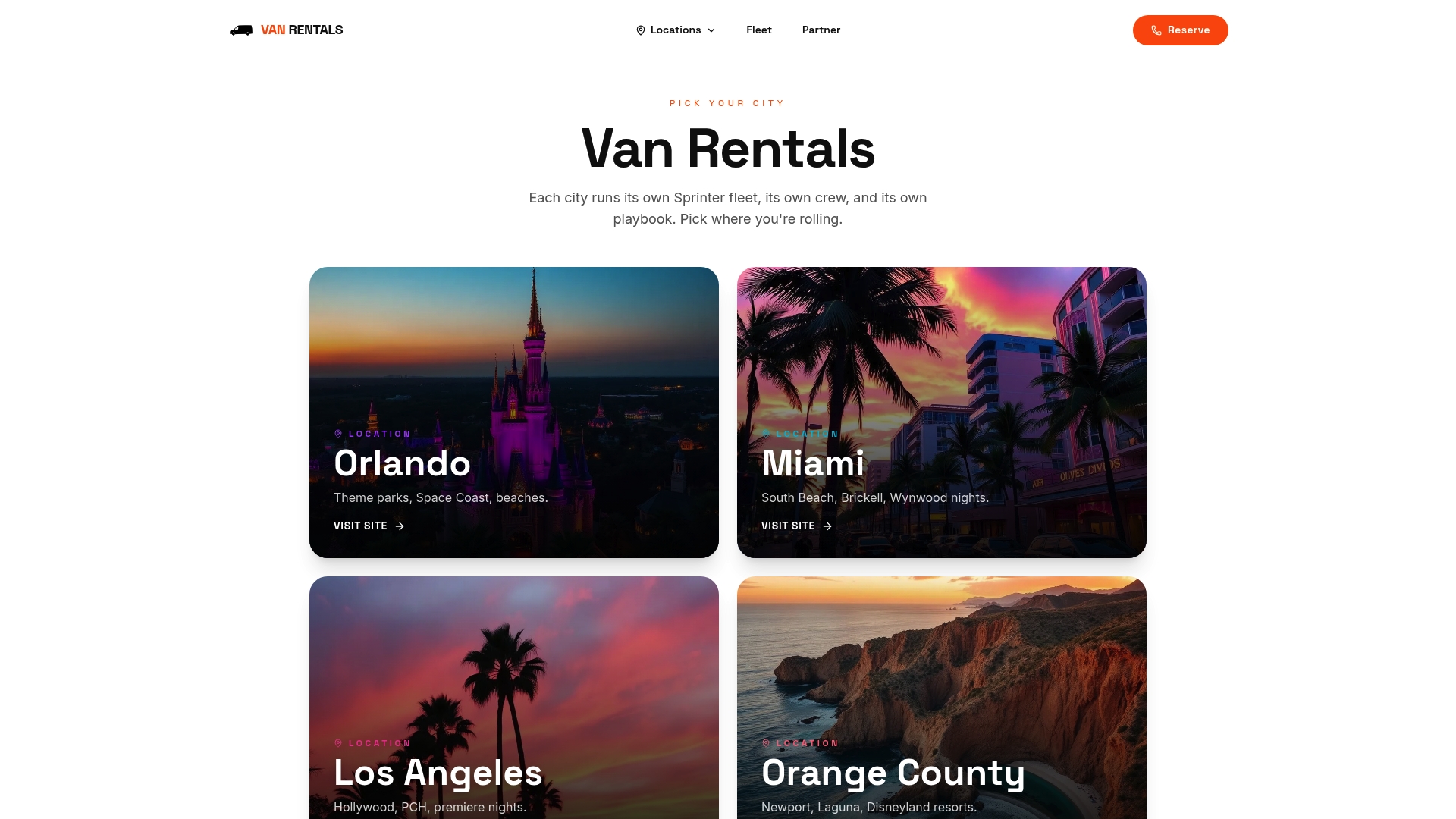
Fixed pricing, local knowledge, and vehicles sized for groups of 8 to 16 make Myvanrentals a practical first call for business planners who need reliable ground transport without the overhead of a managed contract. You can also review multi-van event planning for larger group logistics. When you are ready to book, pick your city and get a quote directly from the local team.
FAQ
What vehicle fits a business group of 12 people?
An executive van seating 8–16 passengers is the standard choice for a group of 12. It offers door-to-door flexibility and fits standard urban parking without requiring a commercial staging area.
How do TMAs reduce group transport costs?
TMAs negotiate group-pass programs that give employees unlimited access to transit, bike-share, and vanpools under a single employer account, which costs less per employee than subsidizing individual parking.
What hidden fees should I watch for in group transport quotes?
The most common hidden fees are parking, tolls, fuel surcharges, and driver wait time. Always request an all-inclusive, itemized quote before confirming any group transport booking.
When should a business use managed transportation instead of chartered vehicles?
Managed transportation makes financial sense for organizations with recurring group travel, such as weekly shuttle circuits. For one-time events, a chartered vehicle with a fixed quote is simpler and usually cheaper.
How does digital ticketing help with corporate group transport?
Digital ticketing automates expense audits and generates travel data that aligns with corporate climate reporting requirements, reducing manual processing time for finance teams.