Van Rental for Bands: Your Band-and-Go Touring Guide
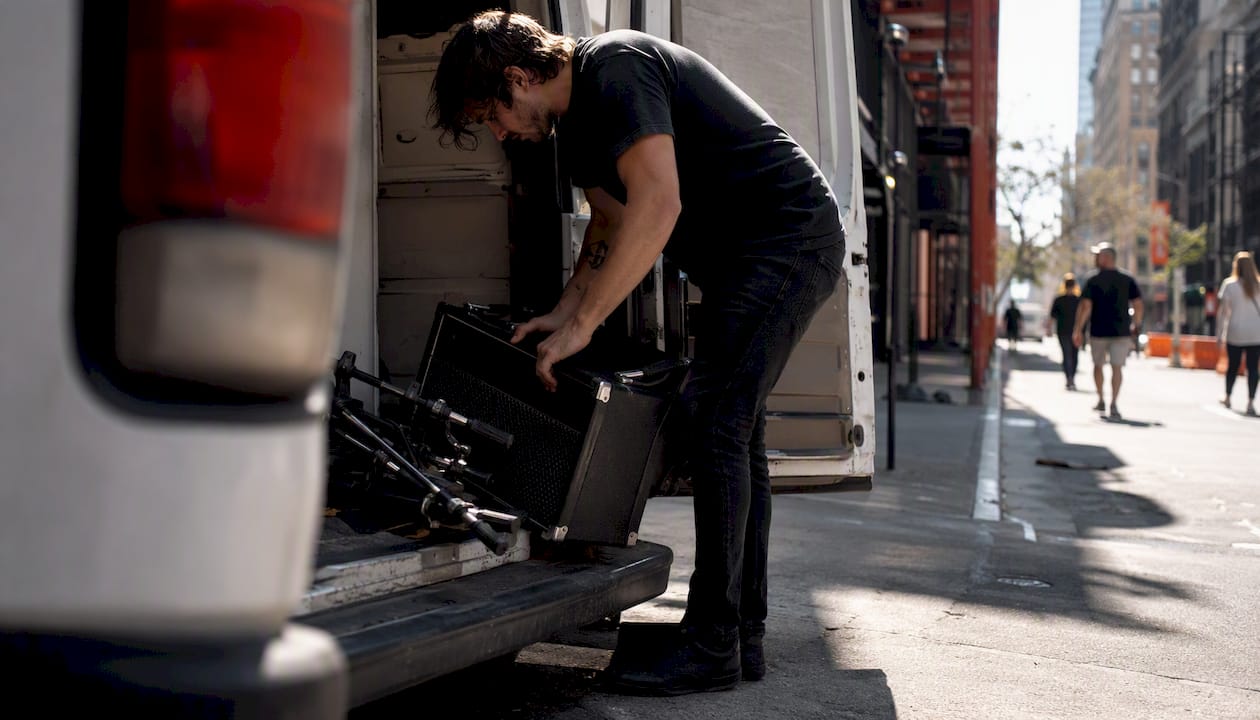
Van Rental for Bands: Your Band-and-Go Touring Guide
For most touring bands, a 12 or 15-passenger van from Myvanrentals give the best balance of passenger seating, gear space, and city-specific pickup flexibility. Start by selecting your city at Myvanrentals, then confirm your passenger count and cargo needs before you reserve.
Two things to verify before you book:
- Fleet specs match your load. A four-to-six person band with a drum kit, amps, and merch typically needs a 15-passenger van with rear cargo access or a Sprinter with fold-flat seats.
- Local team support is available. Myvanrentals operates city-specific teams, so you get a local contact for airport pickup, venue delivery, and on-the-ground questions.
Pro Tip: Check the fleet configurator before calling. Knowing your preferred seat layout and cargo setup cuts booking time significantly.
A complete touring checklist covers logistics, equipment spares, documents, and pre-drive checks. Have it ready before you confirm any rental.
Key Takeaways
For most touring bands, a 15-passenger van or Sprinter from Myvanrentals covers passenger capacity, gear volume, and city-specific pickup in one booking.
| Point | Details |
|---|---|
| Match van class to band size | A 4–6 person band with full gear needs a 15-passenger van or Sprinter with rear cargo access. |
| Use the fleet configurator first | Compare seat layouts and cargo options at myvanrentals.com/fleet before calling to book. |
| Book early for peak season | Reserve well in advance for festival season (spring through early fall) in high-demand cities. |
| Confirm driver and policy details | Verify minimum driver age, mileage cap, deposit amount, and cancellation window before signing. |
| Myvanrentals for city-specific tours | City teams, airport pickup, and venue delivery make Myvanrentals a practical choice for multi-city touring bands. |
Table of Contents
- Which Myvanrentals option fits your band?
- What each van type actually offers a touring band
- How to pick and book the right van without surprises
- How band-focused rental providers compare
- Cancellation and modification policies for band tours
- What touring professionals actually do on the road
- Sources
- FAQ
Which Myvanrentals option fits your band?
The table below covers Myvanrentals’ band-ready vehicles. Each entry is matched to a specific band size and use case.
| Option | Best for | Passenger capacity | Cargo / gear space | On-board amenities | Booking & pickup |
|---|---|---|---|---|---|
| Van Rentals — Pick Your City | Bands on multi-city tours | Up to 15 | Varies by city fleet | City-specific options | Airport, hotel, venue delivery |
| Configure Your Van — Fleet | Gear-heavy bands comparing specs | Up to 15 | Configurable | Seat layout, cargo options | Online configurator |
| Express 15-Passenger — LA | Larger bands, moderate gear | 15 | Standard rear cargo | Basic seating | Airport & venue pickup |
| Transit 15-Passenger — LA | Bands wanting comfort on long drives | 15 | Flexible layout | Entertainment system, flexible seating | Airport & venue pickup |
| Church / School Programs | Repeat bookings, community runs | Up to 15 | Program-dependent | Standard | Long-term and repeat booking options |
Key verdicts:
- Pick Your City suits bands routing across multiple markets. Local teams handle city-specific logistics.
- Fleet Configurator is the right starting point if you need to match exact cargo dimensions to your gear list before committing.
- Express 15-Passenger handles larger groups where gear volume is moderate.
- Transit 15-Passenger adds entertainment systems and more flexible seating, which matters on drives over four hours.
- Church / School Programs show the longer-term and repeat-booking workflows that work well for bands with a recurring regional schedule.
Pro Tip: For a festival run across three or more cities, use the multi-van event rental guide to plan staggered pickups and avoid availability gaps.
What each van type actually offers a touring band
Understanding the vehicle classes saves you from booking the wrong size. Here is how each type performs for bands specifically.
Sprinter-type vans
Sprinters offer the most interior height and the most flexible cargo configuration. You can remove rear seats to create a dedicated gear bay, which works well for bands carrying a full drum kit, multiple guitar rigs, and merchandise. The Sprinter’s interior also supports add-ons like roof racks and electrical outlets. The trade-off is cost: Sprinters run higher daily rates than standard passenger vans.
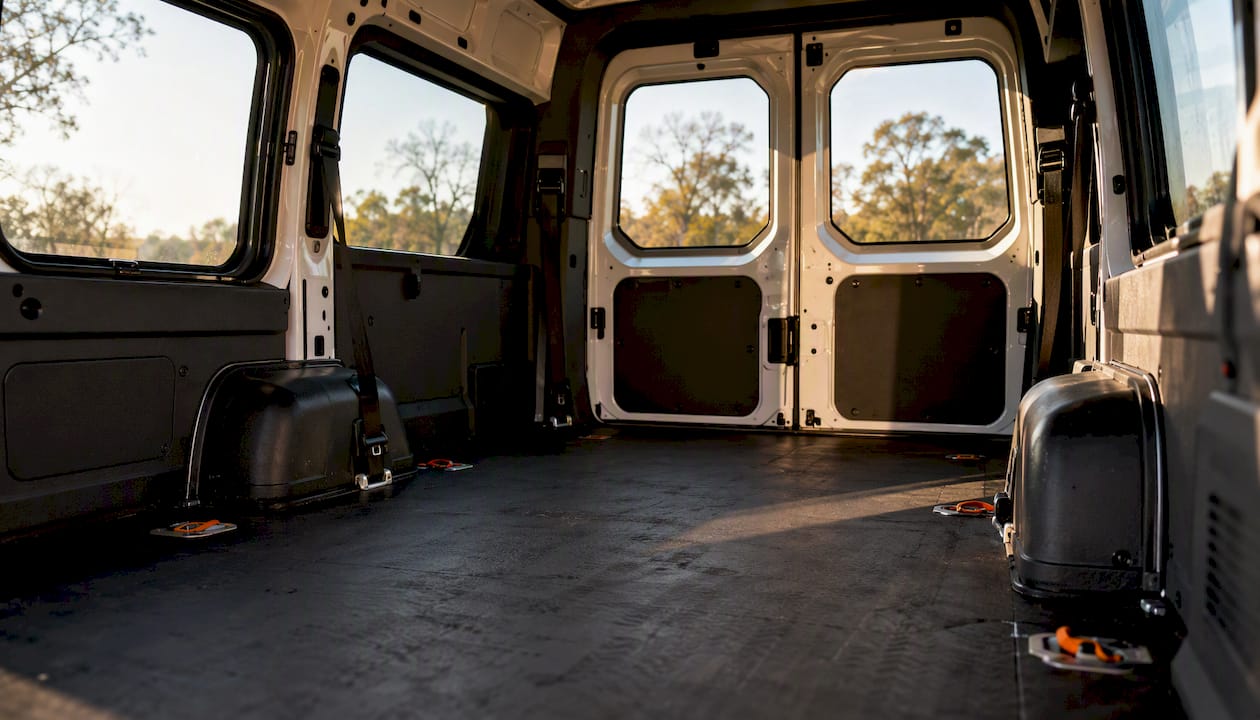
Ford Transit 15-passenger
The Transit sits between a Sprinter and a standard passenger van. The Transit 15-Passenger LA includes entertainment systems and flexible seating layouts. For a six-to-eight person band with moderate gear, it handles both passenger comfort and cargo without the premium Sprinter price.
Chevy Express / 12 and 15-passenger vans
These are the workhorses for most touring bands. The Express 15-Passenger LA seats up to 15 and provides straightforward rear cargo access. A four-to-five person band with standard gear (two guitar combos, a small drum kit, and a merch box) fits comfortably. Cargo volume is more limited than a Sprinter, so plan your load before you book.
On-board features bands care about
- Electrical outlets for charging phones, laptops, and pedal boards
- Entertainment systems for long drives between cities
- Cargo tie-downs to secure amps and cases
- Flexible or removable rear seating for gear-heavy loads
- Tow hitch availability for trailer options on larger tours
Practical cargo rule for a 4–6 person band
A standard drum kit occupies roughly 20–25 cubic feet. Add two guitar combos (8–10 cubic feet each), a bass rig, and a merch box, and you are looking at 55–70 cubic feet of cargo. A 15-passenger van with the rear row removed typically provides that range. A Sprinter with full rear conversion gives more headroom for oversized cases.
Pro Tip: Pack gear in hard cases and use cargo tie-downs on every load. Unsecured equipment shifts during highway driving and causes damage that standard rental insurance may not cover. Experienced touring musicians treat protected storage as non-optional.
Bandago, founded in 2003 by Sharky Laguana, built its early reputation by customizing van interiors with outlets, entertainment systems, and cargo solutions specifically for touring crews. That history explains why band-specific features became the standard expectation in this category.
How to pick and book the right van without surprises
Follow these steps in order. Each one prevents a common booking mistake.
- Confirm your passenger count and cargo volume. Count every person traveling plus every piece of gear. Use the cargo rule above to estimate cubic feet needed.
- Check the fleet configurator. Use Myvanrentals to compare seat layouts and cargo options before calling.
- Clarify the mileage policy. Ask whether the rate includes unlimited miles or a daily cap. Long tours can generate significant overage fees on capped plans.
- Confirm pickup and drop-off logistics. Verify airport pickup availability, venue delivery options, and the exact pickup address. Check the location coordinates for any pickup point before your travel day.
- Ask about one-way availability. Not all markets support one-way rentals. Confirm this before routing a tour that ends in a different city.
- Understand the deposit and damage coverage. Ask what the deposit amount is, what the deductible covers, and whether supplemental insurance is available.
- Confirm driver rules. Most rentals require a licensed driver aged 21 or older. Some markets set the minimum at 25. Confirm this for every driver on the tour.
- Get the local contact phone number. For breakdowns or last-minute changes, a direct local number matters more than a national call center.
Questions to ask the rental agent:
- Does the rate include airport or venue delivery?
- What is the fuel policy (full-to-full or pre-purchase)?
- Is there a cleaning fee for post-show loads?
- What is the breakdown procedure and response time?
Booking timeline:
- Weekend gig: reserve at least two weeks out.
- Festival season (May through September): reserve six to eight weeks out.
- High-demand cities (Los Angeles, Miami, New York): reserve eight or more weeks out.
Tour routing and anchor gig planning directly affect which cities you need vehicles in and when. Lock your dates before you book any van.
Pro Tip: Review group van rental basics for a plain-language breakdown of typical fees, pickup processes, and what to expect at the counter.
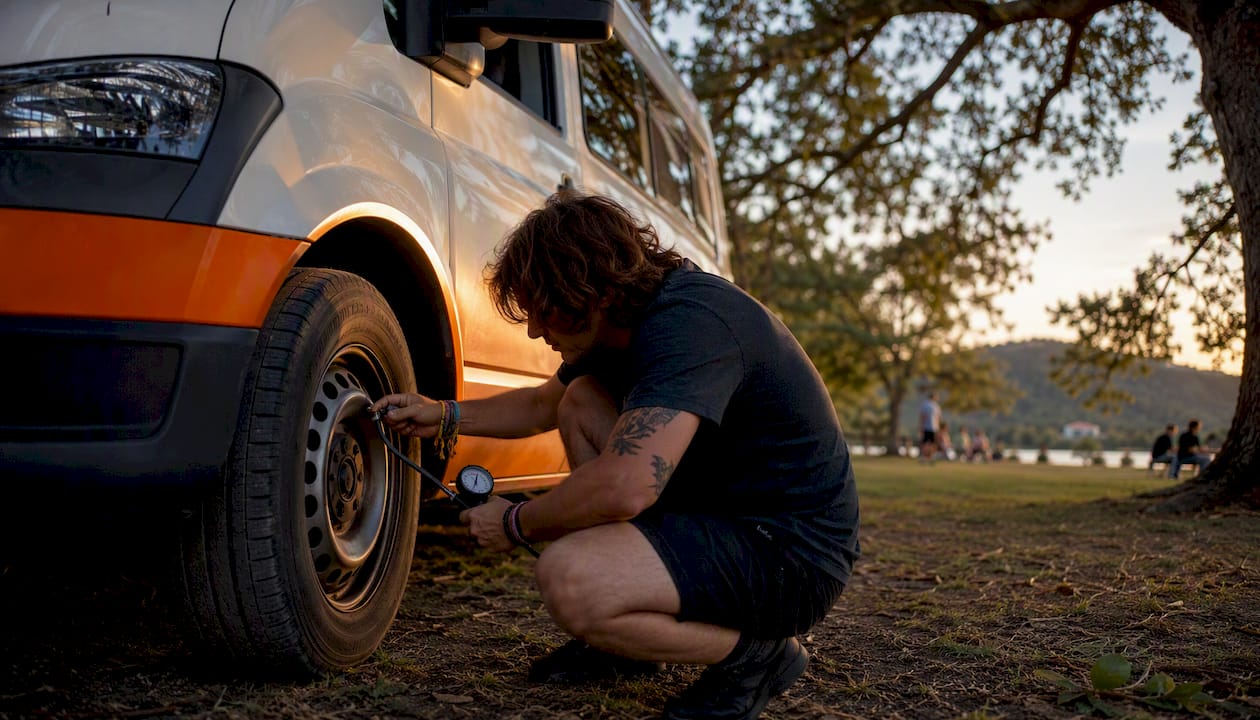
Pre-trip vehicle checks reduce risk on long drives. Before leaving the lot, verify tire pressure, fluid levels, and that all lights are working. Long-distance vehicle prep applies directly to touring bands sharing driving duties across multiple days.
How band-focused rental providers compare
Two names come up consistently for band-specific van rentals: Myvanrentals and Bandago.
Myvanrentals operates city-specific fleets across major U.S. markets including Los Angeles, Miami, and Orlando. Its model uses local teams for pickup, delivery, and support. The fleet covers 12 and 15-passenger vans, Sprinters, and Transit options, with airport and venue delivery available. The fleet configurator lets you compare specs before booking, which is useful for gear-heavy loads. Repeat-booking programs through the church and school pages show the workflow for bands with recurring regional schedules.
Bandago built its reputation on custom-upfitted vans with outlets, entertainment systems, and cargo solutions designed for touring crews. It operates from specific U.S. locations and has a history of advocacy around rental industry regulations. For bands whose primary need is a van with touring-specific interior features already installed, Bandago’s upfitted fleet is worth comparing. Its location network is more limited than a national marketplace, so availability depends heavily on your routing.
The practical difference: Myvanrentals gives you broader city coverage and a configurator to match specs to your load. Bandago offers a more specialized interior upfit for crews that want touring-ready features out of the box.
Cancellation and modification policies for band tours
Tour schedules change. A venue cancels, a booking shifts, or a festival date moves. Your rental agreement needs to handle that without a large penalty.
When reviewing any rental contract, check these points:
- Cancellation window. Most providers offer a full refund if you cancel more than 48–72 hours before pickup. Confirm the exact cutoff.
- Modification fees. Changing a pickup city, date, or vehicle class after booking often carries a fee. Ask whether one free modification is included.
- Deposit refund timeline. Deposits typically return within 5–10 business days after the vehicle is returned in good condition.
- Force majeure clauses. If a venue cancels your show, that does not automatically qualify as a force majeure event for the rental. Read the contract language carefully.
- Late return policy. An extra day on the road costs money. Know the hourly overage rate before you leave.
Contact the local team directly for any modification. A local contact resolves changes faster than a national support line.
What touring professionals actually do on the road
The bands that hold up over a long tour treat logistics like a job, not an afterthought. Experienced touring musicians use standardized packing systems, spare instrument parts, and consistent sleep and hydration routines to reduce equipment damage and fatigue.
Here is what that looks like in practice:
- Day before: Pack gear in the same order every time. Assign each piece a position in the van. Label cases.
- Load-in order: Heavy cases first, fragile gear last. Secure everything with tie-downs before moving.
- Post-show inventory: Count every case before leaving the venue. One missing item is easier to recover at the venue than three states later.
- Driver rotation: Switch drivers every two to three hours on long drives. Fatigue is the leading cause of road incidents for touring crews.
- Hydration and sleep: Tour managers consistently flag dehydration and poor sleep as the two factors that most affect performance quality and decision-making on the road.
Pro Tip: Assign one person as the load manager for every show. That person owns the packing list, the tie-down check, and the post-show count. Shared responsibility often means no one does it.
Sources
- The Touring Band Checklist: Everything You Need Before You Leave | Setlistly
- How to Tour Like a Pro and Build Your Fanbase – Making A Scene!
- The Musician’s Guide to Travelling Well - The Blogging Musician
- Bandago: Rock Star Van Rental
FAQ
Is Bandago Van Rental a legitimate company?
Yes. Bandago has operated since 2003 and is a recognized specialist in band-focused van rentals with a documented history of custom fleet upfits and industry advocacy.
Who founded Bandago?
Bandago was founded by Sharky Laguana in 2003 to address the specific transport needs of touring musicians and crews.
What is typically included in a band van rental?
Most rentals include the vehicle, basic liability coverage, and a fuel policy. Extras such as supplemental insurance, entertainment systems, and cargo tie-downs vary by provider and vehicle class. Confirm each item before booking.
Can I rent a 15-passenger van for a band tour in Los Angeles?
Yes. Myvanrentals offers both the Express 15-Passenger and the Transit 15-Passenger in Los Angeles, with airport and venue pickup available.
How far in advance should a band book a van for a tour?
Book at least two weeks out for a single weekend gig, and six to eight weeks out for festival season or high-demand cities like Los Angeles and Miami.