School Field Trip Vans: Rules, Costs and How to Rent

School Field Trip Vans: Rules, Costs and How to Rent
A passenger van works for a school field trip when the group is small, the route is short and your district allows it. Check three things first: your district’s policy, the driver’s qualifications and the van’s real capacity. This guide covers each one, plus costs and booking steps.
TL;DR
- A 12- or 15-passenger van suits small groups and short trips. Larger classes usually need a bus.
- A 15-passenger van must never carry more than 15 people, driver included. Luggage and gear count against safe loading.
- Federal rules limit what new vehicles may be sold for student transport. States and districts decide what you may actually use. Ask your district before you book.
- Budget for the driver, mileage, fuel and insurance. District rates in the research below range from $1.24 to $2.00 per mile.
- Submit your request early. Districts ask for anywhere from 7 days to a month or more.
Table of Contents
- When a van is the right vehicle for a field trip
- What federal rules say about vans and students
- Capacity, seating and luggage
- Driver rules
- Insurance and interstate rules
- What a field trip van costs
- How to rent a van for a school trip, step by step
- Our view on field trip vans
- Rent a school group van with us
- What to do when a van is not enough
- FAQ
- Sources
When a van is the right vehicle for a field trip
A van fits a specific kind of trip. Think of a robotics team going to a competition. Think of a small class visiting a local museum. Think of a group of student leaders heading to a conference.
A van makes sense when:
- The group is 10 to 14 people, including adults.
- The trip is local or regional, with a short drive.
- The destination has tight parking or narrow streets.
- You want one vehicle, so the group stays together.
- Your district or school policy allows rented vans.
A bus makes more sense when the group is a full class or a whole grade. It also makes sense for long highway drives, or when the district requires school-bus-certified vehicles.
Van, minibus, school bus and charter bus
| Option | Typical fit | Best for | Watch for |
|---|---|---|---|
| 12-passenger van | Small group plus chaperones | Local trips, teams, clubs | Limited cargo space with 12 aboard |
| 15-passenger van | Larger small group | Short regional trips | Strict 15-person cap, rollover risk with heavy loads |
| Minibus | A class or two | Day trips | Higher cost than a van |
| School bus | Full class or grade | Standard district trips | Must be booked through the district |
| Charter motorcoach | Whole grade or long distance | Overnight or long trips | Price and lead time |
NHTSA says school buses are among the safest forms of transportation in the United States. It strongly recommends that buses carrying schoolchildren meet federal school-bus safety standards. A van is a practical choice only when the group and the trip suit it. It is not a like-for-like swap for a bus.
What federal rules say about vans and students
Federal rules here are often misread. Two points matter.
Rule one: what can be sold. NHTSA states that a new vehicle carrying 11 or more people, sold or leased for significant transportation of students to school or school-related events, must meet federal school-bus safety standards. A conventional new 12- or 15-passenger van generally does not qualify unless it is certified to those standards.
Rule two: what can be used. Federal law restricts the types of new buses that may be sold to transport children. It does not restrict how a vehicle is used. States set the rules for using 15-passenger vans and other vehicles to carry students.
NHTSA also defines a school-related event broadly. It includes any school-sponsored activity, such as field trips, sports, concerts and competitions. So a field trip counts.
What this means for you:
- Your state and district decide whether a rented passenger van is allowed.
- Some districts ban certain vans outright. Union County Public Schools, for example, prohibits 16-passenger vans and requires district-approved, certified drivers.
- Ask your transportation office for the written policy before you request a quote.
Capacity, seating and luggage
A 15-passenger van must not carry more than 15 people. That count includes the driver. NHTSA’s guidance on 15-passenger vans also covers cargo:
- Place cargo forward of the rear axle.
- Do not overload the van.
- Do not put loads on the roof.
The load matters because of rollover risk. NHTSA’s analysis found that 15-passenger vans with 10 or more occupants had a single-vehicle rollover rate nearly three times that of lightly loaded vans. More people and more weight raise the risk.
A simple loading plan
- Count every person, adults included. Then add bags, instruments, uniforms or equipment.
- If the group is 13 or 14 people with gear, consider two vans or a larger vehicle.
- Keep aisles and emergency exits clear.
- Seat everyone with a working seat belt. No one stands or sits on the floor.
- Give a short safety briefing before departure. NHTSA’s pupil transportation guidance says students on field trips should get safety and emergency-exit instructions before leaving.
Roof height and cargo space
A high roof gives more headroom and more room behind the last row. That helps when a group carries equipment. Our guide to high roof passenger van benefits shows what to check before you choose one.
Driver rules
The driver matters as much as the vehicle. NHTSA recommends drivers who are experienced, licensed, well rested and used to driving 15-passenger vans. It also advises that drivers:
- Wear a seat belt, and make sure all passengers do too.
- Allow extra braking distance.
- Avoid abrupt steering and sudden moves.
- Never use a handheld phone while driving.
- Not drive more than 8 hours in a day.
All of this comes from NHTSA’s 15-passenger van page.
Your district may add its own rules. These often include an approved-driver list, a background check, or a requirement that the driver be a district employee. Ask who may drive before you rent. If the district says only certified drivers may drive students, a self-drive rental will not work for that trip.
Insurance and interstate rules
Insurance depends on who operates the vehicle and where it goes.
Self-drive rentals. Your district or school may need to confirm that its own coverage applies to rented vehicles. Ask your risk manager. Renter’s contingent liability coverage can add liability protection on a rental. We offer Renter’s Contingent Liability Insurance with rentals. Ask your district whether it accepts that coverage for school trips.
Hired carriers. FMCSA explains that federal rules may apply to interstate passenger operations based on vehicle size, passenger capacity and whether the operation is for-hire. For-hire interstate carriers generally need operating authority and financial responsibility, and must comply with safety rules unless exempt. See the agency’s tip sheet for education-related transportation.
FMCSA generally requires for-hire passenger carriers in interstate commerce to carry $1.5 million in insurance for vehicles with 15 or fewer passengers, driver included. For 16 or more, including the driver, the figure is $5 million.

There is an exception. Those insurance requirements do not apply to carriers under contract for extracurricular trips for pre-primary, primary and secondary students when the school district organizes, sponsors and pays for the trip. If your trip is a school-sponsored one, ask the carrier which rules apply to it.
For trips that cross state lines, confirm the rules with your district’s transportation office and, if needed, with FMCSA. Do not assume.
What a field trip van costs
Prices vary by district and by vehicle. The research shows the range schools use when they charge for their own transportation:
| District | Published rate | What it covers |
|---|---|---|
| Greenville County, SC | $24.00 per hour per driver, plus $1.24 per mile | Field trips |
| Calcasieu Parish, LA | $40.00 daily rental fee per bus, plus fuel and the driver | In-parish trips for outside organizations |
| Montgomery County, KY | $2.00 per mile and $17.50 per hour for a driver | 2025 cost estimate |
These are school-run buses and drivers, not van rentals. Use them as a check on your own numbers. A van rental has its own cost structure.
What to put in your budget
- Daily or multi-day rental rate
- Mileage. Our extra-mile fees are $0.50 per mile for the Ford Transit (Low Roof) and Med Roof Ford Transit. They are $0.75 per mile for the Mercedes Sprinter and the 8-passenger minivan. See the fleet page for details.
- Fuel
- Driver pay or time, if the school provides the driver
- Insurance or liability coverage
- Parking, tolls and admission for chaperones
Do not choose on price alone. The U.S. Department of Education’s cost analysis tool says to weigh reliability, safety performance, on-time delivery, driver availability, fleet age, inspection results, breakdowns, complaints and flexibility alongside cost.
How to rent a van for a school trip, step by step
- Read the policy. Find your district’s field trip procedures. Look for rules on vehicle type, drivers and insurance.
- Get approval. Submit the trip through your district’s system. Lead times differ. Union County schools submit trips in Travel Tracker one month ahead. Deer Valley Unified requires a minimum of 15 school days for ordering transportation. Montgomery County asks for the transportation request seven days ahead. It also asks for professional leave requests at least a month ahead.
- Count the group. Add students, chaperones and the driver. Add gear.
- Pick the size. Choose a 12- or 15-passenger van with a margin. Do not fill every seat if you carry luggage.
- Confirm the driver. Check who is allowed to drive under your policy.
- Confirm coverage. Get written proof of insurance for the principal or business office.
- Book and pay. Ask whether the vendor accepts purchase orders or tax-exempt status.
- Brief the group. Cover seat belts, exits and the emergency plan before you leave.
- Send the plan. Give the principal the checklist and emergency action plan before departure.
Our view on field trip vans
We rent 12- and 15-passenger vans across the United States. We see schools ask the same question each season: can we use a van for this trip? Our answer is that it depends on the group and your district’s rules.
We suggest a van for small groups and short runs. We suggest a bigger vehicle when the group is large or the route is long. A packed 15-passenger van with bags is not a good plan. Take two vans or move up in size.

We also suggest you ask your district for its written policy first. Then pick the van. This avoids a cancelled booking.
We work with schools on billing. We offer tax-exempt and purchase-order billing for school programs. We publish live pricing and do not add surprise charges at pickup. We also deliver vans to a school or venue in many cities.
— Gabriel
Rent a school group van with us
We offer 12- and 15-passenger vans in Ford Transit, Chevrolet Express and Mercedes-Benz Sprinter models. We run school van rental programs with tax-exempt and PO billing, and delivery to your school or venue.
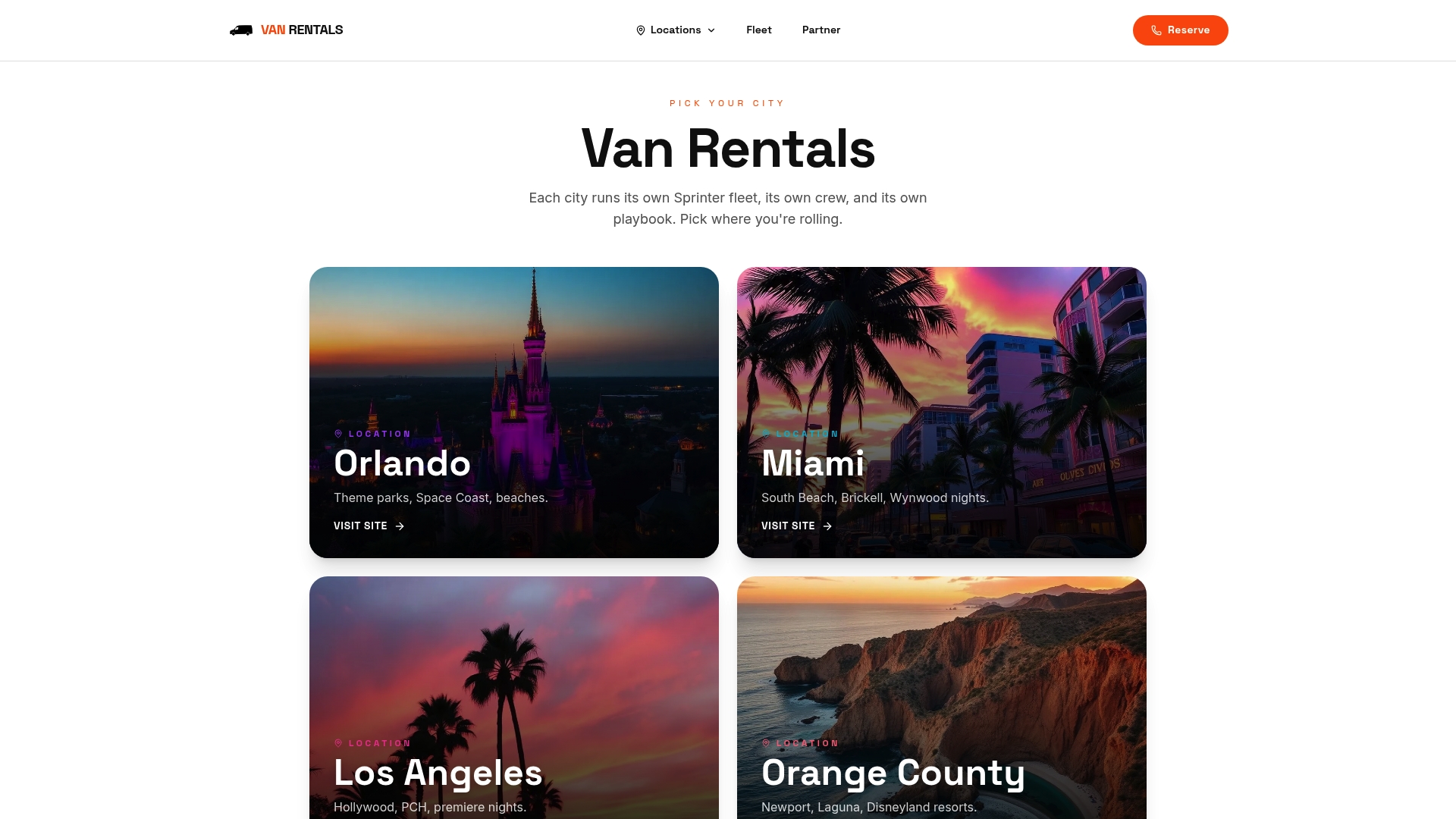
Local fleets are listed by city. For example, you can see the Ford Transit Low Roof 15-passenger van in New York City, the Express 15-passenger van in Washington DC or the Transit 15-passenger van in Savannah. Browse the full fleet to compare sizes and roof heights.
Before you reserve, confirm that your district allows rented passenger vans for your trip.
What to do when a van is not enough
Sometimes a van does not fit. The group is too big. The district bans passenger vans. The trip is long or crosses state lines. Here are the options by type.
- District school bus. The usual choice for most field trips. It meets school-bus standards and uses district drivers. Ask the transportation office early because buses and drivers book up.
- Minibus. Seats more than a van and is a good match for a class or two on a day trip.
- Charter motorcoach. Fits a whole grade and suits long distances or overnight trips. Check the operator’s federal registration and insurance, as described above.
- Two vans. For a group of 20 to 28, two vans with two drivers can work if your district allows it. It adds a second driver and a second cost.
- Smaller groups in rotations. Split a class into groups and run staggered visits. This only works if the destination allows it.
The same planning applies to all of them: policy, driver, capacity, coverage, budget. The same logic holds for groups that are not schools. Our guide on vans versus coaches for group transport under 60 walks through it.
FAQ
Can a school legally use a 15-passenger van for a field trip?
Federal law restricts the sale of certain new vehicles for student transport. It does not restrict how a vehicle is used. States and districts set those rules, and some ban 15-passenger or 16-passenger vans. Check your district’s written policy before booking.
How many students fit in a 15-passenger van?
No more than 15 people in total, driver included. With luggage or equipment, plan for fewer. NHTSA advises keeping cargo forward of the rear axle and never loading the roof.
Who can drive a school field trip van?
This depends on your district. NHTSA recommends experienced, licensed, well-rested drivers who are used to 15-passenger vans. Many districts also require approved or certified drivers, so confirm that before you rent.
How far ahead should I book?
As early as you can. District lead times in the examples above run from 7 days to one month or more. Book the van after you have approval, and ask us about availability for your dates.
Is a van cheaper than a bus?
For a small group, often yes, but it depends on mileage, driver time and your district’s rules. Compare the full cost, including fuel, mileage and insurance. Safety, reliability and district policy matter alongside price.
Sources
- 15-Passenger Vans, NHTSA
- School Bus Regulations FAQs, NHTSA
- NHTSA interpretation letter on 15-passenger vans
- Uniform Guidelines for State Highway Safety Programs: Pupil Transportation, NHTSA
- Tips for Vans, Buses, and Vehicles Used by Education-Related Organizations, FMCSA
- Education-Related Transportation, FMCSA
- Licensing and Insurance Requirements for For-Hire Motor Carriers of Passengers, FMCSA
- Field Trip Procedures, Union County Public Schools
- Field Trips: Scheduling Transportation, Deer Valley Unified School District
- Field Trip Checklist 2025, Montgomery County Schools
- Requesting Field Trips, Greenville County School District
- Parochial Field Trip Request Form, Calcasieu Parish School Board
- NSTA Cost Analysis Tool, U.S. Department of Education