Planners: Vans Beat Coaches for Corporate Group Transport Under 60
Planners: Vans Beat Coaches for Corporate Group Transport Under 60
Corporate group transportation means coordinating vans, shuttles, or coaches to move employees, executives, or attendees between airports, hotels, and venues on a fixed schedule. For most corporate events under 60 people, the recommended move is a fleet of 12 or 15-passenger vans or Sprinters booked with a manifest-ready provider. Have your passenger count, luggage estimate, flight numbers, and event timeline ready before you call.
TL;DR:
- Most corporate events under 60 people should use 12 to 15-passenger vans or Sprinters, booked with manifest-ready providers to ensure efficiency.
- Vans are preferable for flexible pickups, staggered arrivals, and venue access challenges, while coaches are suited for single-location, high-volume events.
- Confirm vehicle dimensions, luggage capacity, and ADA accessibility early, especially for groups with heavy equipment or special needs.
- Booking should include detailed passenger counts, luggage estimates, flight info, and event timelines, with at least one to three days’ lead time for Sprinters and coaches.
- On event day, assign a logistics manager to manage manifests, staging, and vehicle rotations to prevent delays and coordinate multiple vehicles smoothly.
Table of Contents
- What Are the Main Types of Corporate Group Transportation?
- Which Vehicle Fits Your Group Size?
- What Should You Ask Before Booking a Provider?
- How Do You Coordinate Multiple Vehicles on Event Day?
- What Do Pricing and Lead Times Look Like?
- Why a National Van Fleet Fits Most Corporate Jobs
- A Planner’s Take on Vans Versus Coaches
- Book Your Corporate Fleet in Minutes, Not Days
- Sources
- FAQ
What Are the Main Types of Corporate Group Transportation?
Most corporate transportation needs fall into four categories, and matching the right one to your event saves both money and headaches.
Airport transfers work best when a provider offers real-time flight tracking, so drivers adjust pickup times automatically instead of waiting on a curb for a delayed flight. Convention shuttles run scheduled loops between a hotel block and a conference venue, often with multiple stops and staggered departure times to avoid a single crowd rush. Executive transfers cover smaller, higher-touch trips, think a roadshow with three city stops in two days, where reliability and discretion matter more than headcount. Employee shuttle programs move staff between offices, parking lots, or campus buildings on a recurring basis.
Vans consistently outperform buses when a group needs flexible pickups instead of one fixed stop. A 15-passenger van can pull up to a hotel side entrance, a private office lot, or a gate a coach can’t access, which matters more than people expect until they’ve watched a 40-foot motorcoach try to navigate a downtown loading dock.
- Airport pickups: best for arrivals with staggered flight times
- Convention shuttles: best for multi-day events with a fixed hotel/venue loop
- Executive transfers: best for small, high-value groups needing door-to-door service
- Employee shuttles: best for recurring, predictable routes
Which Vehicle Fits Your Group Size?
Choosing the wrong vehicle class is the most common (and costly) planning mistake. Undersized vehicles mean stranded passengers; oversized ones waste money and complicate parking.
- Minivan (8 passengers): small executive groups or airport meet-and-greets
- 12 to 15-passenger van: the workhorse for most corporate outings, department off-sites, and small conference groups
- Sprinter van (around 14 passengers): more cargo room and a taller cabin, good for groups with heavy luggage or AV equipment
- Mini coach (around 24 passengers): mid-size conference shuttles between a hotel and venue
- Motor coach (35 to 55 passengers): single-location, high-volume events like a full-day convention with one arrival wave
Comfort matters too. Sprinters and larger vans often include Wi-Fi and reclining seats; motor coaches add restrooms but lose the door-to-door flexibility vans offer. Confirm ADA-accessible vehicles early, since accessible units are often limited in number and book up faster than standard vans.
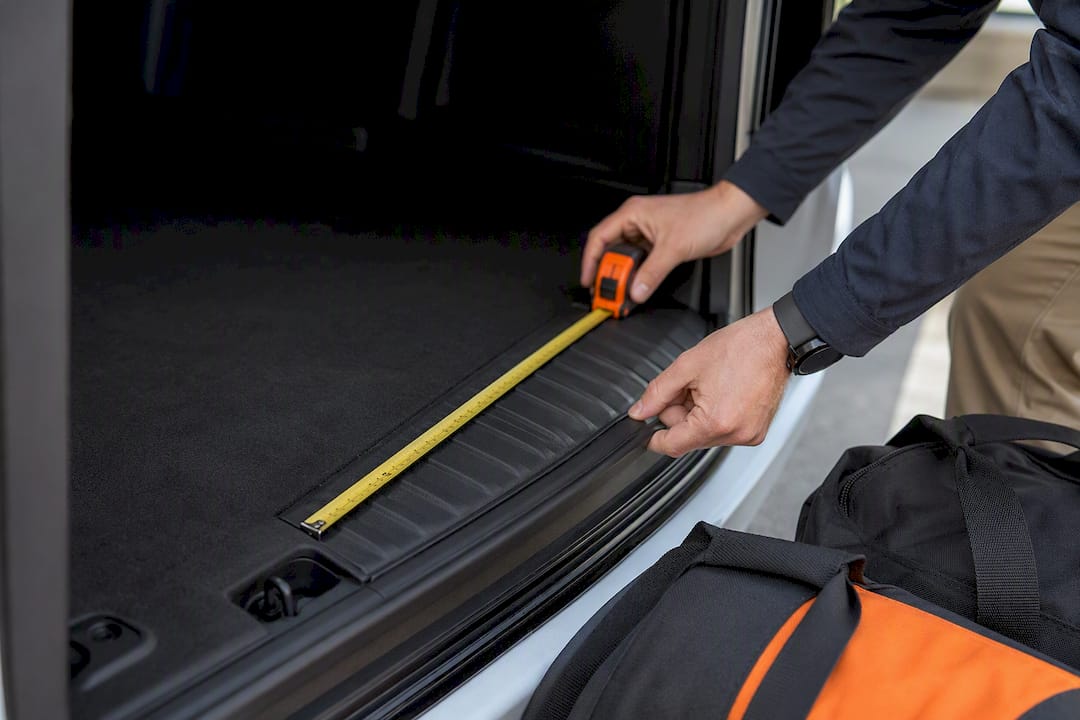
Pro Tip: Ask for the actual luggage compartment dimensions, not just seat count. A van rated for 15 passengers with full luggage often only comfortably seats 12 with bags loaded.
For a deeper breakdown of van, Sprinter, and coach differences, see this guide to corporate van rental types.
What Should You Ask Before Booking a Provider?
A solid booking process starts with information you gather before you ever call a provider, then continues through a short list of contract questions that separate professional operators from risky ones.
Have this ready when you request a quote:
- Total passenger count and any accessibility needs
- Luggage or equipment estimate per person
- Flight numbers and arrival windows, if applicable
- Exact venue addresses and designated loading points
- Full event timeline, including return trips
Ask providers these questions before signing:
- How is pricing structured: flat rate per route, hourly, or event-program pricing?
- What are the cancellation and modification terms?
- What insurance and liability coverage applies to the vehicles and passengers?
- Do you offer corporate accounts with consolidated monthly billing?
- Can you provide references from a group event of comparable size?
Watch for red flags: vague vehicle specifications, no defined manifest process for multi-vehicle jobs, pricing that only appears as a surge rate close to your date, or a provider unwilling to name past corporate clients. The Federal Motor Carrier Safety Administration publishes safety compliance information worth checking for any provider running commercial passenger vehicles. Confirm liability coverage details directly, and review commercial auto fleet insurance basics if you’re unsure what questions to ask.
How Do You Coordinate Multiple Vehicles on Event Day?
Once you’re running more than two or three vehicles, day-of coordination becomes the difference between a smooth arrival and a parking lot full of confused executives.
A manifest assigns specific passengers to specific vehicles by name, not just by headcount, so drivers know exactly who they’re waiting for and staff know exactly which van to board. Number each vehicle clearly and stage them in a holding area with a rotation system, pulling vehicle 1 to the loading point, then vehicle 2, rather than parking all vans curbside at once where space runs out fast. Build in time buffers between staged arrivals, since FHWA operations guidance notes that local traffic and event-day congestion can extend travel times well beyond normal estimates.
- Assign a single on-site logistics manager to run the manifest and communicate with drivers
- Brief every driver on the loading sequence and backup routes before wheels-up
- Confirm curb access and staging rules directly with the venue in advance
- Build a contingency plan for a delayed flight or a passenger who can’t be located
Executive-level transfer operators treat manifest management and an on-site logistics lead as standard practice for exactly this reason, it cuts loading time and prevents missed passengers.
Pro Tip: Confirm curb and loading-dock rules with the venue itself, not just the transportation provider. Many downtown venues restrict curbside dwell time to two minutes or less.

What Do Pricing and Lead Times Look Like?
Pricing typically follows one of three shapes: a flat rate per route, an hourly charter rate, or a bundled event-program price covering multiple shuttle runs across a multi-day conference. Hourly rates make sense for open-ended executive transfers; flat routes work better for predictable airport-to-hotel runs.
Lead times vary sharply by vehicle type. Smaller vans are sometimes available with same-day notice, while Sprinters and mini coaches typically need at least one to three days to confirm the right vehicle and driver. Multi-vehicle convention shuttle programs should be booked at least a week or more in advance, especially around major conference dates when local fleets run tight.
- Flat-rate routes: predictable cost, best for point-to-point transfers
- Hourly charters: flexible, best for executive itineraries with changing stops
- Event-program pricing: bundled cost across multi-day shuttle schedules
Consolidated monthly billing through a corporate account removes the need to reconcile individual bookings on a company card, which matters most for organizations running frequent group travel.
Why a National Van Fleet Fits Most Corporate Jobs
Most corporate group trips, executive roadshows, and small-to-mid convention shuttles fit comfortably inside a van fleet rather than a full motorcoach program. A national van rental provider offering 12 and 15-passenger vans, Sprinters, and Ford Transit vans across major U.S. cities with airport pickup and delivery support built in.
- Nationwide pickup, delivery, and airport support
- High-roof options and extra luggage capacity for equipment-heavy groups
- Modern amenities across the fleet, including comfortable seating for longer transfers
- Dedicated programs for churches, schools, and business accounts, including tax-exempt and PO billing
For planners running executive roadshows in cities like Orlando, where event-hub congestion can multiply normal travel times, a flexible van fleet often adapts faster than a fixed coach schedule.
A Planner’s Take on Vans Versus Coaches
Vans win when your group needs flexibility: staggered arrivals, multiple pickup points, or a venue a coach physically can’t reach. Coaches make more sense for a single-location crowd arriving at once, where headcount efficiency beats maneuverability. For multi-day programs, staggering van departures in 15-minute waves usually beats forcing everyone onto one giant shuttle loop.
— Gabriel
Book Your Corporate Fleet in Minutes, Not Days
My Van Rentals is the alternative to chasing down a motorcoach charter for events that don’t actually need one. You can rent 12 and 15-passenger vans, Sprinters, and Transit vans with transparent live pricing and no surprise charges at pickup, plus corporate account options with consolidated billing for teams running frequent group travel.
To get a fast quote, have your passenger count, pickup and drop-off addresses, flight numbers if applicable, and event dates ready. Most bookings confirm within the same business day. Browse available models on the fleet page, check coverage on the locations page, or head straight to the booking page to reserve your vans for the next event on your calendar.
Sources
FMCSA safety guidance, UMA charter standards, and FHWA traffic operations guidance informed the operational recommendations above.
- Federal Motor Carrier Safety Administration
- FHWA: Traffic management and operations considerations
- CPA Practice Advisor — consolidated travel billing solutions
FAQ
What Does “Corporate Transportation” Mean?
It refers to organized vehicle service, vans, shuttles, or coaches, arranged by a business to move employees, clients, or event attendees between locations like airports, hotels, and venues on a scheduled basis.
What Are the Top Transportation Options for Corporate Groups?
The main options are passenger vans (12 to 15-seat), Sprinter vans, mini coaches, and full motor coaches, chosen based on group size, luggage needs, and how many pickup points the trip requires.
How Much Does It Cost to Rent a 40-Seat Bus?
Motorcoach pricing varies widely by region, trip length, and season, so get a direct quote from a licensed operator; for groups under 40 people, a mix of 12 or 15-passenger vans is often more flexible and can cost less depending on route and luggage needs.
What Does It Take to Move 1,000 People?
Moving a group that size requires a multi-vehicle plan with a detailed manifest, numbered vehicle assignments, staged loading zones, and an on-site logistics manager coordinating rotation, since no single vehicle class handles that volume alone.