Compare Van Rental Corporate Accounts: 2026 Guide

Compare Van Rental Corporate Accounts: 2026 Guide
A corporate van rental account is a formal business agreement that gives your company centralized billing, preferred pricing, and dedicated fleet access through a single managed relationship. When you compare van rental corporate accounts, the differences between programs go far beyond the daily rate. Procurement managers who evaluate only headline prices routinely miss cost factors that shift total spend by 20–30%. This guide walks you through setup requirements, pricing structures, operational support, and long-term rental models so you can make a fully informed decision for your organization.
How to compare van rental corporate accounts effectively
The most important thing to understand about business van rental comparison is that programs look nearly identical on paper. The real differences appear under operational stress: last-minute bookings, peak season shortages, and billing dispute resolution. A program with a slightly higher daily rate but a named account manager and a guaranteed escalation path will almost always deliver lower total cost than a cheaper program with branch-level service only.
Corporate van rental accounts, also called commercial vehicle rental programs in the industry, provide three core advantages over booking individual rentals. First, they consolidate all charges onto a single invoice using ghost cards or lodge cards. Second, they unlock weekly and monthly pricing tiers that are not available to individual bookers. Third, they assign a dedicated account manager who handles exceptions without requiring you to call a general support line.

Pro Tip: Request a sample invoice from any program you are evaluating. The invoice format reveals how well the provider handles departmental billing codes and cost center chargebacks before you sign anything.
What documents and requirements do you need to set up a corporate account?
Setting up a corporate account requires a specific set of legal and administrative documents. Missing even one item delays verification and postpones access to commercial pricing. Gather the following before you apply:
- Federal Tax ID (EIN): Required by every major program to verify business status and enable direct billing.
- Business license: Confirms your organization is legally registered in your state.
- Authorized drivers list: Full legal names, license numbers, and license states for every driver who will use the account.
- Primary account administrator: One named individual who owns the account relationship, approves new drivers, and manages billing disputes.
- Accepted payment method: Most programs require a business credit card or a pre-approved direct billing arrangement. Personal cards do not qualify for corporate rate access.
Verification typically takes several business days after you submit a complete application. Incomplete submissions restart the clock. The most common pitfall is submitting a driver list with expired license information. Verify every license expiration date before you file.
Pro Tip: Appoint a backup account administrator at setup. If your primary contact leaves the company, an unmanaged account loses its billing codes and preferred rates until ownership is re-established, which can take weeks.
How do pricing structures and total cost factors compare?
Total rental cost depends on far more than the base daily rate. Damage waivers alone cost $14–$45 per day depending on the program and vehicle class. That single line item can add $280–$900 to a three-week project rental. Procurement managers who focus only on daily rates instead of all-in project cost routinely underestimate actual spend.
The table below shows the key cost components you need to evaluate side by side when comparing programs.
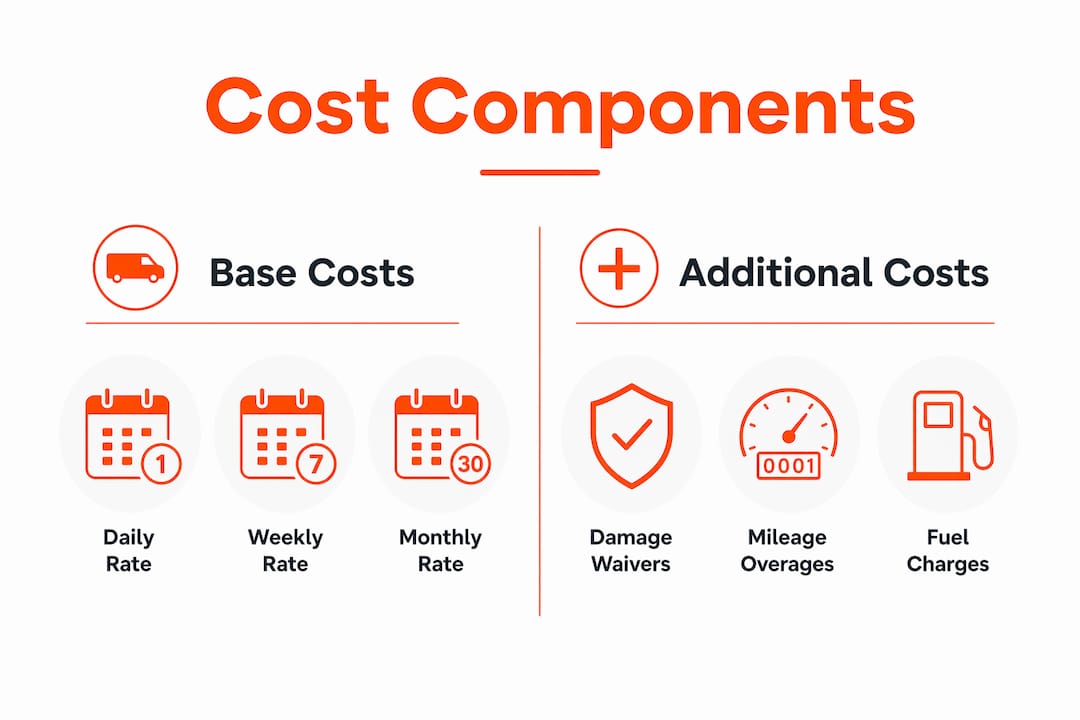
| Cost component | What to look for |
|---|---|
| Base daily rate | Weekly and monthly tiers available to corporate accounts |
| Mileage policy | Unlimited vs. capped; overage rates per mile |
| Damage waiver | Daily cost, coverage limits, and exclusions |
| Fuel policy | Full-to-full vs. prepaid; fuel service charge rates |
| Additional driver fee | Per-day charge or waived for corporate accounts |
| Deposit requirement | Amount held and release timeline |
Mileage policy deserves particular attention for van hire for companies with field teams. A capped mileage plan at 100 miles per day looks affordable until your crew drives 180 miles on a site visit. Overage rates typically run $0.25–$0.45 per mile, and those charges appear on your invoice without warning.
Fuel policy is the second most overlooked factor. Full-to-full policies require drivers to return the van with a full tank. Prepaid fuel options charge a flat rate per gallon upfront, which is almost always higher than pump prices. For short urban trips, full-to-full is almost always cheaper.
Pro Tip: Ask each program for a sample billing statement from a real corporate account. Actual invoices reveal fee line items that never appear in the rate card.
What operational features separate strong corporate van rental programs?
Dedicated account managers and clearly defined escalation paths are the features that separate adequate programs from genuinely useful ones. When a branch reports no vehicle available on the morning your crew needs to reach a job site, a named account manager at a central desk can source a vehicle from a nearby location in minutes. Branch-level service alone cannot do that.
Evaluate each program on these four operational criteria:
- Account manager access: Is there a named individual with a direct phone number, or does every call go to a general queue?
- Fleet availability guarantees: Does the program offer priority access during peak periods, or is availability first-come, first-served?
- Billing dispute resolution: What is the documented process and timeline for resolving incorrect charges?
- Reporting and billing codes: Can you assign departmental cost center codes at the time of booking to automate reconciliation?
“Sophisticated billing uses departmental codes within central reservation portals, allowing automated cost center chargebacks and minimizing manual reconciliation.” — Enterprise Commercial Vehicle Rentals Guide
Reporting capability is frequently undervalued during the evaluation process. A program that exports monthly spend by department, driver, and city eliminates hours of manual spreadsheet work. That time saving has real dollar value that does not show up in a rate comparison.
Peak seasonal demand is the single best stress test for any program. Ask each provider how they handled fleet shortages during the previous holiday season or a major local event. The answer tells you more about program quality than any rate card.
When does a long-term or subscription rental model make more sense?
Long-term rental and subscription models bundle insurance, maintenance, tires, and tax into a fixed monthly rate. That structure eliminates the unpredictable charges that make standard rental accounts difficult to budget. For project-based work lasting three months or more, subscription models are frequently cost-comparable with leasing while offering more flexibility.
| Factor | Standard corporate account | Long-term or subscription model |
|---|---|---|
| Billing structure | Per-rental invoices with variable fees | Fixed monthly rate, all-inclusive |
| Insurance | Purchased per rental or via waiver | Bundled into monthly rate |
| Maintenance | Not included | Included |
| Flexibility | High; book as needed | Moderate; minimum term applies |
| Best for | Irregular, short-term needs | Recurring or project-based use |
The most common misconception about subscription models is that they are always more expensive. For a team that rents a van more than 15 days per month, the fixed rate almost always beats the variable cost of a standard account once you add damage waivers, fuel service charges, and additional driver fees.
One scenario where standard accounts still win: unpredictable demand. If your team needs a van three times one month and zero times the next, a subscription model creates a fixed cost with no corresponding output. Standard rental options for businesses with on-demand booking remain the better fit for that pattern.
Pro Tip: Before committing to a subscription model, pull your last six months of rental invoices and calculate actual all-in spend per month. The real number is almost always higher than the rate card suggests, which makes the subscription comparison more favorable.
Key Takeaways
Comparing corporate van rental accounts on total cost, operational support, and billing capability produces better outcomes than comparing daily rates alone.
| Point | Details |
|---|---|
| Total cost over daily rate | Damage waivers, mileage overages, and fuel charges shift total spend by 20–30%. |
| Document preparation | Submit EIN, business license, and a verified drivers list to avoid verification delays. |
| Operational support quality | A named account manager and escalation path matter more than branch-level service. |
| Billing code capability | Departmental cost center codes automate reconciliation and reduce manual work. |
| Subscription model fit | Fixed monthly models beat standard accounts when usage exceeds 15 days per month. |
What most procurement guides get wrong about corporate van rentals
I have reviewed a lot of corporate van rental programs over the years, and the pattern I see most often is procurement teams treating this like a commodity purchase. They collect three rate cards, pick the lowest number, and call it done. That approach works fine for buying paper clips. It does not work for a service where operational failure means a crew standing in a parking lot with no vehicle.
The factor I weigh most heavily is vendor responsiveness under pressure. I ask every provider the same question: “Walk me through what happens when your nearest branch has no available van at 7 a.m. on a Monday.” The quality of that answer tells me everything. A provider with a central account desk, real escalation authority, and cross-location inventory visibility gives a specific, confident answer. A provider without those things gives a vague one.
The second thing I see procurement teams get wrong is ignoring fleet density in the specific cities where their teams actually operate. A program with strong national coverage but thin inventory in Orlando or Miami is not useful if that is where your work happens. City-specific fleet depth is a real differentiator, and it is rarely listed in a rate card.
Treat your corporate van rental account as an operating relationship, not a one-time transaction. Review it annually. Check whether your billing codes are still accurate. Confirm your account manager has not changed. The programs that deliver the most value over time are the ones where someone on your side is paying attention.
— Gabriel
Myvanrentals corporate van rental accounts for business teams
Business travel works better when your rental account is built around the cities where your teams actually operate.
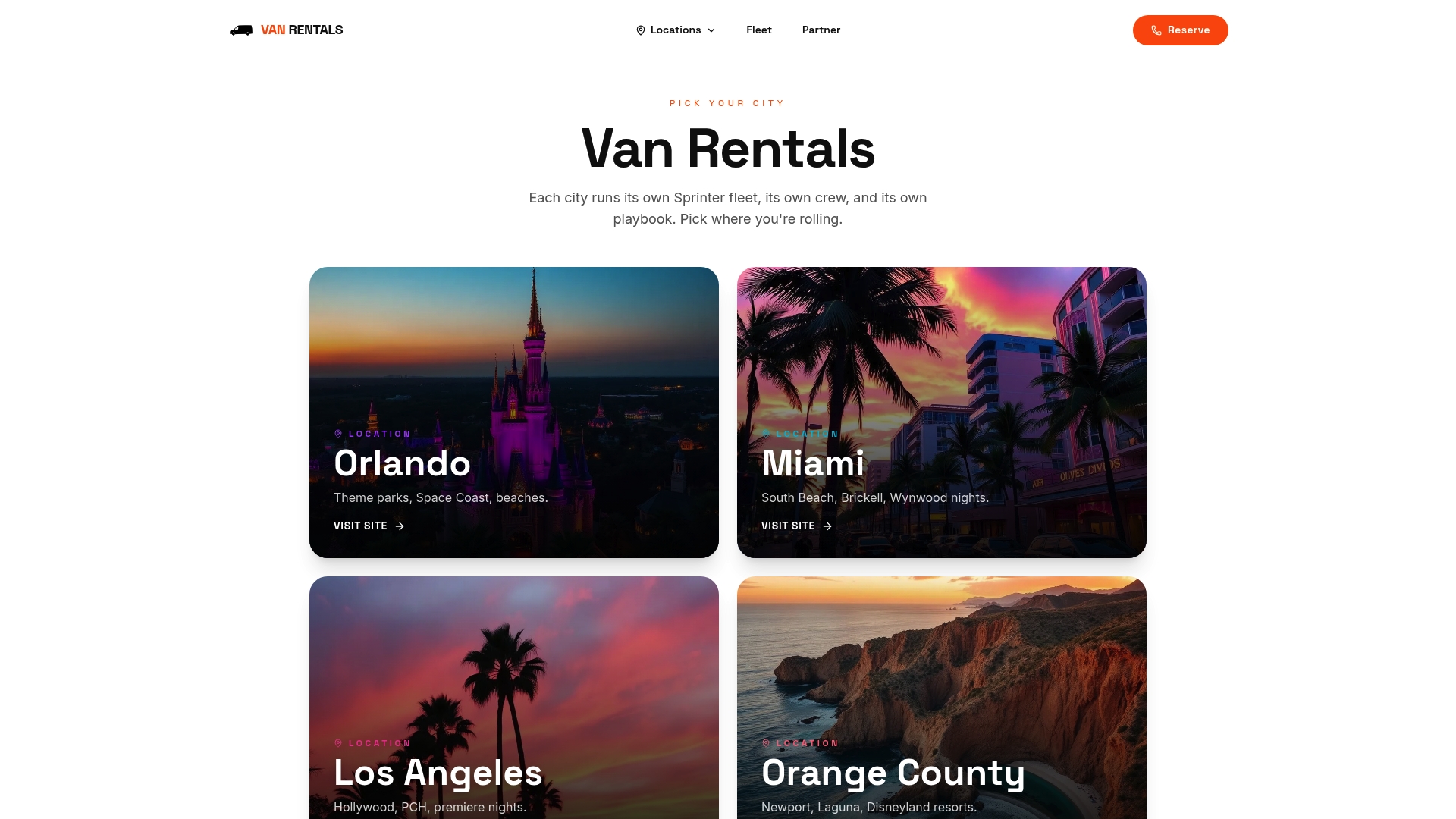
Myvanrentals manages city-specific fleets in Orlando, Miami, and Los Angeles with local teams who know availability, routes, and demand patterns in each market. Corporate managers get centralized billing, business-focused account setup, and fleet access sized for groups rather than individual travelers. If your procurement team needs van rental options that match real urban operating conditions, Myvanrentals is built for that. Setup is direct, pricing is transparent, and the fleet is managed locally so availability reflects actual city demand rather than national averages.
FAQ
What is a corporate van rental account?
A corporate van rental account is a formal business agreement providing centralized billing, preferred pricing tiers, and dedicated account management. It replaces individual bookings with a single managed relationship that reduces administrative overhead.
What documents are required to open a corporate van rental account?
Most programs require a federal tax ID (EIN), a current business license, an authorized drivers list, and a designated account administrator. Verification typically takes several business days after a complete application is submitted.
How do mileage policies affect total rental cost?
Capped mileage plans charge overage fees per mile beyond the daily limit, which can significantly increase total cost for field teams. Unlimited mileage plans cost more per day but eliminate overage risk for high-mileage use.
When does a subscription rental model beat a standard corporate account?
A subscription model is typically more cost-effective when a team rents a van more than 15 days per month. The fixed monthly rate bundles insurance, maintenance, and fuel policy into one predictable charge.
How do I evaluate fleet availability for specific cities?
Ask each provider directly about inventory levels in the cities where your teams operate most frequently. Fleet density in specific markets like Orlando, Miami, or Los Angeles varies significantly between programs and is rarely disclosed in standard rate cards.