Save $100+ on U.S. Weekly Van Rentals: City Rates and Fee Formula

Save $100+ on U.S. Weekly Van Rentals: City Rates and Fee Formula
A one-week van rental in the United States typically runs $360 to $1,880, with most renters landing between $600 and $1,100 depending on the vehicle. Van class and pickup location decide most of that spread. A minivan booked at a neighborhood lot in a slow month sits at the low end; a 15-passenger van or Sprinter picked up at an airport during a busy week pushes toward the high end. Some rental companies list both ends of that range across their U.S. fleets.
TL;DR:
- Weekly van rental prices in the U.S. range from $360 to $1,880, depending on van size, location, and season, with most renters paying between $600 and $1,100.
- Vehicle class significantly impacts cost, with minivans being the most affordable and Mercedes-Benz Sprinter high-roof vans usually costing the most due to premium features.
- The total rental cost includes base rate, mileage overages, insurance, fuel, taxes, fees, and deposits, which can collectively raise the price by hundreds of dollars.
- Prices vary by city, with airport pickups typically more expensive due to additional surcharges, and prices increase during peak seasons like summer and holidays.
- To reduce costs, renters should book midweek, avoid airport locations, select an appropriate mileage plan, and decline unnecessary extras.
Table of Contents
- How Much Does a Weekly Van Rental Cost by Van Class?
- What Drives the Weekly Cost of a Van Rental?
- What Do Weekly Van Rentals Cost in Different U.S. Cities?
- How to Calculate Your Out-the-Door Weekly Van Rental Cost
- How Can You Lower Your Weekly Van Rental Cost?
- How Our Fleet Helps Keep Weekly Rental Costs Predictable
- Where to Find Weekly Van Rental Deals
- Sources
- FAQ
How Much Does a Weekly Van Rental Cost by Van Class?
Vehicle size is the single biggest lever on price. A minivan seats six to seven and sips fuel; a 15-passenger van or Sprinter hauls more people and cargo but costs more to insure, fuel, and maintain. Rental companies price accordingly, and weekly rates reflect that gap directly.
Here’s how the major classes typically break down for a seven-day rental in the U.S.:
- Minivan (6-7 passengers): typically costs a moderate amount per week, roughly equivalent to a low daily rate. Best fuel economy in the group, widely available, minimal specialty features.
- Cargo van: typically costs more than a minivan per week, based on cargo volume and roof height rather than seating.
- Passenger van (8-11 seats): typically costs somewhat more per week, reflecting larger size without the insurance jump that comes with 12/15-passenger classes.
- 12-passenger van: tends to be priced higher weekly, popular with churches, teams, and families needing to keep everyone in one vehicle.
- 15-passenger van: commands premium weekly rates due to higher demand during busy seasons like graduations, tournaments, and summer travel.
- Mercedes-Benz Sprinter (high roof, 12-15 seats or cargo configuration): generally has the highest weekly rates among common van types, reflecting premium features like standing headroom and extra luggage space.
TravelPander’s cost breakdown puts typical U.S. weekly van rates in the $500 to $1,200 band overall, which lines up with where passenger and 12/15-passenger vans tend to fall. Auto Europe’s pricing guide also confirms that minivans consistently price below Sprinters and full-size passenger vans, largely because of fuel economy and lower group insurance premiums.
Fleets typically span most of this range: Ford Transit and Chevrolet Express vans in the passenger and 12/15-passenger classes, plus Mercedes-Benz Sprinter vans with high-roof configurations for groups that need extra headroom or luggage room. A detailed look at Sprinter van rental prices shows how daily rates in that class stack up city by city.
What Drives the Weekly Cost of a Van Rental?
A quoted weekly rate is never just one number. It’s a stack of line items, and each one moves independently. Here’s what typically shows up on a van rental invoice, in the order it usually gets calculated:
- Base rate. This is the daily or weekly rental fee before anything else gets added. It shifts with location (major metro vs. smaller city), season, and even day of the week. Weekend pickups often carry a premium over weekday ones.
- Mileage. Many weekly rentals include somewhere between 700 and 1,400 miles. Go over that allowance and overage fees commonly run $0.25 to $0.50 per mile. A 1,500-mile road trip on a plan with a 700-mile cap can add well over $200 by itself.
- Insurance and protection. Collision damage waivers, liability upgrades, and supplemental coverage typically add $70 to $250 for the week, depending on the level of protection. Some credit cards include rental coverage, which can reduce or eliminate this line, though many card policies exclude vans over a certain seating capacity, so it’s worth confirming before declining the rental company’s option.
- Fuel. Estimate this yourself: miles planned ÷ vehicle mpg × current fuel price per gallon. A Sprinter averaging 16 mpg driven 700 miles at $3.50 per gallon runs about $153 in fuel alone.
- Taxes, surcharges, and extras. State and local rental taxes, airport concession fees, child seats, GPS units, wheelchair ramps, and additional driver fees round out the bill. Deposits or holds, often $200 to $500, get authorized on a card but aren’t part of the actual charge unless there’s damage or a late return.
The full CostInsider breakdown puts a complete weekly total, with every component included, at $360 on the low end and $1,880 on the high end, with $920 as a realistic middle for a mid-size van with standard coverage and modest mileage, according to Cost Insider’s van rental cost analysis. That $920 figure is a useful mental anchor when a quote comes in far outside it.
What Do Weekly Van Rentals Cost in Different U.S. Cities?
City-level pricing swings more than most renters expect. Airport concession fees, local tax rates, and seasonal demand all shift the base rate before a single mile gets driven.
| City | Sample Daily Rate | Sample Weekly Total | Notes |
|---|---|---|---|
| Houston, TX | ~$123/day | ~$860/week | Kayak’s Houston data shows this as a representative average across listed vans. |
| San Diego, CA | ~$130/day | ~$910/week | Kayak’s San Diego data reflects similar mid-range pricing with slightly higher demand. |
| Los Angeles, CA | ~$110-$160/day | ~$770-$1,120/week | Airport pickups near LAX typically run higher than inland lots. |
| New York metro area | ~$120-$180/day | ~$840-$1,260/week | Urban parking and tolls add to the practical cost beyond the quote itself. |
A quick worked total for Houston: a passenger van at $123/day comes to $861 for the base rate alone. Add $100 in insurance, $80 in estimated fuel for a 500-mile week, and $40 in local taxes and fees, and the out-the-door total lands close to $1,080. That’s a meaningful jump from the headline daily rate, which is exactly why the base number on a listing page rarely tells the whole story.
Seasonality matters too. Some aggregators show noticeably cheaper listings in slower months like February, with prices climbing during peak travel windows such as summer and around major holidays. If your dates are flexible, that alone can be worth more than any discount code.

How to Calculate Your Out-the-Door Weekly Van Rental Cost
Every quote boils down to one formula:
Total = (base rate × 7) + mileage overage + insurance + estimated fuel + taxes/fees + extras + deposit hold
Here’s how to work through it step by step:
- Find your base daily rate for the van class and pickup city you want, then multiply by 7.
- Estimate your mileage. Add up planned driving for the week and compare it against the included-mile allowance on the listing. If you’re over, multiply the extra miles by the per-mile overage fee.
- Add insurance. Use the rental company’s quoted weekly protection cost, or $0 if your credit card coverage applies to the vehicle class.
- Calculate fuel. Divide planned miles by the van’s mpg, then multiply by your local fuel price per gallon.
- Add taxes, surcharges, and any extras like a child seat or additional driver.
- Note the deposit separately. It’s authorized, not charged, unless something goes wrong.
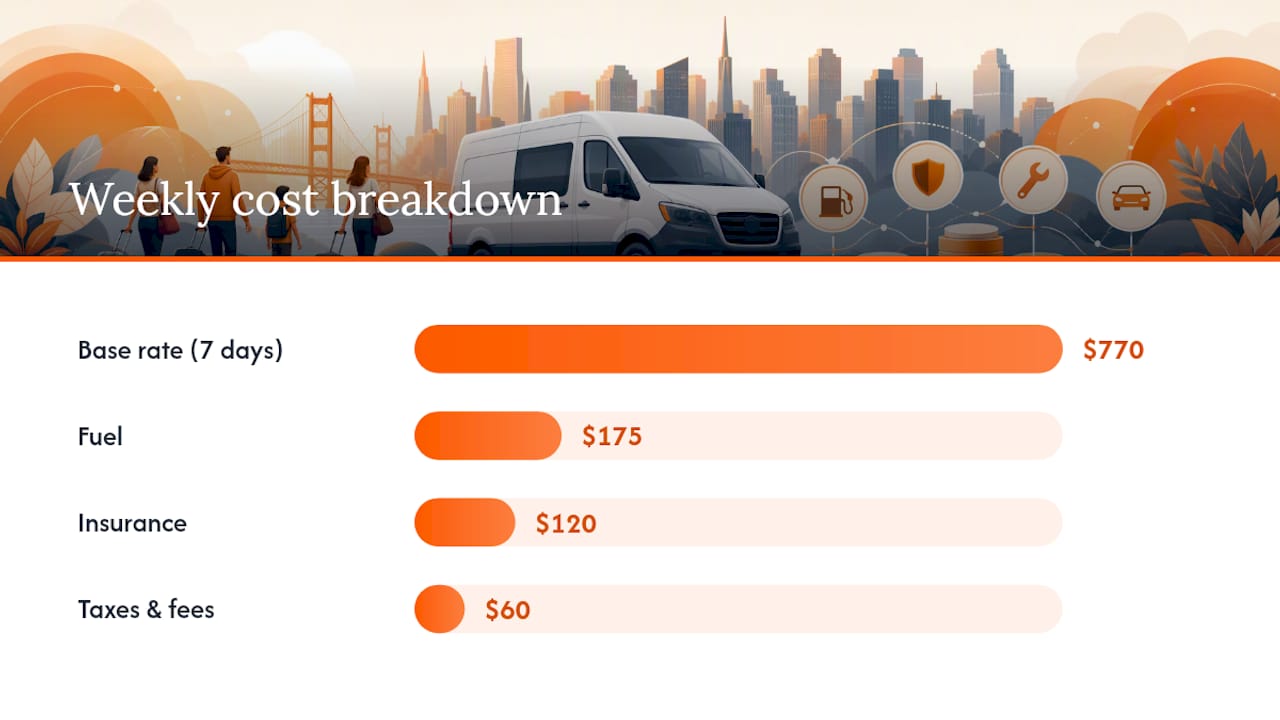
Worked example: a 12-passenger van at $110/day for a 700-mile week. Base rate: $110 × 7 = $770. The listing includes 700 miles, so mileage overage is $0. Insurance: $120 for the week. Fuel: 700 miles ÷ 14 mpg × $3.50/gallon = $175. Taxes and fees: roughly $60. Total out-the-door cost: $1,125, before any deposit hold.
Pro Tip: Match your mileage plan to your actual trip before you book, not after. A plan with 1,000 included miles costs more upfront than one with 500, but if you’re driving 900 miles, the overage fees on the cheaper plan will erase the savings and then some. The add-on cost breakdown covers how deposits and extras typically get calculated.
How Can You Lower Your Weekly Van Rental Cost?
Small timing and location choices routinely save $100 or more on a weekly booking. Here’s where the real savings sit:
- Book midweek pickups when possible. Weekend start dates often carry a rate premium, and shifting a pickup from Saturday to Tuesday can lower the base rate.
- Watch for off-peak timing. Rates in slower travel months tend to run below summer and holiday pricing, and flexible dates give you leverage. The off-peak booking guide breaks down which weeks typically run cheapest.
- Skip the airport lot when you can. Auto Europe’s pricing research confirms airport pickups routinely carry concession surcharges that a downtown or neighborhood location avoids.
- Choose a mileage plan that matches your trip, not a generic default that either overcharges upfront or leaves you exposed to overage fees.
- Skip extras you don’t need. GPS and add-on devices are easy to decline if you’re already using a phone for navigation.
Before you confirm, run through this checklist: included miles, fuel return policy, insurance coverage type, one-way fees if you’re dropping off elsewhere, deposit amount, and cancellation terms. Missing any one of these is how a $900 quote turns into an $1,100 bill at pickup.
How Our Fleet Helps Keep Weekly Rental Costs Predictable
Pricing surprises usually come from mismatched vehicles, not bad luck. A family booking a 15-passenger van for a five-person trip is paying for capacity they don’t need. A church group cramming into a passenger van is risking an upgrade fee at the counter.
Some companies stock Ford Transit, Mercedes-Benz Sprinter, and Chevrolet Express vans in 12 and 15-passenger configurations across cities, with airport pickup and delivery options available. That range lets a sports team, wedding party, or tour group pick the exact seating and cargo capacity their trip actually requires, rather than rounding up and overpaying for the week. Groups that would otherwise book two smaller vehicles, or fly and rent separately at the destination, often find one right-sized van covers the trip for less, a comparison worth running before you finalize any group travel plan.
— Gabriel
Where to Find Weekly Van Rental Deals
Getting an accurate weekly quote shouldn’t take a dozen tabs and a spreadsheet. Certain rental platforms provide upfront details like van class, included miles, and fees, so the quoted number aims to be close to the final price.

Booking takes three steps. Search your pickup dates and city, select the van class that fits your group size and cargo needs (from Ford Transit passenger vans to Mercedes-Benz Sprinter high-roof configurations), then confirm your mileage plan, insurance option, and payment. Delivery to a hotel or venue is available in most markets if you’d rather skip the counter altogether, and common extras like child seats or an additional driver can be added at that stage.
Start by browsing van rentals available in your city to see current 12 and 15-passenger and Sprinter availability for your travel dates.
Sources
- Cost to Rent a Van for a Week 2026 – Cost Insider
- Van rentals in Houston — Kayak
- Van rentals in San Diego — Kayak
- Van Rental Cost | Costs of Renting a Van Explained — Auto Europe
FAQ
How much does it cost to rent a minivan for a week?
A minivan typically costs between $360 and $600 for a full week in the U.S., making it the most affordable van class available.
What is the cheapest van rental?
Minivans are generally the cheapest class, followed by cargo vans; both cost less than passenger vans, 12/15-passenger vans, or Mercedes-Benz Sprinter vans because of lower fuel use and insurance requirements.
How much does it cost to rent a van per day?
Daily rates vary widely by van class and location, with minivans generally costing less and premium vehicles like high-roof Sprinters at the higher end, while passenger and 12/15-passenger vans fall somewhere in between depending on city and season.
Is it cheaper to rent a van for a week than by the day?
Yes. Weekly rates almost always work out cheaper per day than booking single days back to back, since rental companies build in a discount for longer commitments, a pattern confirmed across Auto Europe’s pricing analysis.
Does My Van Rentals offer weekly discounts on passenger vans?
My Van Rentals lists 12 and 15-passenger vans, Sprinter vans, and cargo vans across U.S. cities with pricing that reflects weekly booking, and browsing city-specific availability shows current rates for your dates.