Trade Show Transportation: A Planner's Action Guide
Trade Show Transportation: A Planner’s Action Guide
For most trade shows, the right transport mix is simple: shuttle loops or coaches for bulk attendee waves between hotels and the venue, Sprinter or 12-15-passenger vans for exhibitor teams and VIPs, and point-to-point charters for airport arrivals. Start planning around the movement itself, not the vehicle. Group travel coordinators get better results when they define who is traveling, when they land, and how much luggage they carry before picking a vehicle type.
Three things to do right now:
- Confirm peak arrival and departure windows for attendees, exhibitors, and staff.
- Estimate luggage volume and separate travelers by role (VIP, exhibitor crew, general attendee).
- Contact one accountable provider for your fleet. My Van Rentals offers Ford Transit and Mercedes-Benz Sprinter vans in 12- and 15-passenger configurations, available in cities across the country for exactly this kind of program.
Key Takeaways
The best trade-show transportation plan matches vehicle type to traveler role and locks vehicles well before your event’s peak season arrives.
| Point | Details |
|---|---|
| Match vehicle to traveler | Use Sprinter or 12-15-passenger vans for exhibitor teams and VIPs, coaches for bulk attendee waves. |
| Build a planning matrix | Track traveler role, arrival window, luggage, and pickup coordinates, then reconcile it 30-45 days out. |
| Book early in major markets | Start contracting vehicles around the same time you reserve your exhibit booth. |
| Always keep a backup plan | Reserve a spare vehicle and a rideshare fallback for delays or mechanical issues. |
| Choose a flexible fleet provider | My Van Rentals offers Ford Transit and Mercedes-Benz Sprinter vans in 12- and 15-passenger sizes with nationwide pickup and delivery. |
Table of Contents
- Trade Show Transportation Checklist and Planning Matrix
- Which Vehicles Fit Which Trade Show Task?
- When Should You Book Trade Show Transportation?
- Staging, Monitoring, and What to Do When Something Goes Wrong
- Environmental Impact and Sustainability Considerations
- Using Technology to Coordinate Trade Show Transportation
- How a Nationwide Fleet Solves Common Trade Show Transport Problems
- Book Your Trade Show Transportation With My Van Rentals
- Sources
- FAQ
Trade Show Transportation Checklist and Planning Matrix
A one-page matrix keeps everyone from your marketing director to your shuttle driver working off the same information. Build it as a shared spreadsheet with these columns:
- Traveler role (VIP/speaker, exhibitor crew, staff, general attendee)
- Arrival/departure window (specific time blocks, not just “morning”)
- Vehicle type assigned (Sprinter, 12-passenger, 15-passenger, coach)
- Luggage profile (carry-on only, checked bags, booth equipment)
- Amenities needed (Wi-Fi, power outlets, extra cargo space)
- Priority level (locked-in VIP transfer vs. flexible shuttle loop)
- Pickup coordinates (exact hotel entrance, terminal curb, venue dock)
Reconcile this matrix against your final headcount 30 to 45 days before the show. That window gives you enough runway to add vehicles if registration spikes, without leaving your provider scrambling for last-minute capacity. Assign one person, usually your on-site staging lead, to own the matrix and one vendor contact to own fulfillment.
When you place your vendor order, confirm these essentials in writing:
- Service hours and whether overtime kicks in automatically or requires approval
- Vehicle types and confirmed capacity per unit
- Parking, loading dock, and venue access permissions
- Cancellation window and any penalty fees
- A named escalation contact for day-of issues, not just a general dispatch line
Which Vehicles Fit Which Trade Show Task?
Match the vehicle to the job, not the other way around. A 15-passenger van that’s perfect for your exhibitor crew’s daily hotel-to-venue run is the wrong choice for moving 400 attendees off a single keynote session.
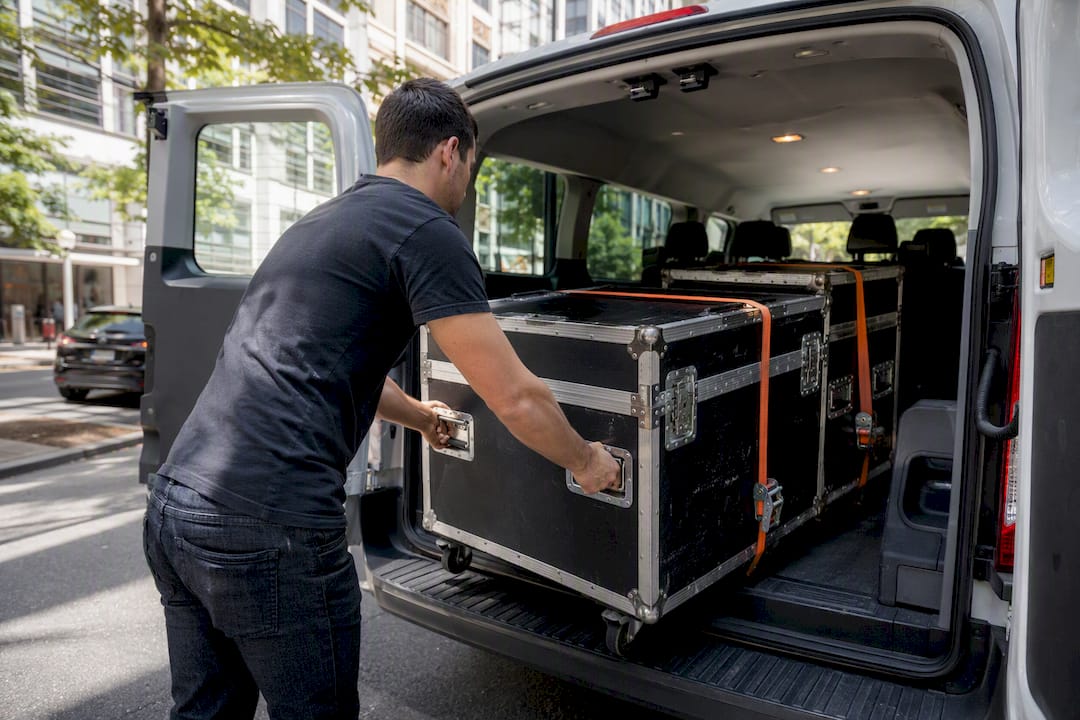
Sprinter and 12-15-passenger vans work best for exhibitor teams, sales staff, and VIP groups traveling on flexible or irregular schedules. They load fast, navigate hotel loading zones without a marshal directing traffic, and give small groups room for booth materials and laptop bags.
Minibuses bridge the gap when you have 20-30 people moving together but don’t need a full coach. They’re a solid fit for regional sales teams or a single company’s full delegation.
Motorcoaches and shuttle loops are the standard for bulk attendee movement between host hotels and a convention center. Convention planning guides consistently point to shuttle loops and motorcoaches as the most efficient option once you’re moving hundreds or thousands of people on a shared schedule.
Three practical rules of thumb: if your group exceeds 15 people, you need either two vans or a bigger vehicle. If booth equipment or oversized cases are involved, add a cargo van rather than cramming gear into passenger space. And if your venue has a tight turning radius or a single loading dock, confirm your vehicle size fits before you book.
Pro Tip: Request onboard Wi-Fi and power outlets for any multi-day Sprinter booking. Exhibitor teams often work from the van between venue and hotel, and that amenity is worth confirming in your quote up front.
When Should You Book Trade Show Transportation?
Booking timelines depend on scale. A single company reserving two or three Sprinter vans for its own team can often lock in vehicles a few weeks out. A show-wide shuttle program serving multiple hotels needs far more lead time.
- Major convention markets move fast. Cities that host large annual trade shows see vehicle inventory disappear early. Programs tied to major venues typically start contracting around the same time exhibitors reserve their booths, often several months ahead.
- Price depends on more than vehicle size. Expect quotes to shift based on number of days, hours per day, seasonality in that city, and whether your schedule pushes drivers into overtime.
- Ask for package pricing on multi-day bookings. Providers frequently offer better daily rates when you commit to a full event window instead of booking day by day.
- Confirm what’s included before you sign. Fuel, tolls, congestion zone charges, and daily minimum hours all affect your final invoice. Get these itemized in the contract, not verbally promised.
Staging, Monitoring, and What to Do When Something Goes Wrong
Staging is where most transportation plans fall apart, not on the road. Buffer time near the venue is easy to underestimate. Loading, unloading, and venue access delays often eat more time than the drive itself, so build that cushion into every schedule instead of counting only travel minutes.
Set clear pickup points with signage, assign a staging marshal at each hub, and share driver photos in advance so attendees know who they’re looking for. Publishing shuttle schedules across your event app, hotel front desks, and printed signage cuts down on confusion and missed departures more than any single fix.
For airport transfers, monitor flights in real time and keep one accountable field contact per pickup hub who can text drivers directly. That person is your first line of defense when a flight lands late or a keynote runs over.
When something breaks:
- Keep a backup vehicle on standby for at least your peak arrival windows.
- Have a rideshare fallback ready, understanding that rideshare works fine as a backup but carries surge pricing and variable reliability that make it a poor primary plan for VIP transfers.
- Identify alternate venue entrances in advance in case the main loading dock is blocked.
- Build a short script for handling driver overtime or a mechanical issue without pulling your event lead away from the show floor.
Pro Tip: Give every driver a laminated card with the escalation contact’s cell number. Radios and apps fail; a phone number in someone’s hand rarely does.
Environmental Impact and Sustainability Considerations
Moving hundreds of attendees in individual rideshares generates far more emissions per person than consolidating them into shared shuttles or vans. Every seat filled on a 12- or 15-passenger van replaces multiple single-occupancy trips, which is one of the more overlooked sustainability levers available to event planners.
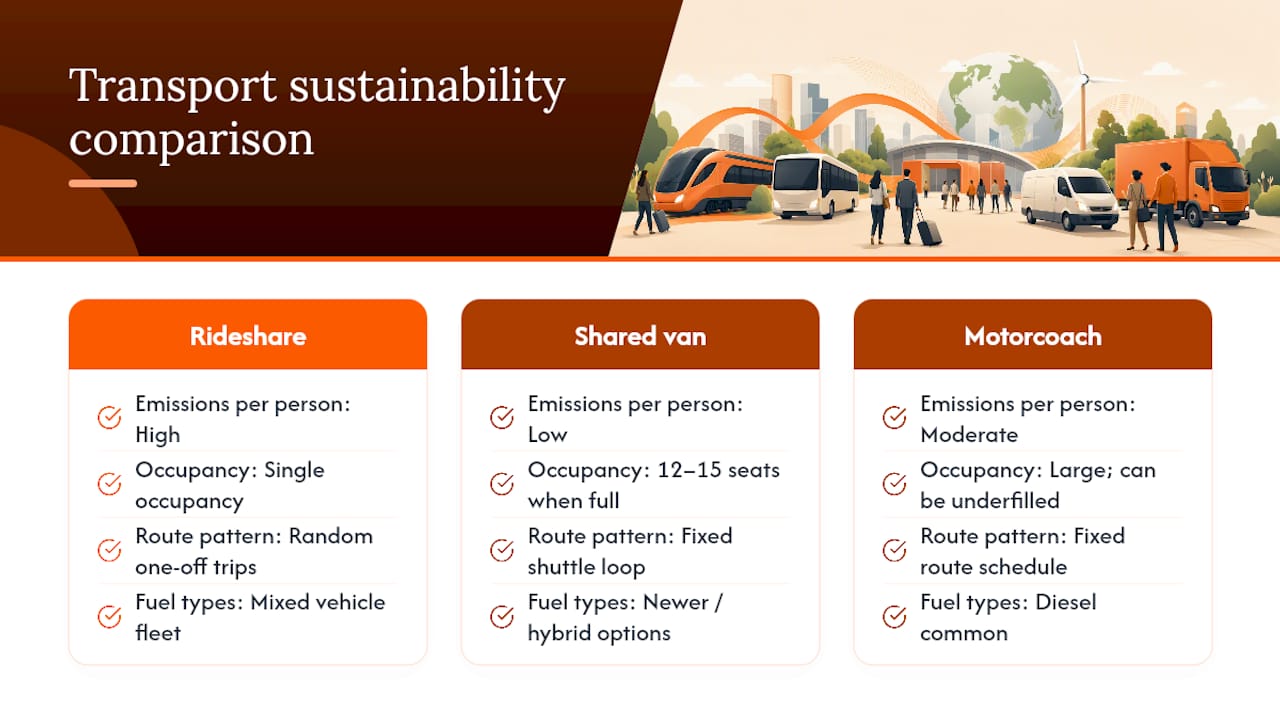
Route efficiency matters as much as vehicle choice. A shuttle loop that runs on a fixed schedule between two or three hotels and the venue burns less fuel per attendee than a fleet of vans making random one-off runs throughout the day. Consolidating pickup points, even if it means a slightly longer walk for some attendees, reduces total vehicle miles.
Newer Sprinter and Ford Transit models also tend to run more efficiently than older fleet vehicles, and some markets offer hybrid or lower-emission options worth asking about when you request quotes. If sustainability reporting matters to your organization or your exhibitors, ask providers directly about fleet age and fuel type. It’s a simple question that many planners skip, and it can shape which provider you choose when two quotes come in close.
Finally, right-sizing vehicles avoids running half-empty coaches. A 15-passenger van carrying 14 people is a better environmental and cost outcome than a 56-seat motorcoach carrying 20.
Using Technology to Coordinate Trade Show Transportation
Coordination breaks down when information lives in someone’s inbox instead of a shared system. Event apps that push shuttle schedules directly to attendees’ phones cut down on the “where’s my ride” messages that flood your team’s phones on show morning.
Real-time GPS tracking, now standard with most professional van and shuttle providers, lets your staging lead see exactly where a vehicle is instead of guessing. Pair that with SMS alerts for pickup confirmations and delay notifications, and you eliminate most of the guesswork that used to require a staffer standing at the curb with a walkie-talkie.
Group messaging tools, whether a dedicated event app or a simple shared thread, keep drivers, staging marshals, and your event lead on the same page when plans shift. A flight delay, a venue access change, or a last-minute VIP addition all move faster through a group thread than through a chain of individual calls.
Digital sign-in sheets for shuttle pickups also help you reconcile your headcount matrix in real time rather than after the fact. If a wave of attendees doesn’t show up for their assigned shuttle, you’ll know before your driver sits idle for twenty minutes. None of this technology replaces a well-built matrix or a clear escalation contact, but it makes both work faster.
How a Nationwide Fleet Solves Common Trade Show Transport Problems
Most transportation failures at trade shows trace back to one thing: a provider that can’t flex when plans change. My Van Rentals runs programs that range from a single exhibitor team needing two Sprinter vans for a week to full VIP transfer blocks coordinated around a keynote schedule.
The fleet strength that matters most here is variety within a single provider relationship. Ford Transit and Mercedes-Benz Sprinter vans in 12- and 15-passenger configurations, including high-roof and luggage-configured options, cover the range from a compact executive pickup to a full staff shuttle. Flexible pickup and delivery to hotels or venues means your team doesn’t lose a morning collecting a rental from an airport counter.
That flexibility is the difference between a transportation plan that survives a schedule change and one that doesn’t.
— Gabriel
Book Your Trade Show Transportation With My Van Rentals
My Van Rentals gives you one accountable fleet instead of stitching together rideshares, rental counters, and a coach company for a single event. That means one contract, one contact, and one set of vehicles configured for exhibitor teams, VIP transfers, and staff shuttles alike.
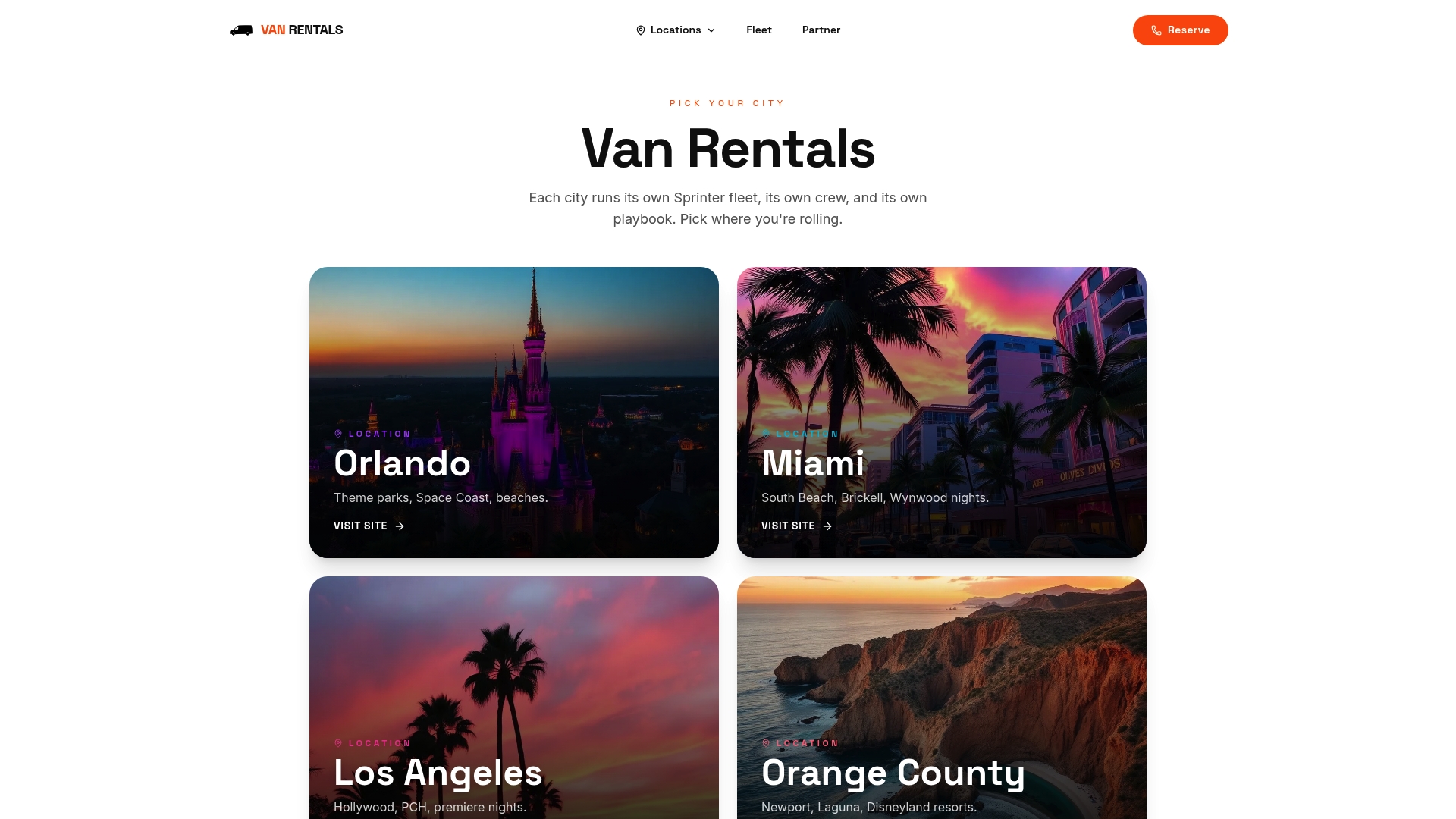
Before you call or book online, have your final headcount, luggage profile, pickup and drop-off coordinates, and required service hours ready. That’s the same information your planning matrix already captures, so quoting takes minutes instead of a back-and-forth email chain. Multi-day pricing is available for programs running the length of a show, and city-specific fleets mean you can book a Mercedes Sprinter 12-passenger van in Atlanta or check availability across dozens of U.S. cities without switching providers between markets.
Start by checking vehicle availability for your show dates on the My Van Rentals homepage and lock your fleet before your convention city’s peak season fills up.
Sources
- Charter Bus Rental for Convention Transportation: The Complete Planning Guide - Charter Buses USA
- Executive Ground Transportation for Group Travel | Savoya
- Charter Bus to the Javits Center: The Complete Guide for Conventions, Trade Shows & Corporate Events
FAQ
How Far in Advance Should I Book Trade Show Transportation?
Single-company programs can often book a few weeks out, but show-wide shuttle programs in major convention markets should start contracting several months ahead, around the same time exhibitors reserve booths.
What’s the Best Vehicle for a Small Exhibitor Team?
A Sprinter or 12-passenger van fits most exhibitor teams, offering flexible scheduling, easy loading access, and room for booth materials without the overhead of a full coach.
Should I Use Rideshare for Trade Show Transportation?
Rideshare works as a backup for individual delays, but professional shuttles and vans offer more reliable scheduling and pricing for VIP transfers and group movement.
How Do I Handle Attendee Luggage and Booth Equipment?
Separate travelers by luggage profile in your planning matrix and add a dedicated cargo van for oversized booth equipment rather than loading it alongside passengers.
Does My Van Rentals Offer Multi-Day Trade Show Rentals?
Yes, My Van Rentals offers multi-day pricing on Ford Transit and Mercedes-Benz Sprinter vans in 12- and 15-passenger configurations, with pickup and delivery to hotels or venues in cities nationwide.