Avoid Big Gaps: U.S. Rental Van Insurance for 12–15 & Cargo Vans

Avoid Big Gaps: U.S. Rental Van Insurance for 12–15 & Cargo Vans
You’re probably covered for some damage, but not automatically for everything a van rental exposes you to. Coverage depends on your vehicle class, your personal policy’s limits, and whether your credit card excludes larger vans. Before declining the rental company’s waivers, confirm your insurer and card issuer both cover the specific van you’re booking, not just “rental cars” in general.
TL;DR:
- Personal auto insurance usually extends to rental vans, but coverage depends on vehicle size, passenger capacity, and specific exclusions, especially for commercial use.
- Credit card coverage is often secondary and may exclude larger vans or moving trucks, requiring renters to verify restrictions and matching the cardholder’s name.
- Damage waivers like LDW and SLI can cost up to several hundred dollars for long-term rentals, making existing insurance more cost-effective if it covers the vehicle.
- Rental in different states or internationally may alter coverage eligibility; always confirm with your insurer before renting to avoid gaps.
- For business or large group rentals, purchasing the rental agency’s protection or a hired/non-owned auto policy is usually necessary, as personal policies often do not apply.
Table of Contents
- What Rental Van Insurance Actually Covers at the Counter
- Does Personal Auto Insurance Cover Rental Vans?
- Credit Card Rental Coverage: The Fine Print That Trips People Up
- Moving Trucks, Cargo Vans, and 12/15-Passenger Vans: Where Coverage Gets Tricky
- Five Questions to Ask Before You Decide at the Counter
- What Rental Van Insurance Actually Costs
- What to Do Immediately if Damage or Theft Happens
- How MyVanRentals Handles Protection Options
- How Rental Van Insurance Rules Change by State
- How Rental Length Changes Your Coverage and Price
- Choosing Coverage Based on Why You’re Renting
- Why We Push for Clarity, Not Upsells
- Book Your Van and Choose Protection That Fits
- Sources
- FAQ
What Rental Van Insurance Actually Covers at the Counter
When you rent a van, the counter agent offers a stack of products that sound similar but do different jobs. Getting these straight before you sign saves you money and, more importantly, keeps you from assuming you’re protected when you’re not.
Loss Damage Waiver (LDW) is the broadest option. It typically waives your responsibility for collision damage, theft, and even loss-of-use charges the rental company bills while the van sits in the shop. Collision Damage Waiver (CDW) covers a narrower slice: collision damage only, often leaving theft and loss-of-use exposed. According to insurance comparison data, LDW is generally broader than CDW, which is why renters handling higher-value vans or business bookings tend to lean toward it.
Supplemental Liability Insurance (SLI) is a separate product entirely. It adds liability protection on top of the state-minimum limits baked into the rental company’s own policy, which matters more with a 12 or 15-passenger van than with a sedan. A fender-bender involving a van full of passengers can generate injury claims that blow past minimum state limits fast.
Two more products round out the counter pitch:
- Personal Accident Insurance (PAI) pays medical costs for you and your passengers after a crash, regardless of fault.
- Personal Effects Coverage (PEC) reimburses stolen or damaged belongings inside the van.
- Roadside assistance covers towing, lockouts, and flat tires. It has nothing to do with liability or collision, but it matters on long-distance trips where a breakdown in an unfamiliar city is its own kind of emergency.
Does Personal Auto Insurance Cover Rental Vans?
Usually, yes, within limits that depend heavily on the vehicle. Most standard personal auto policies extend collision, comprehensive, and liability coverage to rental vehicles under what insurers call “temporary substitute vehicle” coverage. Your policy treats the rental as a stand-in for your own car while it’s being repaired or unavailable, carrying over the same coverage types and the same deductible you already have.
That last part trips people up. If your comprehensive deductible is $1,000, that same $1,000 applies to a rental claim. Declining the rental company’s waiver to “save money” only works if you’re comfortable covering that deductible out of pocket.
Here’s how to verify your coverage before you commit to a rental van:
- Call your agent, not the customer service line. Ask specifically whether your policy covers rental vans, not just rental cars. Some insurers draw a real distinction based on vehicle weight or passenger capacity.
- Ask about business or commercial-use exclusions. If you’re renting a van for a church group, sports team, or company event, some personal policies exclude “livery” or business-related use entirely.
- Check for a passenger-count or weight cutoff. Vans built for 12 or 15 passengers sometimes fall outside a personal policy’s definition of a covered “private passenger automobile.”
- Ask about umbrella coverage. If you carry an umbrella policy, confirm whether it extends liability protection to a rental van, since many umbrella policies require the underlying auto policy to already provide coverage.
- Get it in writing. State Farm’s own guidance recommends confirming details before you decline rental coverage, and a written or emailed confirmation from your agent is worth more at the counter than a memory of a phone call.
If you don’t own a car and don’t carry personal auto insurance, ask about hired and non-owned auto (HNOA) coverage, sometimes available through a standalone non-owner policy, which fills that gap.
Credit Card Rental Coverage: The Fine Print That Trips People Up
Credit card rental protection sounds like a free safety net, and sometimes it is. But it comes with restrictions that catch renters off guard, especially with vans.
Most card coverage is secondary, not primary. That means it kicks in after your personal auto insurance pays out, covering what’s left, like your deductible. A smaller number of premium cards offer primary coverage that pays first, without touching your own policy.
You must pay with the card and decline the rental company’s own waiver. Paying with a card and then still buying the card’s LDW voids most card benefits.
Larger vehicles are frequently excluded. Credit card coverage often excludes moving trucks and some larger vans, and some issuers cap coverage at vehicles seating nine passengers or fewer, which rules out most 12 and 15-passenger vans outright.
The cardholder’s name has to match the renter. If your assistant or a fellow group member books the van under their name, your card’s coverage doesn’t apply.
Liability usually isn’t included. Card benefits protect the vehicle, not people. If you cause an accident that injures someone else, your card offers nothing, which is exactly the gap SLI is built to fill.
Before you count on a card, call the number on the back and ask specifically about van rentals. Our guide to credit card holds on rental vans walks through the related deposit and authorization rules that catch renters off guard at pickup.

Moving Trucks, Cargo Vans, and 12/15-Passenger Vans: Where Coverage Gets Tricky
Not every van is treated the same by insurers, and this is where a lot of renters get burned. Vehicle class drives almost every coverage decision here.
- Moving trucks and large cargo vans are commonly excluded from both personal auto policies and credit card benefits. Guidance on renting moving vehicles consistently recommends buying the rental company’s damage waiver and SLI for these vehicles rather than assuming outside coverage applies.
- 12 and 15-passenger vans carry higher liability exposure by design. More seats means more potential injury claims from a single accident, which is why some insurers apply passenger-count restrictions or higher premiums to policies that need to cover them.
- Business and event rentals (church groups, school trips, corporate transport) often fall outside personal auto coverage entirely, since personal policies are underwritten for personal, not commercial, use.
Your alternatives when personal and card coverage won’t reach: buy the rental agency’s LDW and SLI directly, purchase a short-term non-owner liability policy through an independent agent, or, for a business booking, use a commercial auto or hired/non-owned auto policy. Hired and non-owned auto insurance often provides stronger primary protection for group and business rentals than any single traveler’s personal coverage.
Pro Tip: If you’re renting a van for a school, church, or company trip, ask your organization whether it already carries hired/non-owned auto insurance. Many nonprofits and small businesses do, and it may make the rental company’s SLI unnecessary.
Five Questions to Ask Before You Decide at the Counter
Standing at the rental counter isn’t the moment to start researching your policy. Have these answers ready before you walk in.
- “Does my personal auto policy cover this specific vehicle class?” If your agent hasn’t confirmed vans, weight limits, or passenger counts, you don’t actually know yet.
- “Is my card’s rental coverage primary or secondary, and does it exclude this van?” A secondary card benefit paired with no personal auto policy leaves you exposed.
- “What’s my deductible, and can I afford it out of pocket?” A $500 or $1,000 deductible on a rental claim is real money due immediately.
- “Does my coverage extend to business or organizational use?” Personal auto policies frequently exclude trips tied to a company, church, or nonprofit.
- “What does the state-minimum liability limit actually cover if something goes wrong?” If you’re transporting 12 to 15 people, that minimum may not stretch far.
The decision flow is simple once you have those answers. Covered by both your personal policy and your card, with no vehicle exclusions? You can likely decline the rental company’s LDW. Missing coverage on either side, renting a moving truck or cargo van, or booking for business use? Buy the waiver, or arrange third-party primary coverage before you drive off the lot.
Pro Tip: If your agent can’t answer a coverage question in one phone call, that’s a red flag. Buy the LDW and SLI at the counter rather than gambling on coverage you can’t confirm.
What Rental Van Insurance Actually Costs
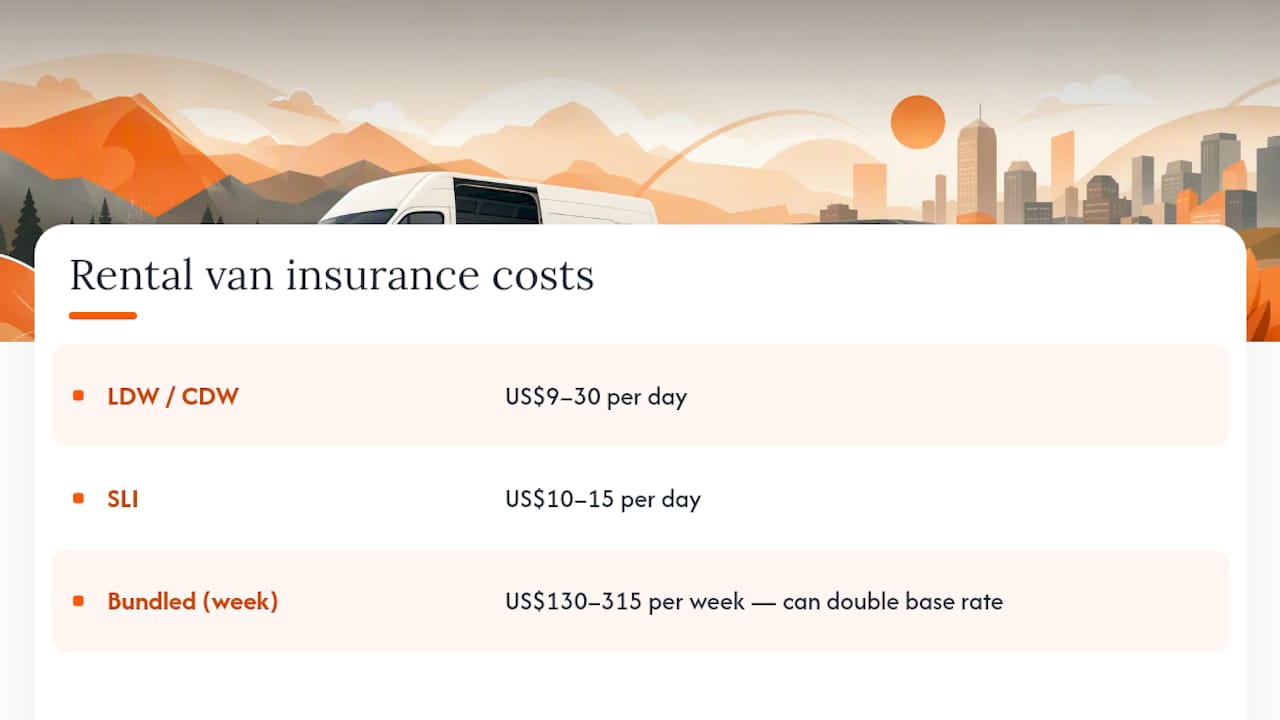
Daily rates vary by rental company and location, but industry summaries put damage waivers like LDW and CDW at roughly $9 to $30 per day, with SLI adding another $10 to $15 per day. Bundle both, and a week-long rental can add $130 to $315 in protection costs alone, sometimes doubling the van’s daily base rate.
Zero-deductible waivers eliminate your out-of-pocket exposure entirely, while relying on your personal policy still leaves your existing deductible in play. Loss-of-use fees (charged while a damaged van sits unrentable) and administrative fees for processing a claim add up separately, and rental companies calculate both differently, so ask upfront how they’re figured.
What to Do Immediately if Damage or Theft Happens
Acting fast protects you from disputed charges later.
- Photograph everything at the scene, including the van, other vehicles, and surrounding area.
- File a police report for any accident or theft, even minor ones. Most insurers require it before paying a claim.
- Call the rental company’s emergency line immediately, not after you return the van.
- Notify your insurer or card issuer within 24 to 48 hours to start the claims process.
- Keep every document, including the rental agreement, repair estimates, and correspondence.
Expect the rental company to charge your card first and your insurer to reimburse you afterward, a process that commonly takes several weeks. If you dispute loss-of-use or damage charges, request an itemized invoice and escalate through your insurer’s claims department, which carries more weight than a phone call alone.
How MyVanRentals Handles Protection Options
MyVanRentals operates fleets that include Ford Transit, Mercedes-Benz Sprinter, and Chevrolet Express vans, and insurer rules differ across those classes, so we flag protection eligibility by vehicle before you book. Our team documents vehicle condition with time-stamped photos and return inspection records to reduce disputes over damage or loss-of-use charges.
- Protection add-ons are shown clearly during checkout, not buried in fine print.
- Roadside assistance details are available before you pick up the van.
- Our contract breakdown guide explains every clause you’ll see at signing.
How Rental Van Insurance Rules Change by State
Insurance requirements for rental vans aren’t uniform across the country, and the differences matter more than most renters expect. Every state sets its own minimum liability limits, and those minimums directly affect how much of a gap SLI needs to fill. A state with low minimum liability requirements leaves a bigger hole for a 15-passenger van accident to fall into, since injury claims from a full van scale with the number of people involved.
Some states also regulate how rental companies can price and structure damage waivers, capping daily rates or requiring specific disclosure language on the rental agreement. Others allow more pricing flexibility, which is part of why the same van rented in two different states can carry noticeably different waiver costs.
If you’re renting across state lines, for a road trip or a one-way move, check whether your personal auto policy follows you and consider getting vacation rental insurance for guests & owners as a supplementary travel protection resource. Most personal policies extend the same coverage regardless of which state you’re driving through, but confirm this with your agent rather than assuming it, especially if the destination state has different minimum coverage laws than your home state.
International rentals raise a separate issue entirely. Personal auto policies from U.S. insurers typically stop at the border, and most credit card rental benefits explicitly exclude vehicles rented outside the United States or list a limited set of covered countries. If you’re renting a van internationally, do not assume either your card or your personal policy applies. Contact your insurer and card issuer directly, and expect to need a local or agency-provided policy instead.
How Rental Length Changes Your Coverage and Price
A weekend rental and a month-long rental expose you to different math. Daily waiver rates stay flat regardless of duration, which means the total cost of LDW or SLI scales directly with how long you keep the van. A three-day waiver at $20 a day runs $60. Stretch that same rental to three weeks, and you’re looking at $420, often enough to make third-party or personal coverage the cheaper route if you already qualify for it.
Coverage terms can shift with duration too. Rental companies frequently define a cutoff, often around 28 to 30 days, beyond which the agreement shifts from a standard rental contract to a long-term lease with different insurance requirements entirely. If you’re planning an extended rental, ask specifically whether your protection plan changes past that threshold.
Personal auto “temporary substitute vehicle” coverage was built around short-term use while your own car is out of service. Some insurers apply time limits, commonly 30 days, after which the rental van may no longer qualify as a temporary substitute under your policy. Longer rentals for events, seasonal business use, or extended travel are exactly the cases where confirming your policy’s duration limit with your agent matters most, before you’re a month into a rental you assumed was covered.
Choosing Coverage Based on Why You’re Renting
The right coverage depends less on the van itself and more on what you’re using it for and how much risk you’re carrying.
For a family road trip, if your personal auto policy and card both check out for the vehicle class, declining the rental company’s LDW is often reasonable. Your existing deductible is the main number to plan around.
For a group or event rental (weddings, sports teams, church groups), lean toward the rental company’s LDW and SLI unless your organization already carries hired/non-owned auto insurance. More passengers means more liability exposure if something goes wrong, and that’s not a gap you want to discover after the fact.

For a business rental, a personal auto policy usually won’t help you at all. A commercial auto or hired/non-owned auto policy is the more reliable primary coverage, and it’s worth arranging before the trip rather than at the counter.
For a moving truck or cargo van, buy the agency’s damage waiver and SLI as your default assumption, since both personal policies and card benefits routinely exclude these vehicle classes.
Match the coverage to the actual risk in front of you: how many people are in the van, whether the trip is personal or organizational, and how far you’re driving from home.
Why We Push for Clarity, Not Upsells
We’ve watched renters get talked into every waiver on the counter out of fear, and we’ve watched others decline everything and get stuck with a bill they didn’t see coming. Neither outcome is necessary. The fix is boring but effective: know your policy, know your card, and ask direct questions before you sign anything.
If you’re ever unsure whether your coverage applies to a specific van, our customer support team can walk through your booking’s vehicle class with you before pickup.
— Gabriel
Book Your Van and Choose Protection That Fits
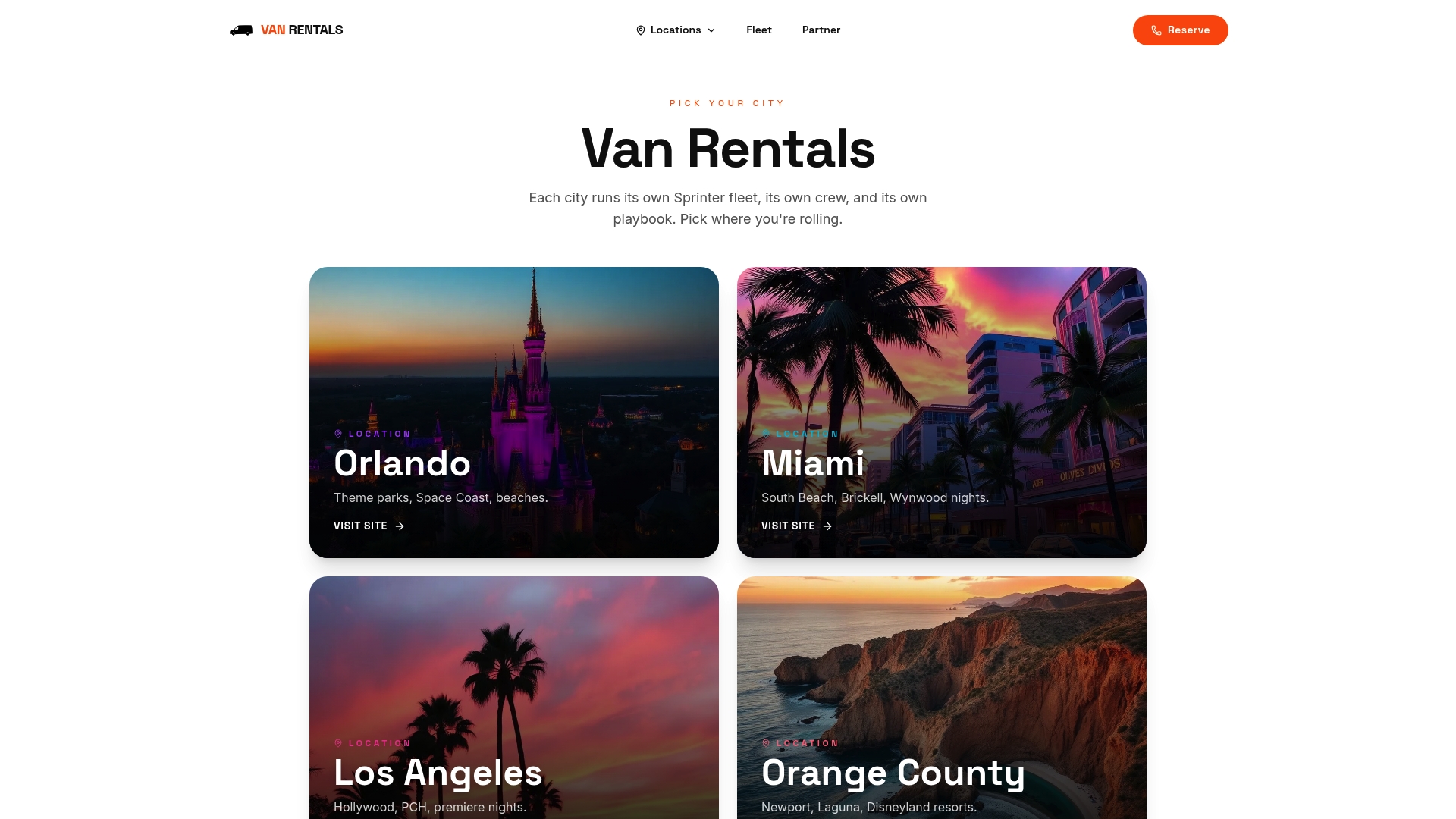
My Van Rentals gives you a clearer path than piecing together coverage from a card issuer’s fine print and a personal policy you’re not sure applies. When you reserve a van through our city pages, you choose protection add-ons directly during checkout, with the vehicle class and passenger count already displayed so you’re not guessing what your insurer needs to know.
Whether you need a 12-passenger Sprinter in Atlanta for a church retreat or a family-sized minivan for a weekend trip, our team can also provide written confirmation of the vehicle class and rental terms your insurer may ask for before pickup. Start by browsing available vans nationwide and picking the protection level that matches your trip.
Sources
- Everything You Need To Know About Rental Car Insurance — GEICO
- Should You Buy Car Rental Insurance? — Consumer Reports
- LDW vs CDW vs SLI: Rental Car Coverage Waivers — GetBusinessCoverage
- When renting a moving truck, don’t forget about car insurance — ValuePenguin
FAQ
Will My Car Insurance Cover a Rental Van?
Usually yes, under “temporary substitute vehicle” coverage, but confirm your policy doesn’t exclude larger vans by weight or passenger count, and remember your existing deductible still applies.
Does a Credit Card Cover Rental Van Insurance?
Often, but coverage is typically secondary and frequently excludes vans seating more than nine passengers or moving trucks, so call your card issuer before relying on it.
What Company Has the Best Rental Insurance?
There’s no single best provider. The right combination depends on whether your personal policy and card already cover the vehicle class, with hired/non-owned auto insurance often the stronger choice for business or group bookings.
Does My Car Insurance Cover Me in a Rental Van in Another Country?
Generally no. Most U.S. personal auto policies and credit card benefits stop at the border, so confirm international coverage with your insurer or plan to purchase local coverage.
Can I Get Temporary Van Insurance in the U.S.?
Yes. Short-term non-owner liability policies are available through independent agents for renters who lack a personal auto policy or need coverage beyond what their card and current policy provide.