Los Angeles Carpool Rules: What Every Driver Must Know

Los Angeles Carpool Rules: What Every Driver Must Know
Most Los Angeles carpool lanes run 24/7, and most require two or more occupants in the vehicle. Children count. Some segments push that number to three or more. Cross a double solid line to jump in or out, and you’re breaking the law regardless of how many people are in your car.
That’s the short version of Los Angeles carpool rules. Here’s what you need to act on right now:
- Occupancy: 2+ people minimum on most routes; some segments require 3+ during posted hours.
- Lane markings: Never cross double solid white or yellow lines to enter or exit. Use dashed-line breaks only.
- Enforcement: California Highway Patrol and automated occupancy cameras issue tickets that commonly start around $490.
Key Takeaways
Los Angeles carpool lanes generally run full-time with a 2+ occupancy minimum, and every violation, from crossing a double solid line to a FasTrak mismatch, carries a fine starting around $490.
| Point | Details |
|---|---|
| Occupancy minimum | Most LA carpool lanes require 2+ people; some segments like El Monte Busway require 3+ during peak hours. |
| Hours of operation | Southern California HOV lanes are typically full-time (24/7), unlike Northern California’s part-time restrictions. |
| Legal entry and exit | Only cross into or out of a carpool lane at dashed-line breaks; double solid lines are always illegal to cross. |
| Enforcement and fines | CHP and automated occupancy detection issue notices, with minimum fines commonly around $490 to $491. |
| Vehicle restrictions | Vans subject to 55 MPH limits or towing trailers cannot use carpool lanes regardless of passenger count. |
Table of Contents
- Who Can Legally Use a Carpool Lane in Los Angeles?
- Are Carpool Lanes Open 24 Hours in Los Angeles?
- Where Can You Legally Enter and Exit a Carpool Lane?
- What Happens If You Get Caught Violating Carpool Lane Rules?
- Can Rental Vans Use Carpool Lanes in Los Angeles?
- How Does Metro ExpressLanes FasTrak Flex Work?
- How Should Groups Prepare Before Using Carpool Lanes?
- Do Carpool Rules Change During Special Events?
- What Should You Do About Carpool Lanes During Freeway Closures?
- Book a Compliant Group Van With My Van Rentals
- An Editorial Take on Navigating LA’s Carpool Maze
- Sources
- FAQ
Who Can Legally Use a Carpool Lane in Los Angeles?
The occupant rule sounds simple until you’re staring down a checkpoint sign at 65 miles per hour. According to Caltrans, an occupant is anyone properly seated and restrained in the vehicle, including infants in car seats and toddlers in booster seats. A family of four with two kids buckled in the back qualifies just as easily as two adults commuting together.
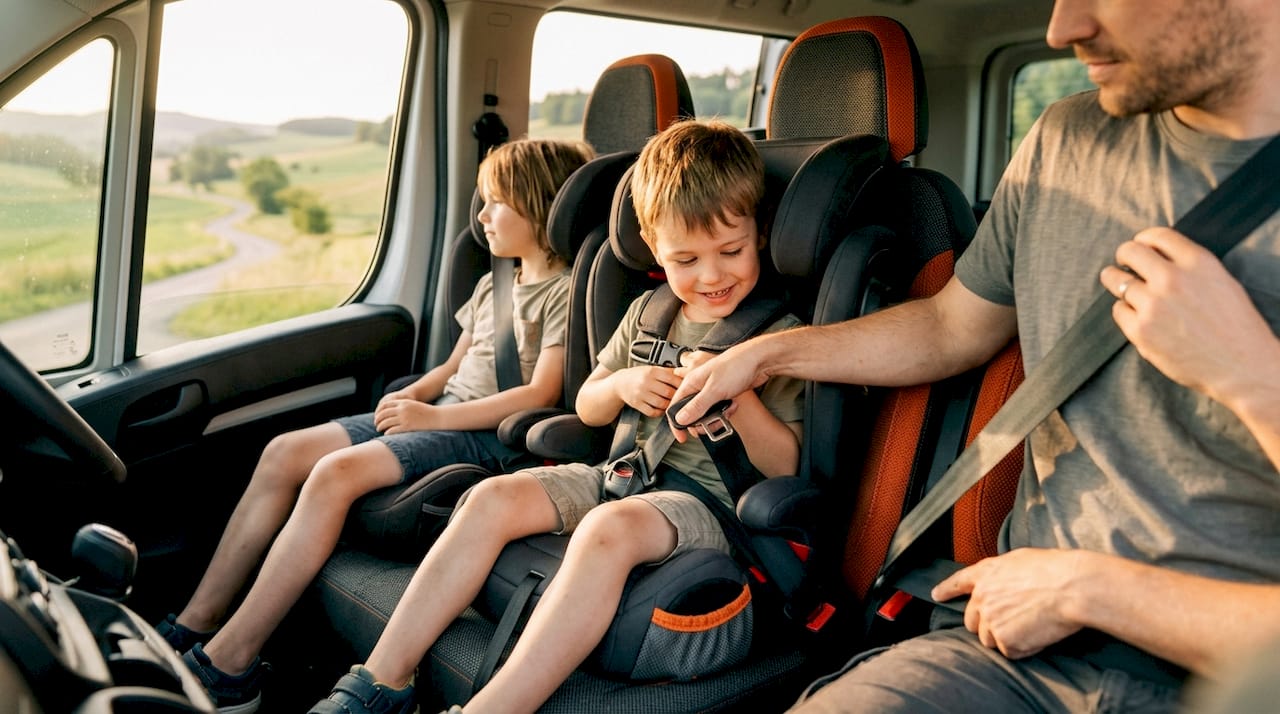
Most Southern California HOV lanes require two or more occupants, though certain corridors bump that to three or more during specific hours. The diamond symbol painted on the pavement marks these lanes, and posted signs tell you the occupancy minimum for that stretch of freeway.
A few vehicle types get a pass regardless of headcount:
- Motorcycles can use carpool lanes solo under California Vehicle Code 21655.5.
- Public transit buses and licensed paratransit vehicles qualify automatically.
- Marked emergency vehicles and blood transport vehicles are exempt by statute.
Statistic Callout: Clean-air vehicle decals once let solo drivers of qualifying hybrids and electric vehicles use carpool lanes without a passenger. That program has changed over time, and some decal types have been phased out. The DMV’s clean-air decal page is the only place to confirm what currently qualifies before you count on solo access.
Are Carpool Lanes Open 24 Hours in Los Angeles?
Yes, in most cases. Southern California HOV lanes are generally full-time operations, meaning the occupancy rule applies at 3 a.m. on a Tuesday the same way it applies during Friday rush hour, according to Caltrans. Northern California handles this differently, restricting many HOV lanes to peak commute windows only. If you’re driving in Los Angeles, assume the rule is always active unless a posted sign says otherwise.
A few Los Angeles facilities add wrinkles worth knowing:
- El Monte Busway on the I-10 corridor has historically required three or more occupants during certain peak windows, a stricter threshold than the standard two-person rule.
- Metro ExpressLanes on the I-10 and I-110 let solo drivers pay a toll to use the lane, while qualifying carpools travel free or at a reduced rate depending on occupancy and time of day, per Metro ExpressLanes.
- Standard diamond lanes elsewhere in LA typically stick to the 2+ rule around the clock.
Route-specific signage overrides general assumptions every time. Check the posted occupancy requirement before you merge, not after you’re already in the lane.
Where Can You Legally Enter and Exit a Carpool Lane?
You may only cross into or out of a carpool lane where the lane markings allow it: dashed white lines or designated ramp connections. Double solid lines, whether white or yellow, mean the lane is sealed off at that point, and the California Highway Patrol treats crossing them as a straightforward violation with no gray area.
Here’s how most visitors and rushed commuters end up with a ticket:
- Merging across a buffer zone. Some carpool lanes are separated from general traffic by a painted buffer, not just a single line. Crossing that buffer is the same violation as crossing a double solid line.
- Entering early to set up for an exit. Drivers often jump into the carpool lane a mile before their exit, then can’t legally get back out because the striping has gone solid.
- Miscounting passengers. An infant asleep in a car seat still counts, but a driver who forgot to check before merging might not realize they’re one person short.
- Ignoring posted signage. Occupancy minimums and hours change by segment, and CHP guidance notes that drivers often assume the rule from one freeway applies to the next.
Pro Tip: Before switching into a carpool lane, glance at the overhead sign for the current occupancy requirement, confirm your passenger count out loud if you’re unsure, and wait for a dashed-line break rather than guessing where the buffer ends.
What Happens If You Get Caught Violating Carpool Lane Rules?
CHP officers patrol Los Angeles freeways specifically watching for solo drivers in carpool lanes and illegal lane crossings. On tolled segments, Metro ExpressLanes also relies on Occupancy Detection Systems, cameras and sensors that estimate how many people are in a vehicle and compare that count to what’s declared on the FasTrak Flex transponder.
Here’s what typically triggers a notice:
- A camera-based occupancy read that doesn’t match your transponder setting.
- A FasTrak account left on the wrong occupancy level from a previous trip.
- A straightforward CHP stop for crossing a double solid line or driving solo in a 2+ lane.
Statistic Callout: Minimum fines for carpool lane violations in California commonly start around $490 to $491, and that figure climbs with court fees depending on the county. Toll-related notices on ExpressLanes add separate processing fees on top of the base toll owed.
Once a notice is issued, it goes to the registered owner of the vehicle, not necessarily the driver. Owners can typically pay the fine directly, contest it through traffic court, or dispute an ExpressLanes toll notice if they believe the occupancy detection made an error. Unpaid tickets can escalate to registration holds, and for rental drivers, unresolved violations sometimes surface as unexpected charges on a final invoice.
Can Rental Vans Use Carpool Lanes in Los Angeles?
Often, yes, but not automatically. The passenger count in a 12- or 15-passenger van clears the occupancy bar easily. The vehicle classification is the part renters overlook. Any vehicle subject to a 55 MPH speed restriction, typically larger trucks, vehicles towing trailers, or vehicles registered as commercial and overweight, is barred from carpool lanes regardless of how many seats are filled, according to CHP.
Before you assume your rental van qualifies, check these details:
- GVWR and vehicle class. Confirm the van isn’t registered in a weight class that triggers the 55 MPH restriction.
- Commercial markings. A van labeled or registered as a commercial vehicle may face different lane restrictions than a standard passenger van.
- Trailers. Towing anything, even a small equipment trailer, disqualifies the vehicle from carpool lane use no matter the occupancy.
- Seat and belt availability. Every occupant you’re counting toward the minimum needs a proper seat and restraint, not a lap or a makeshift spot.
Getting this wrong carries more than a fine. If you’re illegally in a carpool lane when a collision happens, an entry or exit violation can shift additional legal responsibility onto the driver during a claims investigation.
How Does Metro ExpressLanes FasTrak Flex Work?
FasTrak Flex is the switch that tells the automated system how many people are in your vehicle before you ever reach the toll gantry. Set it to 1, 2, or 3+ before your trip starts, according to Metro ExpressLanes. The system’s cameras and sensors then check that declared number against what they detect as you pass through.
The I-10 and I-110 ExpressLanes don’t run identical rules. One corridor may offer toll-free passage to vehicles carrying two or more occupants, while the other requires three or more during specific windows, so check the posted rate signs for your specific route and time of day rather than assuming both freeways match.
- Set your transponder before merging, not after you’re already in the lane.
- A mismatch between your declared occupancy and the detected count is what generates a violation notice, not simply being in the lane.
- Forgetting to set FasTrak Flex, or not having one at all, often results in a one-time toll notice with added processing fees rather than the carpool rate.
Pro Tip: Set your FasTrak Flex the night before a group trip, not while merging onto the freeway. It takes ten seconds and it’s the single biggest reason drivers get hit with toll notices they didn’t expect.
How Should Groups Prepare Before Using Carpool Lanes?
Group trips add moving parts that solo commuters never have to think about. A quick pre-trip routine solves most of it.
- Confirm your passenger manifest before you leave, and double check that every seat has a working belt.
- Set your FasTrak Flex to the correct occupancy level if you’re taking a tolled ExpressLane.
- Map your entry and exit points in advance, including a backup route if the dashed-line break you planned on isn’t where you remembered.
- Choose a van class that isn’t subject to a 55 MPH restriction, and confirm that with your rental provider before booking.
My Van Rentals’ Los Angeles fleet includes 12- and 15-passenger vans built for exactly this kind of trip, with full seating and belts for every rider and delivery options that get your group moving without a detour to pick up the vehicle first. A properly configured 15-passenger Transit keeps a school group, church trip, or wedding party together in one vehicle instead of splitting across multiple cars that may or may not qualify for the same lane.
Do Carpool Rules Change During Special Events?
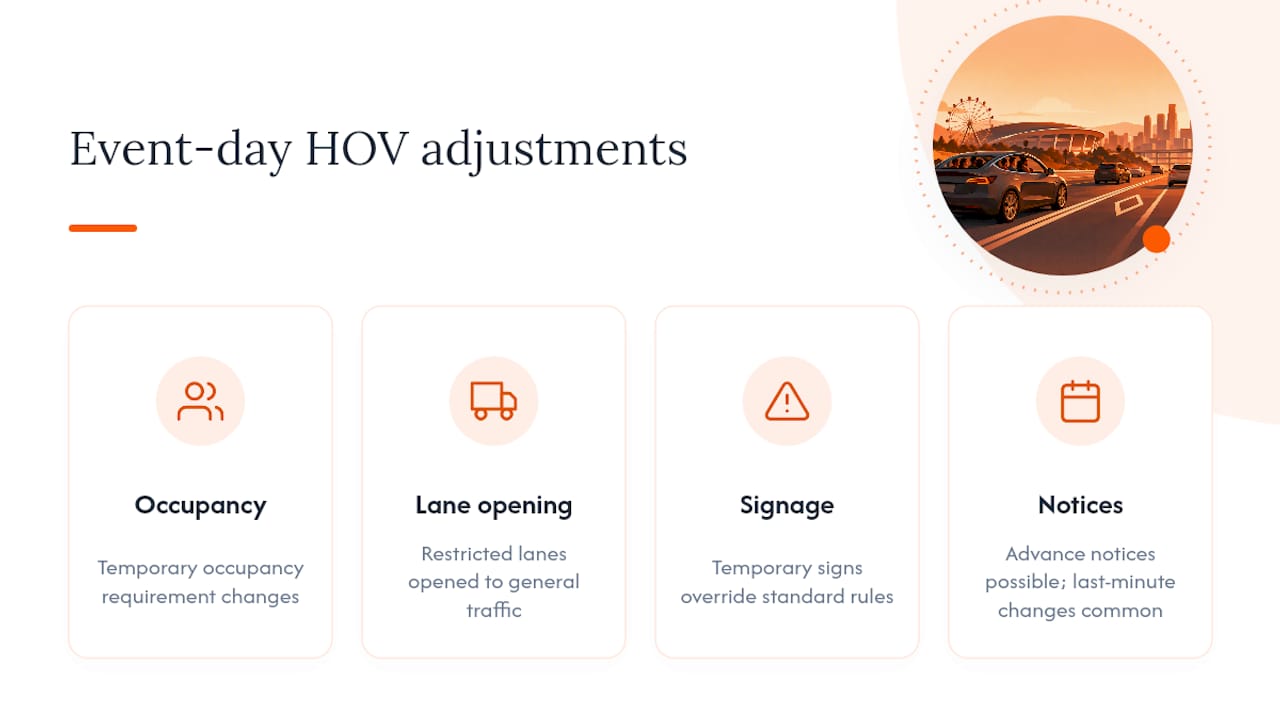
Yes, and this catches visitors off guard more than almost any other wrinkle in LA’s system. During major events, Caltrans and local transportation agencies sometimes adjust HOV lane rules temporarily, particularly around stadiums, convention centers, and large-scale gatherings where traffic volume spikes far beyond normal commute patterns.
These adjustments can include shifting occupancy requirements for a specific window, opening a normally restricted lane to general traffic to manage congestion, or posting temporary signage that overrides the standard 24/7 rule for a set period. The Los Angeles area has seen this kind of temporary lane management around major sporting events and large public gatherings, where traffic engineers prioritize overall flow over standard carpool restrictions.
The catch is that these changes are almost always communicated through temporary signage and electronic message boards on the freeway itself, not through a permanent update to any published rulebook. A lane that required 2+ occupants last week might carry different instructions on event day, and the only reliable way to know is to read the overhead signs as you approach, not rely on what you remember from a previous trip on that same freeway.
If you’re driving a group to or from a stadium event, build extra time into your trip specifically to read signage carefully rather than assuming yesterday’s rules still apply. Local radio traffic reports and the Caltrans website sometimes post advance notice for major planned events, though last-minute adjustments for unexpected congestion are common and rarely announced ahead of time.
What Should You Do About Carpool Lanes During Freeway Closures?
Freeway closures and detours create a specific kind of confusion around carpool lanes because the normal cues you’d rely on, like lane striping and consistent signage, can be disrupted or temporarily rerouted. When a section of freeway closes for construction, an accident, or maintenance, the detour route doesn’t automatically carry the same HOV rules as the closed segment.
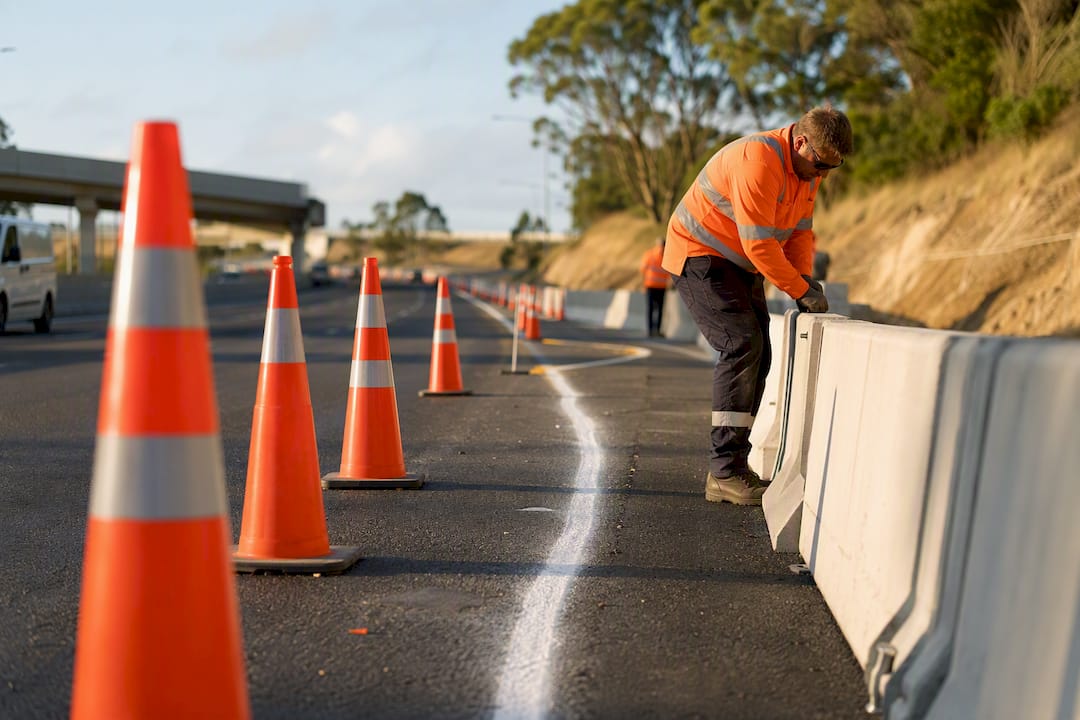
The safest approach is treating every detour as a fresh read of the road rather than an extension of the lane you were just in. If construction crews have shifted traffic patterns, the carpool lane markings may be temporarily covered, relocated, or suspended entirely for the duration of the work. Caltrans typically posts temporary signage indicating whether HOV restrictions remain in effect through a work zone, and ignoring that signage because “the carpool lane was there yesterday” is a common way visitors and even longtime residents end up with a ticket.
Pay close attention to cone patterns and temporary striping, since construction zones often use different lane markings than the permanent paint underneath. If you can’t clearly identify a dashed-line break or confirm the current occupancy requirement through posted signs, the safer move is staying in a general-purpose lane until the detour clears and normal markings resume. A missed carpool lane during a five-minute detour costs you far less than a violation that follows you home. For broader context on how LA traffic patterns shift during construction and closures, Ride Scouts’ Los Angeles transportation guide offers useful background on route planning around the city’s most congested corridors.
Book a Compliant Group Van With My Van Rentals
Understanding Los Angeles carpool rules matters most when you’re actually behind the wheel of a full vehicle trying to get a group somewhere on time. My Van Rentals makes that easier by matching you with the right vehicle class from the start, so you’re not left guessing whether your rental qualifies for the lane you’re counting on.
Our Los Angeles fleet includes 12- and 15-passenger options like the Express 15-Passenger, built with full seating and belts for every rider, plus flexible pickup and delivery so your group isn’t wasting time before the trip even starts. If your group is planning a school outing, church trip, or wedding party transport elsewhere in the country, our school van rental options and nationwide fleet, including Sprinter vans like the Atlanta 12-Passenger Sprinter, cover the same need for reliable, properly classed group transportation.
Reserve your van early, confirm the vehicle class before your trip, and you’ll spend less time worrying about lane eligibility and more time actually getting where you’re going.
An Editorial Take on Navigating LA’s Carpool Maze
Most articles on this topic treat carpool lanes like a simple math problem: count your passengers, check the sign, done. The research tells a different story. The real risk isn’t misunderstanding occupancy, it’s misjudging where you’re legally allowed to move. CHP guidance keeps circling back to the same point: violations cluster around lane crossings and buffer zones, not headcounts.
That gap matters because most visitor advice online focuses entirely on “how many people do I need,” while ignoring the striping question until it’s too late. If you’re renting a van for a group trip, the vehicle classification question deserves equal attention. A full 15-passenger van still gets barred from HOV lanes if it’s registered in a weight class carrying a 55 MPH restriction, a detail almost no consumer guide mentions.
My honest read: prioritize the striping rules and vehicle class check first. The occupancy math takes care of itself once you’re paying attention to where you’re allowed to merge and what you’re actually driving.
— Gabriel
Sources
- High-Occupancy Vehicle Systems - Caltrans
- Using Metro ExpressLanes – Metro ExpressLanes
- HOV and HOT Lane Information - California Highway Patrol
- California Vehicle Code §21655.5
- Clean-air vehicle decals for using carpool lanes - DMV
FAQ
What are the rules for using carpool lanes in Los Angeles?
Most Los Angeles carpool lanes run 24/7 and require 2+ occupants, with some segments requiring 3+. You can only enter or exit at dashed-line breaks, never across double solid lines.
Is California the only state with carpool lanes?
No. HOV lanes exist in many states across the country, though California operates one of the largest and most heavily used networks, with Los Angeles among its busiest corridors.
How do cops catch HOV violators?
CHP officers patrol visually for solo drivers and illegal lane crossings, while Metro ExpressLanes uses automated Occupancy Detection Systems that compare camera-based passenger counts to FasTrak Flex transponder settings.
Is HOV in California 2 people?
Usually yes. Most California HOV lanes require two or more occupants, but certain corridors, like segments of the El Monte Busway, require three or more during posted peak hours.