Long-Term Van Rental Benefits: Why Renting Beats Owning

Long-Term Van Rental Benefits: Why Renting Beats Owning
Renting a van for weeks or months gives your group a large vehicle without the cost of buying one. You skip the down payment, the repairs and the resale. You pay for the time you need and hand the van back when the trip, season or project ends. For most families, church groups, event organizers and business teams, that is the cheaper and simpler way to move many people together.
This guide explains the main benefits, what to count in the cost, how to keep a large van safe over a long rental, and how to pick the right size.
TL;DR
- A long-term van rental replaces a purchase, a loan and ongoing repairs with one predictable rental cost.
- Insurance, maintenance and roadside help can be packaged into the rental, as public transportation guides describe for leased vans.
- You can match the van to the job: 12-passenger, 15-passenger, Sprinter, minivan or executive van.
- Count mileage fees, fuel, parking and insurance before you book. Extra miles at My Van Rentals are listed per mile by van type.
- Large vans handle differently from cars. Follow federal safety guidance for drivers, tires, load and seat belts.
Table of Contents
- What “long term” means for a passenger van
- The main benefits of renting a van long term
- Who gets the most from a long-term van rental
- What to count in the cost
- Safe use over a long rental
- How to choose the right long-term van
- Reserve your long-term van
- Our view on long-term rental
- FAQ
- Sources
What “long term” means for a passenger van
There is no single legal cutoff. In practice, a short rental covers a weekend or a trip. A long-term rental runs for several weeks, a season or many months. Rental companies usually price these by the day, week or month.
Long-term van use is common. Public agencies describe vanpools, which are regular commutes in vans carrying 7 to 15 passengers. The 511.org guide says these vans may be leased, company-owned or member-owned. Church shuttles, school programs, tour seasons and employee transport work the same way. The van stays with you for a defined period and goes back when you no longer need it.
At My Van Rentals, we handle short-term and long-term passenger van rentals, including 12-passenger and 15-passenger vans, in cities across the United States.
The main benefits of renting a van long term
1. One predictable cost instead of a purchase
Buying a large passenger van means a down payment or a loan, registration, taxes and a vehicle that loses value every year. Renting turns that into a cost you can plan around. You know the period, you know the rate you agreed to, and you know when it ends.
This matters most when the need is temporary. A summer camp season, a wedding weekend block, a three-month project or a winter of airport runs does not justify owning a van that sits idle the rest of the year.
2. No repair and upkeep headaches
Owners handle oil changes, brakes, tires, inspections and surprise repairs. Industry guides to van leasing list avoiding these expenses as a core reason to lease. A rental fleet is maintained as part of the service. You drive the van and return it.

The public guides agree. New Jersey’s transportation department notes that vanpool models can include vendor-provided insurance and maintenance. The 511.org guide says third-party leasing can package insurance, maintenance and 24-hour roadside assistance with the vehicle.
Our fleet is a modern one, made up of Ford Transit, Mercedes-Benz Sprinter and Chevrolet Express vans. Our positioning is simple: fully insured vehicles and no surprise charges at pickup.
3. Insurance you can arrange up front
A large van carries more people, so liability matters. Many renters check their personal auto policy first. Some policies do not extend to large passenger vans. We offer Renter’s Contingent Liability Insurance as an option, so you can sort out coverage before you pick up the keys.
4. The right van for each job
When you own, you are stuck with the van you bought. When you rent, you choose by need:
- 12-passenger van: a family trip, a small team, a wedding party.
- 15-passenger van: a church group, a sports team, a tour group.
- Ford Transit: low roof for easy parking, medium or high roof for more headroom and luggage space.
- Mercedes-Benz Sprinter: comfortable seating for longer drives.
- Executive Sprinter: a luxury option for business clients and special events.
- Minivan (8-passenger): a smaller group that does not need a full-size van.
You can see the full range on our fleet page. If your needs change mid-season, a different van fits the new group.
5. Shared cost for a large group
A big van is often cheaper per person than several cars. Each car adds its own fuel, parking and insurance. One van splits one set of costs across everyone.
Public transportation guides make the same point. The 511.org guide says vanpool participants can benefit from shared fuel costs, lower individual vehicle maintenance and insurance costs, and potentially lower parking costs. A 1993 federal handbook on vanpooling reported that average Southern California vanpoolers saved more than $1,500 a year on gas, maintenance and wear and tear compared with driving alone. That is a vanpool figure from its time, not a quote for your trip. It shows the logic: one vehicle, many riders, lower cost per head.
6. Less stress and a group that stays together
Travel by convoy means lost turns, split arrivals and people waiting at the curb. One van keeps everyone together. New Jersey’s transportation department lists reduced travel expenses and stress, more productive commute time and less worksite parking demand among the benefits of vanpooling. The same idea applies to a family heading to a theme park for a week or friends sharing a beach house.
7. Delivery and airport pickup
A long rental starts better when the van is waiting where you are. We offer airport pickup and delivery to hotels or venues, run by local teams in major U.S. cities. For a group arriving with luggage, that means no shuttle transfers and no hunting for a rental counter.
Who gets the most from a long-term van rental
Families on extended trips
A family visiting theme parks for one or two weeks needs room for luggage, strollers and everyone’s gear. A van costs less per person than two cars, and you park once at the hotel. If you travel with small children, read our guide on fitting car seats in rental vans before you pack.
Friends on beach getaways
Splitting the rental, fuel and parking among eight to fifteen people brings the cost per person down fast. Everyone arrives together, and the designated driver is clear.
Businesses and event organizers
A company running a trade show, a film shoot or a temporary site needs transport for weeks, not days. A rented van avoids the fleet purchase. If you move staff daily, our guide to employee shuttle vans explains how to set up and run a program.
There is also a commuting tax rule worth knowing about. The IRS says in its 2026 Publication 15-B that the monthly exclusion for commuter highway vehicle transportation and transit passes is $340 for 2026. This is an employer commuting benefit. It does not apply to leisure rentals. Ask your accountant whether your program qualifies.

Churches and schools
Weekly outings, youth trips and seasonal programs fit a long-term rental well. We run dedicated church and school programs, including tax-exempt and PO billing.
Moving and project work
Some people rent a passenger van for a multi-week move, taking out seats’ worth of passengers between trips and carrying boxes in the cargo area. If your belongings need to wait between locations, a guide to short-term storage costs helps you compare monthly storage with other options.
What to count in the cost
A long rental has more line items than a weekend rental. Build a simple budget before you book.
| Cost item | What to ask or check |
|---|---|
| Base rate | Daily, weekly or monthly, and the length of the term |
| Mileage | Miles included and the fee per extra mile |
| Fuel | Estimate miles per week and your van’s fuel use |
| Insurance | What your own policy covers, and whether you need liability cover |
| Parking | Hotel, venue or street parking for a large vehicle |
| Drivers | Who will drive, and whether they meet the rental rules |
| Pickup and return | Airport pickup, delivery to a hotel or venue |
A 1993 federal vanpool handbook sorts expenses into fixed costs such as insurance, registration and lease costs, and operating costs such as fuel and maintenance. That is a good way to organize your own budget. For a rental, the fixed costs sit mostly inside the rental rate. Your operating costs are fuel, tolls and parking.
Mileage is the line to watch
On a long rental, mileage adds up. Our published extra-mile fees depend on the van:
- Ford Transit (low roof): $0.50 per extra mile
- Medium-roof Ford Transit: $0.50 per extra mile
- Mercedes-Benz Sprinter: $0.75 per extra mile
- Minivan (8-passenger): $0.75 per extra mile
- Mercedes-Benz Sprinter Executive: $5.00 per extra mile
Estimate your total miles before you choose. A group doing short daily runs between a hotel and parks uses far fewer miles than a team traveling across states. Pick the van whose mileage terms fit your route.
Keep fuel use down
Tires matter more than most renters think. NHTSA says properly inflated tires can save up to 11 cents per gallon and add 4,700 miles of tire life. Check pressure at the start of each week on a long rental.
Parking a large van
A 15-passenger van is long and tall. Before a multi-week stay in a city, check where it will sleep each night. Our guide to street parking a passenger van covers size, rules and fines.
Safe use over a long rental
Long rentals mean more hours behind the wheel. Federal guidance for 15-passenger vans is specific, and it is worth sharing with every driver in your group. NHTSA’s 15-passenger van guidance says:
- Drivers should be experienced and licensed.
- Everyone in the van should wear a seat belt.
- Check tire pressure before each use.
- Keep cargo forward of the rear axle and put nothing on the roof.
- Expect longer braking distances and different handling than a car.
- A driver should not drive more than 8 hours a day.
Load matters too. NHTSA notes that rollover risk in 15-passenger vans rises sharply as the number of occupants grows from fewer than five to more than ten. Do not choose a van on seat count alone. If your group is nine or ten people with heavy luggage, a 12-passenger van or a higher-roof Transit with cargo room can be the better fit. Our team can help you match the van to your group size and luggage.
How to choose the right long-term van
- Count people and bags. Add everyone who rides regularly, plus luggage, strollers or gear.
- Estimate total miles. Multiply daily miles by days. Compare with the mileage terms.
- Pick the roof and size. Low roof for tight garages. Medium or high roof for luggage and headroom.
- Choose the comfort level. A Sprinter suits long drives. An executive Sprinter suits client transport.
- Plan your drivers. Name them early and confirm they have the right license and experience.
- Sort the insurance. Confirm your own coverage, and consider liability insurance through us.
- Choose pickup. Airport pickup or delivery to your hotel or venue saves a first-day trip.
- Confirm pricing in writing. Make sure the rate, term, mileage and fees match what you expect.
Reserve your long-term van
We specialize in 12-passenger and 15-passenger vans, with Ford Transit, Mercedes-Benz Sprinter and Chevrolet Express models in cities across the country. You can see live pricing, pick your city and van, and book on our main page. If you want to compare vehicles first, browse the fleet.
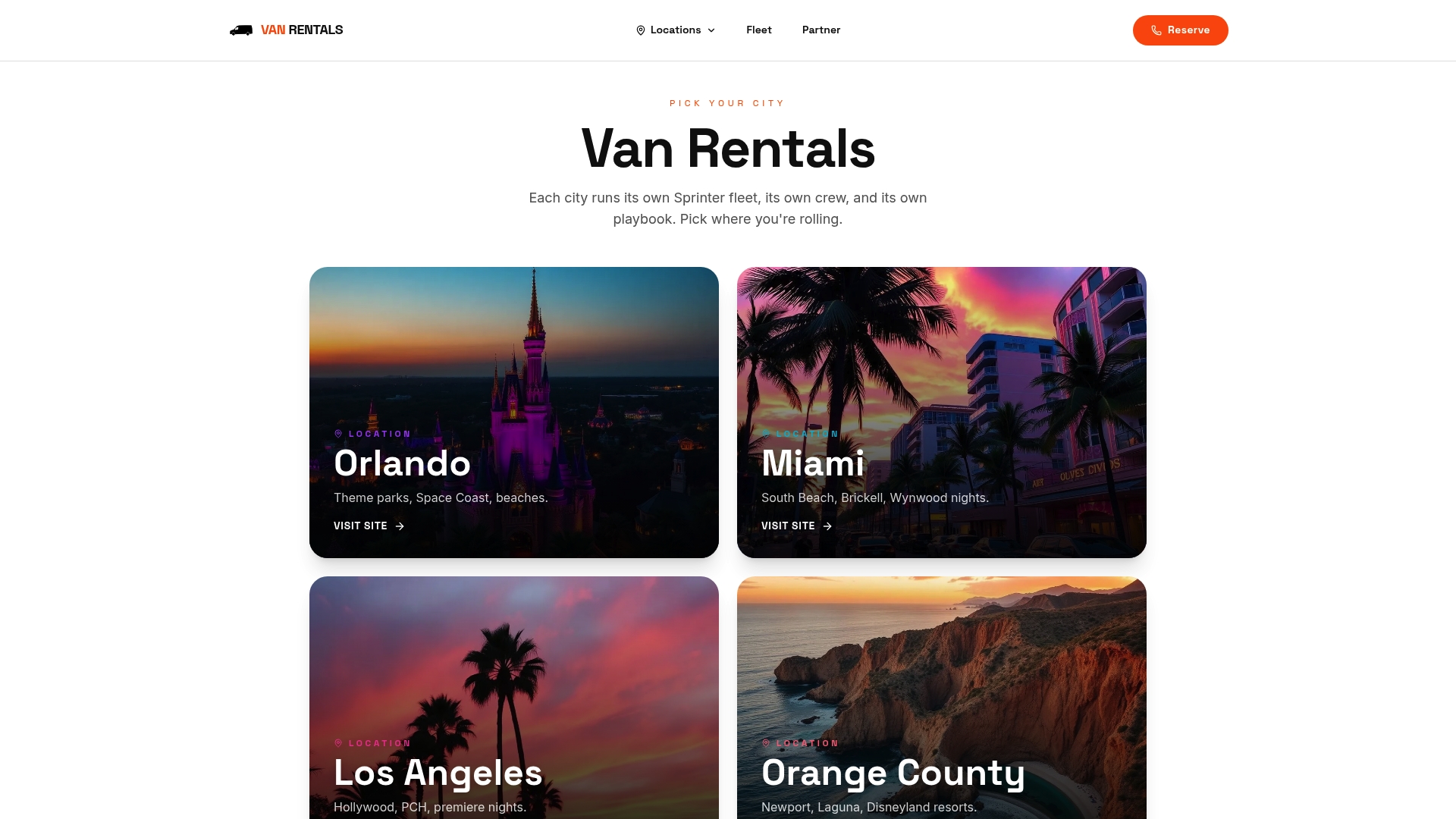
For churches and schools, we offer tax-exempt and PO billing. For airports, we can arrange pickup so your group starts the trip together. Popular city options include Express 12-passenger vans in Miami, Transit 15-passenger vans in New York City and Sprinter 15-passenger vans in Seattle.
Our view on long-term rental
We see long-term rental as the most practical way for a group to get a large vehicle. Most groups do not need a van every day of the year. They need one for a season, a project or a trip that lasts weeks.
That is why we focus on 12-passenger and 15-passenger vans. The need is specific, and the details matter: roof height for luggage, mileage that fits the route, insurance sorted before pickup, and a van delivered where the group is.
We built our service around clear pricing, a fully insured modern fleet and no surprise charges at pickup. For churches and schools, we added tax-exempt and PO billing, because those groups pay differently.
Our advice is simple. Decide the dates, count the people and bags, estimate the miles, and book the van that fits. Then the van is one less thing to worry about.
Gabriel
FAQ
Can you rent a van long term in the United States?
Yes. Passenger vans are rented by the day, week or month, and many groups keep them for several weeks or a full season. At My Van Rentals, you can book short-term and long-term rentals of 12-passenger and 15-passenger vans in major U.S. cities. Choose your city, van and dates, and confirm the term and mileage when you book.
Is a long-term van rental cheaper than buying a van?
For a temporary need, usually yes. Renting avoids a down payment, a loan, registration and repairs, and you stop paying when the need ends. Count fuel, parking and any extra-mile fees in your budget so you can compare the full cost with a purchase.
What insurance do I need for a long-term van rental?
Check whether your own auto policy covers large passenger vans, then decide whether you need extra liability cover. We offer Renter’s Contingent Liability Insurance for this. Sort it out before pickup so everyone is covered from the first day.
Which van is best for a long rental with a big group?
It depends on people, luggage and route. A 12-passenger van suits a family or a small team. A 15-passenger van suits larger groups, but NHTSA notes that handling and rollover risk change with more occupants, so match the van to your real load. A medium or high roof Ford Transit adds luggage room.
Sources
- How To: Start a Vanpool Program (511.org)
- Vanpooling, Smart Moves (New Jersey Department of Transportation)
- Vanpooling: A Handbook to Help You Set Up a Program (U.S. DOT, 1993)
- 2026 Publication 15-B (IRS)
- Safety and Savings Ride on Your Tires (NHTSA)
- 15-Passenger Vans (NHTSA)
- Short-term storage costs