Get Around Miami Without the Subway: Best Alternatives
Get Around Miami Without the Subway: Best Alternatives
You can get around Miami without the subway by using a hybrid mix of free neighborhood trolleys and the Metromover for short hops, rideshares for cross-town trips, Citi Bike or e-scooters for last-mile connections, and a rental car or passenger van for group or regional travel. Miami’s neighborhoods are spread out, so no single mode covers everything. The hybrid strategy recommended by Miami travel experts is to pick the right tool for each leg, not to force one option to do it all.
Quick-reference by trip type:
- Downtown/Brickell loops: Metromover (free, 21 stops, runs 5 AM–midnight)
- Beach-area exploration: Miami Beach free trolley (South Beach, Mid-Beach, North Beach, Collins Express routes)
- Cross-town gaps: Uber or Lyft
- Last-mile connections: Citi Bike or e-scooter
- Airport runs: Rideshare or Metrorail Orange Line
- Groups of 8–15 or day trips: Passenger van from Myvanrentals Miami
Table of Contents
- What city-run transit can you use instead of the subway?
- Are bikes and scooters worth it in Miami?
- Safety, accessibility, and practical cautions
- Key Takeaways
- The hybrid approach is the only approach that actually works in Miami
- Myvanrentals makes group travel in Miami straightforward
- FAQ
What city-run transit can you use instead of the subway?
Miami-Dade Transit operates four main services: Metrobus, Metrorail, Metromover, and Metro Express BRT. For visitors who want to skip the Metrorail entirely, three of those four options still work well.
| Mode | Coverage | Cost | Hours | Best For |
|---|---|---|---|---|
| Metromover | Downtown + Brickell (21 stops, 3 loops) | Free | 5 AM–midnight | Short downtown hops |
| Miami Beach Trolley | South Beach, Mid-Beach, North Beach, Collins Express | Free | ~8 AM–11 PM | Beach-area exploration |
| City of Miami Trolley | Brickell, Wynwood, Little Havana, Coconut Grove | Free | Varies by route | Neighborhood loops |
| Coral Gables Trolley | Miracle Mile, Ponce de Leon, Douglas | Free | Varies by route | Coral Gables errands |
| Metrobus | Citywide | $2.25/ride | Varies by route | Budget cross-town travel |
| Metro Express (BRT) | South Dade TransitWay | $2.25/ride | Varies | South Dade commutes |
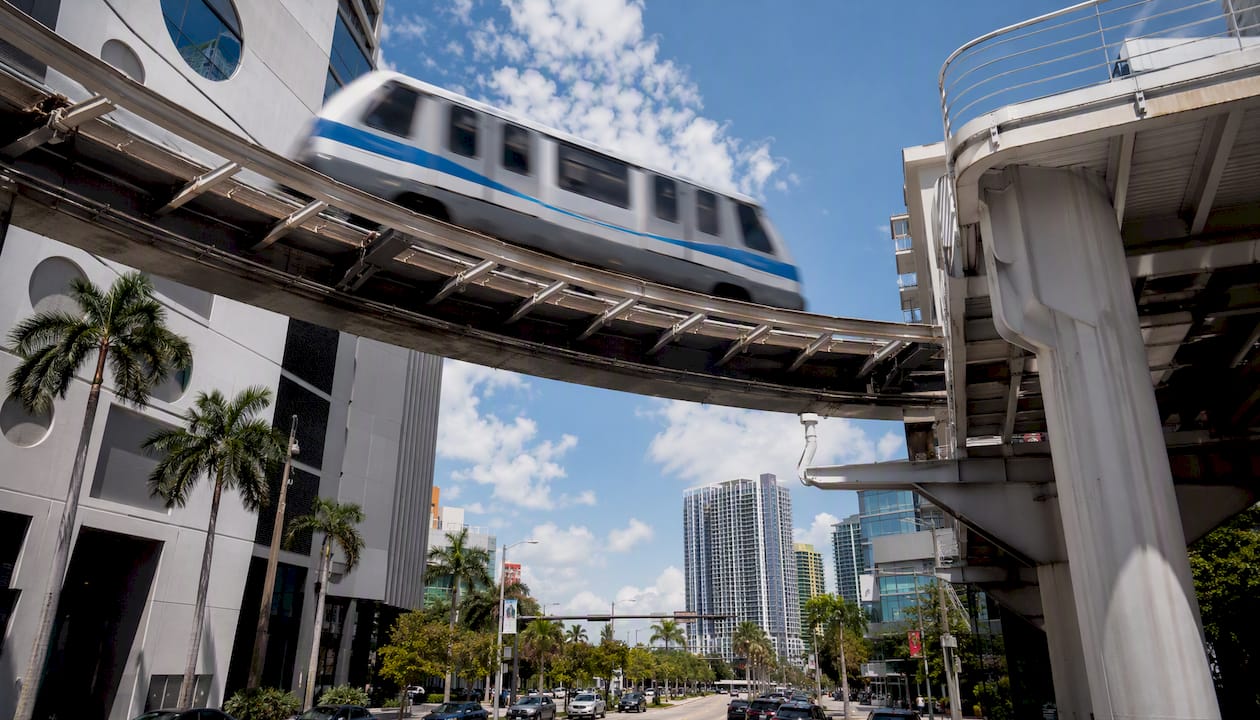
Metromover is the standout option for anyone staying in or visiting Downtown Miami or Brickell. It’s free, covers 21 stops across three connected loops, and runs frequently enough that you rarely wait more than a few minutes during the day. Use it to move between Brickell City Centre, Bayside Marketplace, and the Government Center without paying anything.
The Miami Beach free trolleys run on four routes and cover the full length of the beach corridor. Frequency is roughly every 20 minutes, with service from approximately 8 AM to 11 PM. If you’re based in South Beach and want to reach Mid-Beach restaurants or the Convention Center, the trolley is faster than waiting for a rideshare and costs nothing.
Metrobus and Metro Express cover the widest geographic area but move slower than rideshares. Use them when cost matters more than time. The EASY Card and EASY Ticket are the standard payment methods; contactless payment is also accepted on most routes.
Pro Tip: Download the GO Miami-Dade Transit app before your trip. It shows real-time bus and trolley positions so you know whether to wait or call a rideshare.
Are bikes and scooters worth it in Miami?
For the right trip, yes. Citi Bike operates an extensive network of stations across Miami, with strong coverage in South Beach, Brickell, Wynwood, and Downtown. A 24-hour pass gives you unlimited 30-minute rides, which covers most point-to-point trips in compact neighborhoods. Locals who commute regularly use the membership option for better per-ride value.
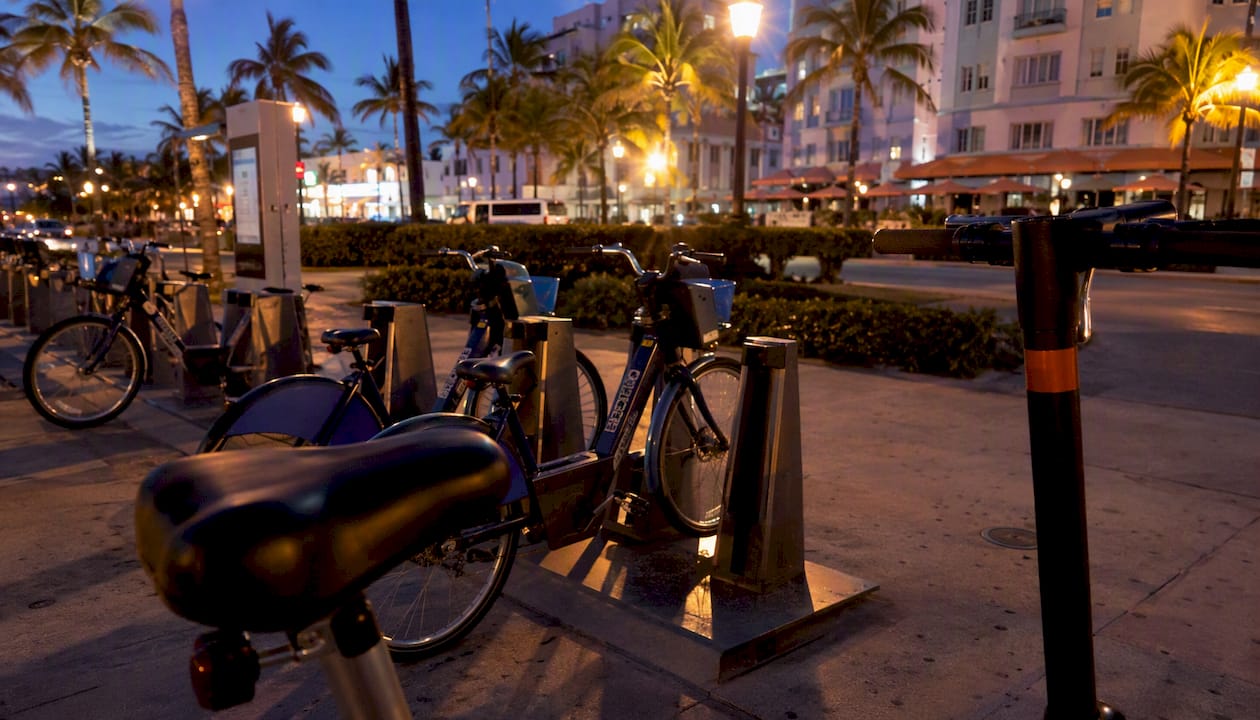
E-scooter networks from operators like Lime fill the gaps between Citi Bike stations. They’re best for trips under a mile, particularly in areas where docking stations are sparse.
Where biking or scooters make the most sense:
- South Beach’s flat streets and dedicated bike lanes along Ocean Drive and the beachfront path
- The Brickell to Downtown corridor along the bay
- Wynwood’s compact grid, where parking is scarce and blocks are short
Safety and weather matter here. Miami’s summer heat is intense, and afternoon thunderstorms arrive fast between June and September. A 10-minute bike ride at 9 AM is comfortable; the same ride at 2 PM in August is not. Helmets are not legally required for adults in Florida, but wearing one is strongly recommended, especially on streets shared with heavy traffic. Wet roads after rain make scooters particularly slippery.
Walking works well in South Beach (the main strip is very walkable), parts of Wynwood, and Brickell near the waterfront. Outside those zones, distances between destinations are longer than they look on a map.
Safety, accessibility, and practical cautions
Accessibility: Miami-Dade Transit’s Metromover, Metrorail, and Metrobus are ADA-compliant with elevators, ramps, and audio announcements at most stations. The Special Transportation Service (STS) provides paratransit for riders who cannot use fixed-route transit due to a disability. Contact Miami-Dade Transit directly to confirm STS eligibility and scheduling.
Luggage: Metromover and Metrorail allow carry-on luggage, but crowded trains during rush hour make large bags difficult. For airport arrivals with multiple bags, rideshare or a van is more practical.
Nighttime safety:
- Use rideshares rather than walking long distances after dark, particularly outside well-lit tourist corridors
- Share your trip details with someone when using rideshare late at night
- Avoid e-scooters after midnight; wet streets and reduced visibility increase risk
Weather: Miami’s rainy season runs June through September. Afternoon storms can arrive in under 30 minutes. Check the forecast before a long bike ride or scooter trip. If you’re caught in rain, the Metromover stations and trolley stops offer covered waiting areas in most locations.
Pro Tip: Keep the GO Miami-Dade Transit app and your rideshare app both open during your trip. Switching between them based on real-time conditions is faster than committing to one mode for the whole day.
Key Takeaways
Miami’s most practical non-subway strategy is a hybrid plan: use free Metromover and city trolleys for neighborhood loops, rideshares for cross-town gaps, and a passenger van for groups or regional day trips.
| Point | Details |
|---|---|
| Metromover is free | Covers Downtown and Brickell on 21 stops; runs 5 AM–midnight at no cost. |
| Free trolleys cover the beaches | Miami Beach trolleys run ~8 AM–11 PM on four routes; no fare required. |
| Rideshare fills the gaps | MIA to South Beach runs $35–$55; South Beach to Wynwood runs $20–$35. |
| Parking costs more than rideshare | South Beach parking runs $25–$45/night; rideshare is cheaper for short beach stays. |
| Myvanrentals for groups | A 12 or 15-passenger van from Myvanrentals is the most cost-effective and predictable option for groups of 8–15. |
The hybrid approach is the only approach that actually works in Miami
Most visitors arrive expecting Miami to function like a dense transit city. It doesn’t. The neighborhoods are spread out, and relying only on public transit outside Downtown and Brickell can turn a 20-minute drive into a 90-minute commute. That’s not a flaw in the system; it’s just the city’s geography.
What actually works is treating transit as a neighborhood skeleton, not a full replacement for a vehicle. Use the Metromover inside Downtown. Use the Miami Beach trolley inside the beach corridor. Use Miami-Dade Transit’s Metrobus when you have time and want to save money. Then use a rideshare or a van to bridge the gaps between neighborhoods. The visitors who get frustrated with Miami transit are usually the ones who tried to make one mode do everything.
For groups, the math is straightforward: two or three rideshares per leg, multiplied across a full day, costs more and takes longer than one van. That’s not a preference; it’s arithmetic.
Myvanrentals makes group travel in Miami straightforward
When your group has 8 or more people, a shared schedule, and more than one stop on the itinerary, coordinating individual rideshares stops making sense fast. Myvanrentals offers 12 and 15-passenger vans, Ford Transits, Chevy Express models, and Sprinters with airport pickup in Miami, managed by a local team that knows the city’s routes and traffic patterns.
One booking covers the whole group. No surge pricing, no split costs, no waiting for the second car to arrive. For church groups, school trips, corporate events, or families traveling together, that predictability is worth more than the flexibility of booking on the fly.
Browse the Miami van fleet and check availability for your dates. You can also view the full fleet options to match vehicle size to your group’s needs before booking.
FAQ
What is the easiest way to get around Miami?
The easiest approach is a hybrid plan: use the free Metromover for Downtown and Brickell, free city trolleys for beach and neighborhood loops, and Uber or Lyft for cross-town trips. For groups, a single passenger van is simpler and often cheaper than multiple rideshares.
Is the Metromover free in Miami?
Yes. The Metromover is completely free to ride. It covers Downtown Miami and Brickell across 21 stops on three connected loops, running from 5 AM to midnight daily.
Is it cheaper to Uber or take a taxi in Miami?
Uber and Lyft are generally comparable to taxis for most trips, but taxis sometimes offer flat airport rates that beat rideshare pricing during surge hours. For the MIA to South Beach route, rideshare typically runs $35–$55; check both options at the airport before choosing.
Is there a free train in Miami, Florida?
The Metromover is Miami’s free elevated rail system, covering Downtown and Brickell. The Metrorail (the subway-style system) charges $2.25 per ride and is not free, though it connects the airport to Downtown via the Orange Line.
When should a group rent a van instead of using rideshares?
For groups of 8 or more people with a shared itinerary, a passenger van from Myvanrentals is more cost-effective and predictable than booking multiple rideshares. It eliminates coordination delays, handles luggage, and covers the full group in one booking.