Executive Passenger Van Features: What to Look For

Executive Passenger Van Features: What to Look For
An executive passenger van is a group van set up for comfort and work. The features that matter most are seating layout, power and connectivity, climate control, safety technology and luggage space. This guide explains each one, shows how roof height and capacity change the trade-offs, and walks through a simple fuel budget so you can plan the whole trip.
TL;DR
- Executive vans focus on comfortable seating, charging, Wi-Fi, climate control and a cabin where people can talk or work.
- Capacity changes space. A 12-passenger layout leaves more legroom and cargo room than a 15-passenger layout.
- Safety features such as stability control, rear cameras and parking sensors matter more in a large van.
- Fuel budget: trip miles divided by mpg, multiplied by the price per gallon.
- Pick the layout first, then the roof height, then confirm what each listing includes.
Table of Contents
- What makes a van “executive”
- Seating and cabin layout
- Power, connectivity and tech
- Comfort features
- Safety features for groups
- Luggage and cargo space
- Branding for business trips
- Fuel budget for a group trip
- Perspective
- Book the right van
- FAQ
- Sources
What makes a van “executive”
There is no single legal definition. The word describes a van that is set up for passengers who want more than a row of bench seats.
In practice, you will see these features:
- Fewer seats and more room per person
- Better seating, often individual seats instead of benches
- Charging ports and outlets at the seats
- Wi-Fi or a way to stay connected
- Rear heating and cooling
- Space for bags that does not cut into the passenger area
Some conversion builders also add conference-style seating, privacy partitions and tables. These turn the rear cabin into a place to hold a meeting while someone else drives. Touring layouts lean the other way. They favor recline and entertainment over work space.
A standard 12 or 15-passenger van is built to move as many people as possible. An executive van is built to move fewer people better. That is the main difference.
We list a Mercedes Sprinter Executive in our fleet for this reason. Specific layouts differ by city, so look at the listing for the van you want. Examples include the Sprinter Executive 10-passenger in New York City, the Sprinter Executive 8-passenger in New York City and the Sprinter Executive 10-passenger in Miami.
Seating and cabin layout
Seating is the first decision. It sets how many people ride, how much legroom they get and how much space is left for bags.
Capacity: 8, 10, 12 or 15
Ford’s U.S. Transit Passenger Van is offered with seating for 12 or 15 passengers. It comes in three roof heights and two body lengths, and all-wheel drive is available. Chevrolet’s Express Passenger Van has 12-passenger seating as standard and 15 passengers on the extended wheelbase.
The Mercedes Sprinter passenger van uses 144-inch or 170-inch wheelbases, standard or high roofs, and 12 or 15-person configurations. Executive versions usually carry fewer seats than that.
Here is how the choice looks in practice:
| Layout | Best for | What you gain | What you give up |
|---|---|---|---|
| 8 passengers | Small business teams, airport transfers, family trips | Room for people and bags | Fewer seats |
| 10 passengers | Executive groups, wedding parties, VIP transfers | Space to spread out | Not enough for large teams |
| 12 passengers | Families, friends, tour groups | Balance of seats, legroom and cargo | Less capacity than a 15 |
| 15 passengers | Teams, church groups, school trips | Everyone in one vehicle | Less room for luggage |
12 vs. 15 passengers
A Ford dealer guide describes the 12-passenger layout as giving more legroom per passenger and more cargo space behind the rear seat. The same guide says the 15-passenger layout maximizes seating but reduces that cargo space. It suits full-load school, shuttle, church and crew transport.
Here is a simple rule:
- Count your people.
- Count your bags.
- If the van will not be full, choose the smaller layout.
A group of 11 in a 15-passenger van has more room than a group of 15. A group of 15 with suitcases may need a second vehicle or a trailer plan. Think about luggage before you book.
You can compare our 12 and 15-passenger options on the fleet page. For example, the Ford Transit comes in 12-passenger and 15-passenger versions in Minneapolis.
Roof height
Roof height changes how the cabin feels. Our fleet includes low roof, mid roof and high roof Ford Transit vans.
A high roof gives more headroom. It helps taller passengers and makes it easier to step around inside the van. A lower roof is easier to park and fits more garages and structures.
The core trade-off is simple. High roofs and longer wheelbases create more room for seating, work areas and luggage. Larger dimensions can make parking and maneuvering more demanding. If you are driving in a dense downtown, think about where you will park before you pick the tallest van.
Power, connectivity and tech
This is where an executive van earns its name. A group that works on the road needs power and a signal.
What to look for
- USB ports and outlets. Charging at the seats keeps phones and laptops running.
- Wi-Fi. Chevrolet lists an available Wi-Fi hotspot, USB connectivity and a 120-volt outlet as passenger-oriented technology.
- Onboard power. The 2027 Ford Transit Passenger Van XL lists a 400-watt Pro Power Onboard system as standard.
- Infotainment and navigation. The same Ford model lists SYNC 4 with a 12-inch display and an 8-inch digital instrument cluster. The Sprinter offers 7-inch and 10.25-inch touchscreens, navigation and satellite radio.
- Bluetooth. Hands-free calling and audio let the driver stay on the road while the group stays on schedule.
Which features a given van has depends on the model year and trim. Standard on one trim can be optional or absent on another. Read the listing for your pickup city.
Work space
Conference-style seating, privacy partitions, tray tables and wireless charging appear in executive conversion guides. These can turn the rear cabin into a mobile work space. They also take room. A table between facing seats means fewer seats in the van.

Decide what the group will actually do. If the answer is take calls and answer email, charging and Wi-Fi matter most. If it is hold a team meeting, seat layout matters most.
Comfort features
A long ride shows quickly whether the cabin was designed for passengers.
Look for:
- Rear climate control. Rear heating and cooling vents, or rear air conditioning, keep back-row passengers comfortable. Chevrolet lists standard rear passenger air conditioning on the Express, and U.S. News notes standard front and rear air conditioning on that van.
- Heated front seats. The 2027 Transit Passenger Van XLT adds standard 10-way power heated front seats. The driver is the person who most needs to stay comfortable for hours.
- Cupholders and headrests. Small items, but groups notice them on day two.
- Reading lights and outlets at the seats. These suit overnight or early-morning travel.
- Premium lighting and sound. Ambient lighting and upgraded audio show up in many luxury layouts.
A van full of people needs fresh air and steady temperature. Check the climate controls before you leave the lot. Know where the rear vents are, and set the temperature before the group boards.
Safety features for groups
A large van is not a minivan. Safety is part of the feature list, not an extra.
Technology to look for
- Electronic stability control. Chevrolet lists StabiliTrak, four-wheel anti-lock disc brakes and tire-pressure monitoring on the Express, along with a rear vision camera.
- Driver assistance. The Ford XL lists Co-Pilot360 with lane keeping and front and rear parking sensors. The XLT adds blind-spot information, adaptive cruise control and a 360-degree camera.
- Automatic emergency braking. U.S. News says the Sprinter includes standard automatic emergency braking and Emergency Call, with more optional driver-assistance features than the other vans in its comparison.
U.S. News also reports that the Chevrolet Express has a more limited set of driver-assistance equipment than the Transit, with lane-departure warning, rear parking sensors and blind-spot monitoring available.
A rear camera and parking sensors help the most in tight spaces. A 15-passenger van is long. You cannot see behind it well without help.
Safe driving habits
Technology helps. Habits matter more. Federal safety guidance, as summarized by CarBuzz, warns that 15-passenger vans are larger and harder to drive than typical minivans, and that an unrestrained occupant is about four times more likely to be killed in a crash than a restrained one.
Use this checklist:
- Make sure everyone wears a seat belt, in every row.
- Never carry more people than the van is designed to seat.
- Check tire pressure before you leave.
- Keep cargo balanced and in front of the rear axle.
- Leave extra stopping distance. A loaded van weighs more.
- Drive at a steady speed and avoid sudden turns.
The driver should be rested and comfortable with a large vehicle. If nobody in your group has driven one, start with a 12-passenger van and practice in an empty lot.
Insurance
Read what coverage applies to your rental before you pick up. We offer Renter’s Contingent Liability Insurance for renters who want added liability protection. Ask your booking contact which coverage fits your trip.
Luggage and cargo space
Executive layouts often trade seats for bags, or the other way round.
Some conversion builders list a rear luggage compartment as part of the design. Others rely on the space behind the last row. In a fully seated 15-passenger van, that space is small. Pack soft bags, not rigid suitcases, when the van is full.
Quick planning guide:
- Carry-on bags only: any layout works.
- One checked bag per person: choose a 12-passenger layout or a high roof.
- Sports gear, instruments or event supplies: choose a high roof and fewer seats.
- Extra equipment: think about a second vehicle.
Balance matters too. Heavy items should sit low and forward of the rear axle, not stacked at the back.
Branding for business trips
Companies that rent vans for client events or staff shuttles sometimes want the van to look the part. If your business runs its own vans, fleet van wraps are one way to carry your branding. Weigh full coverage against lower-cost options for your fleet.
Fuel budget for a group trip
Fuel is a real part of the cost of a van trip. A large van uses more than a car. Plan for it before you book.
The formula
- Estimate your trip miles.
- Divide by the van’s miles per gallon. This gives the gallons you will use.
- Multiply the gallons by the price per gallon.
Here is an example using round numbers, not a quote:
- Trip: 400 miles
- Fuel economy: 15 mpg
- Fuel price: $3.50 per gallon
- Gallons: 400 ÷ 15 = about 26.7
- Cost: 26.7 × $3.50 = about $93
Change the three inputs to match your trip. Add the return leg. Add local driving at your destination.
What changes your mpg
The EPA says actual fuel economy varies with driving conditions and style, load, air-conditioning use, weather, terrain, tire inflation and maintenance. The EPA also notes that some passenger vans over 10,000 pounds GVWR are not listed and do not require fuel-economy estimates or window labels. That means you may not find an official window-sticker number for a large van.
A full van with a roof load and the air conditioning running will use more fuel than an empty van on flat roads. Use a conservative mpg when you budget. Build in a cushion.
Extra mileage fees
Fuel is not the only mileage cost. Our listed extra mile fees are:
| Vehicle | Extra mile fee |
|---|---|
| Ford Transit (Low Roof) | $0.50 per mile |
| Med Roof Ford Transit | $0.50 per mile |
| Mercedes Sprinter | $0.75 per mile |
| Minivan (8-Passenger) | $0.75 per mile |
| Mercedes Sprinter Executive (Luxury) | $5.00 per mile |
If your route is long, estimate your miles first. Then compare your trip against the mileage your booking includes. A long-distance trip may fit a different van better than a short city rental.
Perspective
Most groups ask for the biggest van. We suggest starting with the trip.
How many people are riding? How many bags? Will anyone work on the way? Will the van sit in a hotel garage? The answers pick the layout.
For most families and friend groups, a 12-passenger van gives the best balance. It seats the group and leaves room for luggage. For teams, churches and schools, a 15-passenger van keeps everyone together. For business travelers and VIP transfers, our Sprinter Executive vans give people room to sit comfortably, charge devices and talk.
We list live pricing and our own local teams support pickup and delivery in major U.S. cities. Our aim is no surprise charges at pickup. Tell us your headcount, route and luggage. We will help you choose.
Gabriel
Book the right van
We rent 12 and 15-passenger vans, Sprinter vans, Ford Transit vans and executive vans across the United States. We also run programs for churches, schools, weddings and events, with airport pickup and delivery to hotels or venues.
Start on our 12 and 15-passenger van rentals page and choose your city. Browse the full fleet to compare roof heights and layouts.
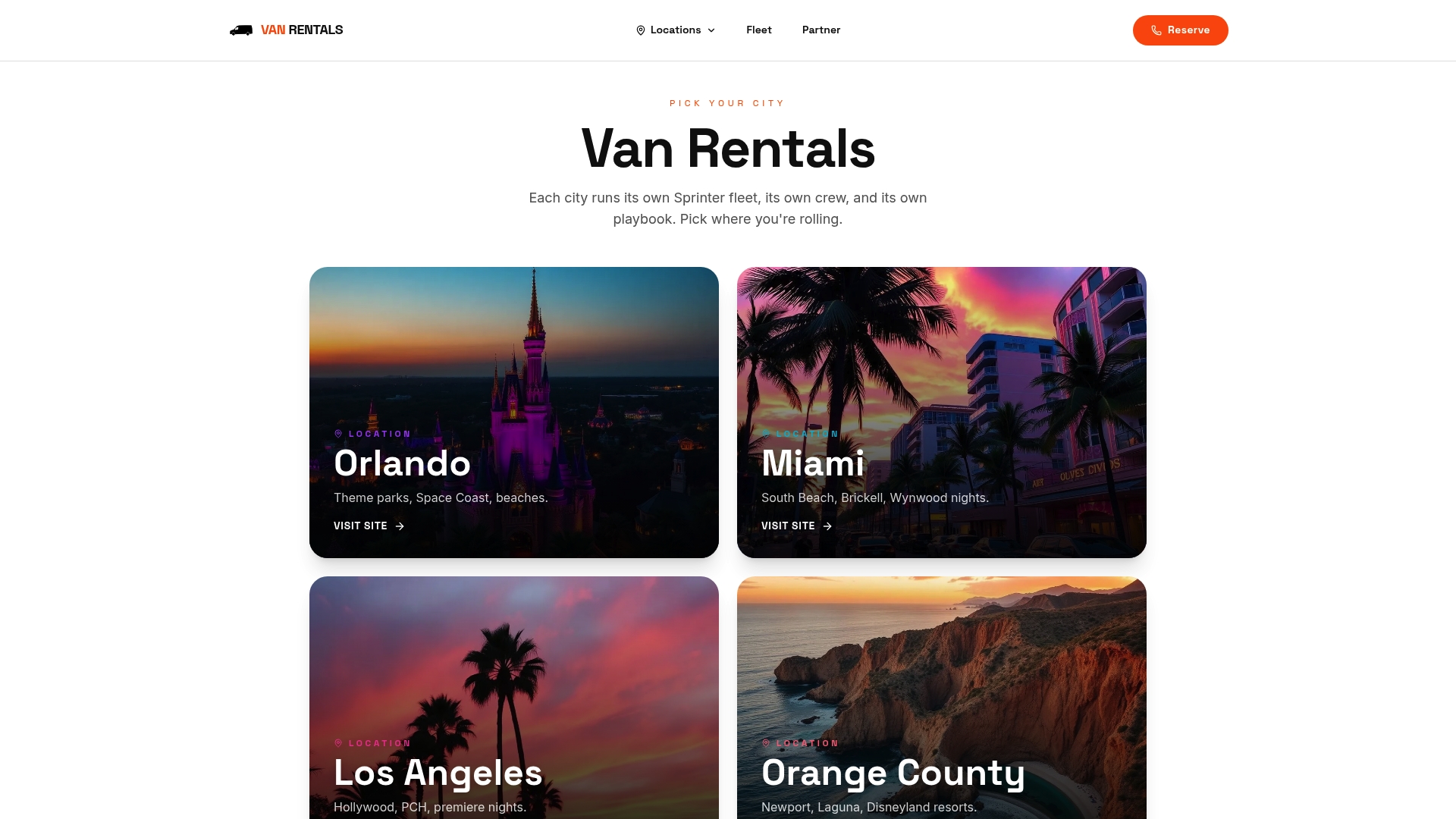
Need a specific van? These pages are a good start:
- Ford Transit High Roof 12-Passenger in Atlanta
- Ford Transit High Roof 15-Passenger in New York City
- Express 12-Passenger in Miami
- Mercedes Sprinter 12-Passenger in New York City
FAQ
What features does an executive passenger van usually have?
Expect comfortable individual or captain-style seating, charging ports, Wi-Fi, rear climate control and room for bags. Some layouts add tables, partitions or upgraded lighting and sound. Features vary by van and trim, so read each listing.
Is a 12-passenger or 15-passenger van better for comfort?
The 12-passenger layout gives more legroom per person and more cargo space behind the rear seat. The 15-passenger layout fits the most people. Choose 12 if your group is smaller or carries a lot of luggage.
Are large passenger vans hard to drive?
They are larger and harder to drive than a minivan. Take your time, leave extra stopping distance and keep cargo balanced. A rear camera and parking sensors help in tight spaces. Make sure every passenger wears a seat belt.
How do I estimate fuel for a passenger van trip?
Divide your trip miles by the van’s mpg, then multiply by the price per gallon. Use a conservative mpg, because load, weather, terrain and air conditioning all raise fuel use. Add the return trip and local driving.
Sources
- 2027 Ford Transit Passenger Van, Ford
- 2023 Chevrolet Express Passenger Van brochure
- Best 10-Person Vehicles, U.S. News
- 2026 Ford Transit Passenger Van guide, Jay Malone Ford
- The 15-Passenger Van in 2026, CarBuzz
- 2026 Fuel Economy Guide, fueleconomy.gov
- Fleet Van Wraps for Managers