Executive Group Travel: Moving Your Team in One Van

Executive Group Travel: Moving Your Team in One Van
Executive group travel is a trip for a small leadership group where time, comfort and privacy matter more than the lowest fare. For groups of up to 15 people, ground transport is the part that most often goes wrong, and the simplest fix is one vehicle that keeps everyone together. A 12 or 15 passenger van, or a Mercedes Sprinter Executive for smaller groups, does that. We rent them at My Van Rentals in major U.S. cities, with airport pickup and delivery to your hotel or venue.
This guide explains what the term covers, how to plan the trip, what ground transport costs, and how to choose the vehicle.
TL;DR
- Executive group travel means a small, high-level group (often 10 to 30 people) traveling for leadership meetings, retreats or incentive trips. Planning favors flexibility and comfort.
- Start with the goal of the trip, then work backward. Ground transport gets its own owner and a written plan.
- For 8 to 15 people, one van usually beats several rideshares on cost, timing and privacy.
- Match the vehicle to the group: Sprinter Executive for comfort, 12 or 15 passenger vans for headcount, high roof or extra luggage space for bags.
- Check the driver and insurance basics before you book. A 12 or 15 passenger van needs no CDL, but you do need to confirm coverage.
Table of Contents
- What executive group travel means
- Plan from the goal, not the destination
- Why ground transport decides the experience
- Choosing the right van for the group
- What executive ground transport costs
- Keep the group comfortable
- Trips where a van fits best
- Book your group van
- Our view
- FAQ
- Sources
What executive group travel means
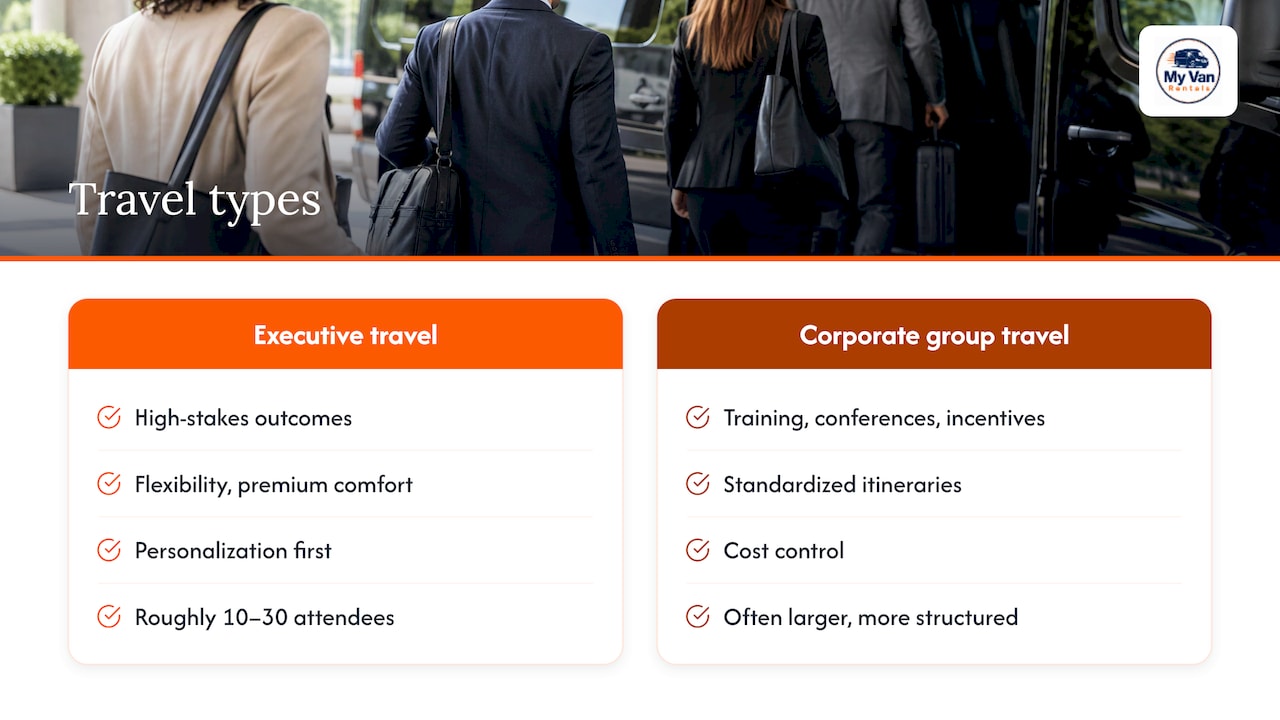
The phrase gets used loosely, so here is a working definition. One travel company describes executive travel as built around high-stakes outcomes, such as negotiations, leadership meetings and investor presentations. Planning for it puts flexibility, premium comfort and personalization first. Team or corporate group travel, by contrast, serves goals like training, conferences and incentive trips, and leans on standardized itineraries and cost control.
Size is the other difference. One planner puts executive retreats at roughly 10 to 30 attendees, built around strategic planning, leadership development or board meetings. Large corporate programs fall into the MICE category (meetings, incentives, conferences and events). Industry writers describe MICE trips as more structured, often larger, and funded by the organization, with one point of contact and centralized contracts.
If your group is 8 to 15 people, you sit at the small end of this range. That matters for transport, because one vehicle can carry the whole group.
Plan from the goal, not the destination
The most useful planning rule is to write one sentence about what the trip must accomplish. A company offsite guide suggests that sentence becomes the filter for venue, length, destination and budget. Strategic alignment for 25 executives is a different trip from rewarding 150 salespeople.
Then set the timeline. Lead times depend on the size of the program:
- Large incentive programs: one planner suggests starting 18 to 24 months out, with hotel contracts and air strategy following over the next year.
- Mid-sized events: another guide advises at least three months ahead for 200 to 250 attendees, and up to a year for international or peak-season events.
- Small executive groups: a working-backward schedule fits. One guide has you collect traveler details 8 weeks out, book flights 6 to 4 weeks out, send the rooming list and briefing 2 weeks out, and reconfirm transfers the week of the trip.
Two habits keep this manageable. Give each workstream (agenda, logistics, vendors) a single internal owner. And judge the destination through the attendees’ eyes: can they reach it from their home cities, and is ground transportation simple or complicated?
Why ground transport decides the experience
Ground transfers are where small groups lose the most time. One retreat guide calls them the most underestimated element of coordination and the most common source of day-of chaos. Its argument is that the transfer is the first thing attendees experience, and people who wait 90 minutes for a van at the airport arrive already frustrated.
Executives also tend to have the least patience for a split group. Four people in one car and five in another means two arrival times, two drivers to track and no chance to talk on the way. One van removes all three problems.

Rideshare costs add up fast
A ground transportation guide puts rideshare airport transfers at $30 to $80 per person. Run that for 10 people each way and the total reaches the hundreds before you add tolls, surge pricing or tips. It also means several cars with several drivers, none of whom know your schedule.
The same guide notes that for groups over 10 to 12 people, group options deliver better value than rideshare. It also lists the extras to budget beyond a base rate: fuel, gratuity, parking, tolls and after-hours premiums. Transportation typically takes 10 to 20% of a retreat budget, so it is worth pricing properly.
One rented van is billed as one booking. You see the vehicle, the rental period and the mileage terms before you commit. We publish live pricing on each van page, and we aim for no surprise charges at pickup.
Build a transfer plan in writing
Ground transport problems are usually preventable. A meetings-industry article advises planners to walk the site with the transport vendor, confirm pickup and drop-off permissions, and keep a vehicle on standby for unexpected executive requests. Use this checklist:
- Collect flight details 4 to 6 weeks ahead. Ask for arrival and departure times from every traveler.
- Cluster arrivals. Group them into windows of two to three hours so one trip covers everyone.
- Add buffers. The same guide suggests 30 to 45 minutes around flights and meetings.
- Name a coordinator. One person watches flights in real time and calls the driver.
- Send pickup instructions twice. Send them 2 to 3 weeks out and again 48 hours before.
- Confirm in writing. Vehicle counts, drivers and dispatch times should be confirmed 72 hours before arrival day.
We help at the steps where a van changes the plan. Airport pickup and delivery to your hotel or venue shorten step 2, because the van is where your group is, not across town. Because a van is one vehicle, steps 4 and 5 shrink to one driver and one pickup point.
Choosing the right van for the group
Headcount is the first filter, but luggage and comfort matter as much for executives. A guide on vehicle sizing says a 14-passenger van carries 10 to 12 people with full luggage. The same logic applies to our vans: a full 15 passenger van has little room left for bags, so size up your luggage as well as your headcount.
Our fleet page lists the options, and here is how to match them to a group.
| Group | Vehicle to consider | Why |
|---|---|---|
| 4 to 8 executives, comfort first | Mercedes Sprinter Executive | Luxury seating for a small leadership group |
| 8 people, family or team | Minivan (8-passenger) | Compact for city use |
| 9 to 12 with bags | Ford Transit, medium or high roof, or 12 passenger Sprinter or Express | More headroom and luggage space |
| 13 to 15 | 15 passenger Express, Transit or Sprinter | Whole group in one vehicle |
See the full fleet for every category. If comfort is the priority, our guide to executive passenger van features lists what to look for. In New York City and Seattle you can book a Mercedes Sprinter Executive 10-passenger van directly. For larger groups, the 15 passenger van page shows the Sprinter option.
Separate your VIPs when it matters
Some planners put keynote speakers, board members or key clients in a dedicated vehicle, because their delays hit the event hardest. With a small van fleet this is easy to plan: one Sprinter Executive for the principals and a 12 or 15 passenger van for the rest of the team.
Know the rules before you drive
Federal rules treat vehicles by capacity. The Federal Motor Carrier Safety Administration says a commercial driver’s license is required for vehicles designed to carry 16 or more passengers, including the driver. A 12 or 15 passenger van falls below that line. The same page explains that for-hire carriers, meaning businesses that carry passengers for pay, need operating authority and minimum insurance. If you rent a van and drive it yourselves, you are not a for-hire carrier. Still, confirm who is driving, that each driver meets the rental requirements, and how your group is covered.
Our Renter’s Contingent Liability Insurance (RCLI) page explains the liability coverage we offer with rentals. Read it before you book so the coverage is settled before the trip.
What executive ground transport costs
Budgets for executive trips vary widely. The IRF/SITE Incentive Travel Index 2025 found average incentive-travel spend of $5,100 per person globally, and $6,000 for North American buyers. Hotels were expected to account for 28% of program budgets in 2026, airfare 20%, food and beverage 18% and activities 13%. Ground transport sits inside the smaller lines, so it is easy to underbudget.
Two budgeting habits help:
- Budget per attendee and per trip, so the total moves with headcount, and get it approved once, as a whole, before bookings start.
- Add a contingency line. One incentive planner recommends 10% from the start, because ground transport beyond airport transfers often surfaces after the budget is set.
For a rented van, the lines to price are the rental period, fuel, parking, tolls and mileage. Extra miles are listed per vehicle on our fleet page: $0.75 per mile for a Mercedes Sprinter and $0.50 per mile for a Ford Transit (low roof or medium roof). Estimate your route before you book so the mileage fits.
Airfare is the line most likely to move. According to an October 2026 roundup of offsite statistics citing the Bureau of Labor Statistics, US airline fares rose 23.4% in the 12 months to August 2026, against 3.4% for all items. Airline group discounts come off the published fare, so they do not protect a budget from fare increases. When flights are the unstable part of the budget, fixing ground transport with a clear van booking keeps one line predictable.
Keep the group comfortable
A smooth trip is mostly small things done early. A retreat guide recommends every traveler receive a single travel document at least two weeks before departure, covering flights, hotel details, pickup instructions, coordinator contact, the schedule and delay instructions. Add a group chat and a named day-of contact. Write contingency steps for missed flights and unavailable vehicles.
Collect preferences too: dietary needs and accessibility requirements. Booking.com for Business suggests this is the best way to ease anxiety before negotiating for a group. For vans, ask who needs step-free access or extra legroom before you choose a vehicle.
Finally, leave space in the schedule. A planner of incentive programs finds that attendees consistently want more free time, and that a day with one organized event and an open afternoon beats back-to-back activities. A van on hand, rather than a fixed shuttle timetable, makes it easier to say yes to a change of plan.
Trips where a van fits best
A van suits a wide range of executive and business trips:
- Offsite or retreat groups moving between airport, hotel and venue.
- Airport arrivals in cities where we operate, such as Orlando and Los Angeles.
- Hotel-based trips where a group needs a flexible vehicle all week, as in our Orlando hotel transportation guide.
- Recurring programs. If you move staff daily, see our guide to employee shuttle vans.
- Small corporate groups. Our planner’s guide covers vans for corporate group transport under 60 people.
This article is written for small groups and organizers who rent a van. If you plan a 200-person conference with air management and branded materials, that belongs to a full MICE planner, and a van then covers a smaller part of the program such as VIP or committee transport.
Book your group van
We provide 12 and 15 passenger van rentals nationwide, plus Mercedes Sprinter, Ford Transit, Chevrolet Express and executive vans, with airport pickup and local delivery to hotels or venues. Our local teams operate in major U.S. cities. Churches, schools and businesses can also use programs with tax-exempt and PO billing.
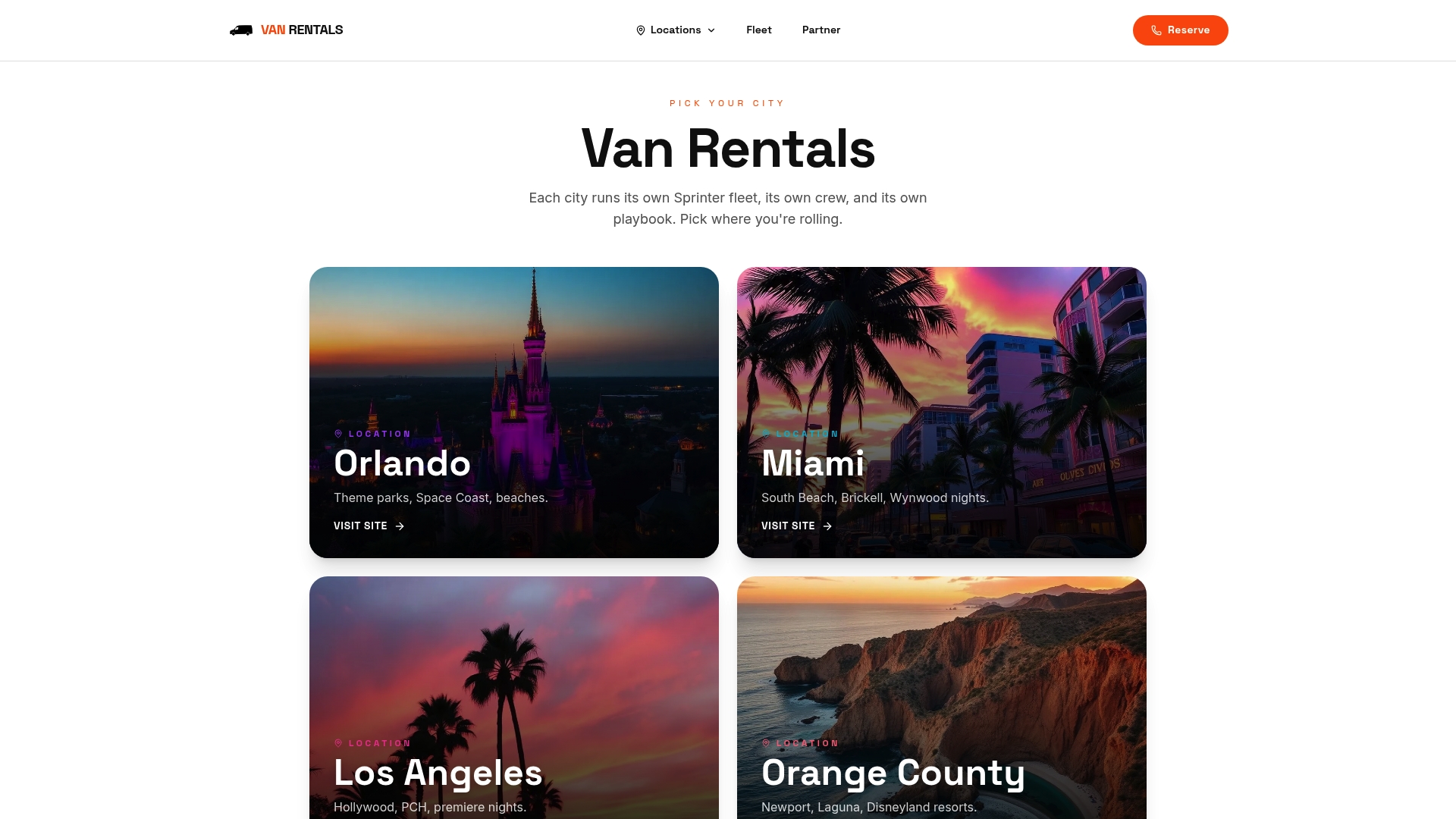
Pick your city and vehicle on the My Van Rentals home page, or go to the fleet page to compare vans. Have the group size, dates, route and luggage count ready.
Our view
Executives rarely complain about the destination. They complain about waiting, about splitting up and about not knowing who is driving.
We built our service for groups of 12 and 15 because that is the size where one vehicle beats several cars. Keeping a group in one van means one pickup point, one set of directions and one conversation on the way to the meeting.
For leadership groups, we recommend starting with the vehicle, not the price. Choose the van that fits your headcount and luggage, such as a Sprinter Executive for comfort, then confirm pickup, mileage terms and insurance in writing. Our pricing is live and we aim for no surprises at pickup.
Plan the transfer the way you plan the agenda. It is the first thing your group experiences.
Gabriel
FAQ
What is the difference between executive and corporate group travel?
Executive travel centers on a small group with high-stakes goals, such as leadership meetings or board sessions, and prioritizes flexibility and comfort. Corporate group travel, often called MICE, is usually larger and more structured, with centralized contracts and standardized itineraries.
How many people fit in a 12 or 15 passenger van?
Seats and luggage compete for space. A planning guide says a 14-passenger van carries 10 to 12 people with full luggage. If your group carries many bags, choose a van with a high roof or extra luggage space, or go one size up.
Do I need a special license to drive a 15 passenger van?
Federal rules require a commercial driver’s license only for vehicles designed to carry 16 or more passengers, including the driver. A 15 passenger van is below that line. Rental requirements and state rules can still apply, so confirm them with us when you book.
How early should I book ground transport?
Send traveler details 8 weeks out and book flights 6 to 4 weeks out. Confirm vehicle counts and dispatch times in writing 72 hours before arrival. For peak dates, book your van as soon as the group size and dates are set.
Sources
- Corporate Travel Planning: Executive vs Team Travel
- Understanding the Different Types of Group Travel (TravelAge West)
- How to Plan a Luxury Corporate Retreat or Incentive Trip
- How to Plan a Company Offsite: A Step-by-Step Guide for HR Leaders
- How to take the stress out of group travel planning
- Planning a company offsite or group trip
- Corporate Retreat Ground Transportation Guide
- Group Travel for Corporate Retreats: The Complete Guide
- Ground Transportation Do’s & Don’ts
- FMCSA Passenger Carrier Guidance Fact Sheet
- Incentive Travel Index 2025 Survey Highlights
- How to Plan a Corporate Incentive Trip
- The Incentive Travel Questions Planners Stop Asking
- Company Offsite & Team Retreat Statistics (2026)
- Airline Savings, Perks and Programs for Meeting and Incentive Planners