3 Rules You Must Follow When Driving a 15 Passenger Van
3 Rules You Must Follow When Driving a 15 Passenger Van
Yes, you can drive a 15-passenger van safely, but three rules are non-negotiable. Every seat gets a belted rider, every tire (including the spare) gets checked before you leave, and you drive slower and smoother than you would in a car. If you’ll be behind the wheel regularly, get trained or ride along with an experienced driver first.
TL;DR:
- Ensuring all passengers wear seat belts, especially in the rear seats, drastically reduces rollover fatality risks in a 15-passenger van.
- Regularly checking tire pressure, age, and tread depth—focusing on the spare tire—is crucial for safe operation and accident prevention.
- Driving slower, wider turns, and maintaining a longer following distance are essential to managing the van’s high center of gravity and preventing rollovers.
- Load weight forward of the rear axle, avoid roof cargo, and do not exceed the vehicle’s gross weight rating to improve stability during trips.
- Only experienced or specially trained drivers should operate a 15-passenger van, with limiting driving hours to under eight per day to reduce fatigue-related risks.
Table of Contents
- Driving a 15 Passenger Van: A Quick Safety Checklist
- How Do You Inspect a 15-Passenger Van Before a Trip?
- Why Does a 15-Passenger Van Handle Differently Than a Car?
- Seating, Occupancy, and Cargo: What’s Safe and What Isn’t
- What Do You Do in a Blowout, Skid, or Rollover?
- Who Should Be Allowed to Drive a 15-Passenger Van?
- What Fleet Operators Get Wrong About Van Safety
- Book a Well-Maintained Van Through My Van Rentals
- Where to Find Official Safety Guidance
- Sources
- FAQ
Driving a 15 Passenger Van: A Quick Safety Checklist
Run through this before you turn the key. It takes five minutes and it’s the difference between a routine trip and a preventable crash.
- Confirm every passenger is belted, including anyone in the far back row.
- Check tire pressure cold, against the number on the driver-side door pillar, not the tire’s own sidewall max.
- Check tread depth and flag any tire, especially the spare, that looks older than six years.
- Load front-to-back if you’re not full, and skip roof cargo entirely.
- Hold a 4-second following distance, extend to 6 seconds in rain or wind, and cut speed by about 5 mph in tricky conditions.
- Adjust both side mirrors before you move and plan wider turns than you would in a sedan.
Pro Tip: Walk the van once, out loud, calling out each check. Saying “tires, good, belts, good” catches mistakes silent checklists miss.
How Do You Inspect a 15-Passenger Van Before a Trip?
Start with tire pressure, and use the right number. The recommended pressure lives on a placard on the driver-side door pillar or in the owner’s manual, and front and rear pressures often differ because the rear axle carries more load once you add passengers. Don’t guess from the tire’s sidewall, that’s a maximum, not a target.
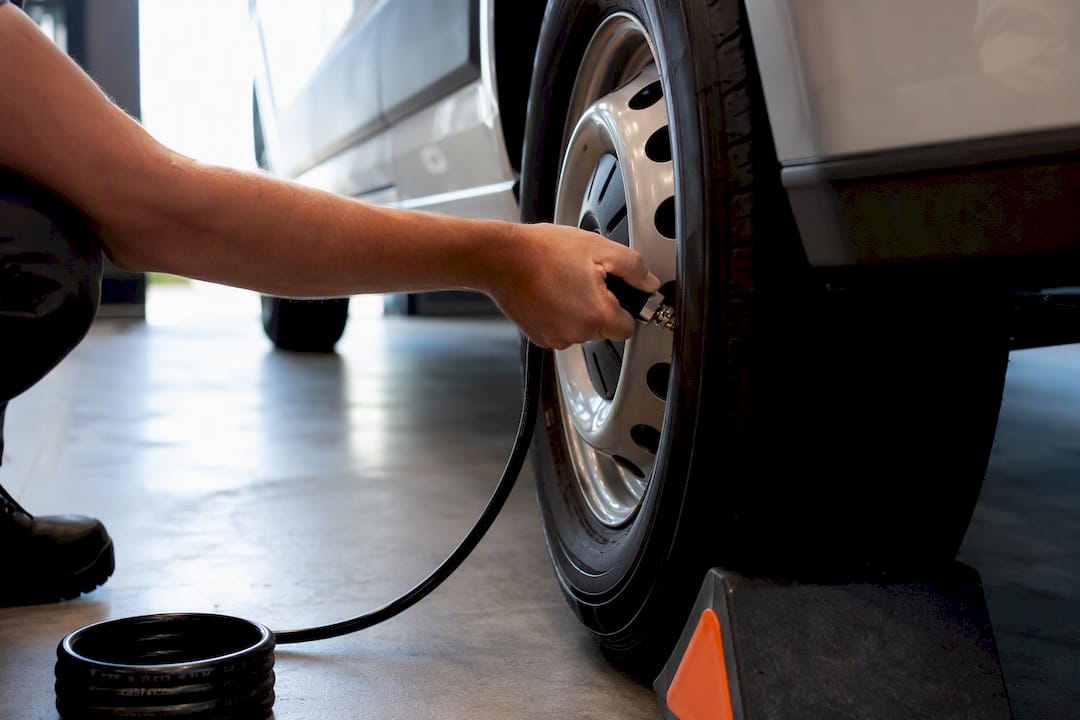
Then check the spare’s age. Every tire carries a Tire Identification Number (TIN), and the last four digits tell you the week and year it was made. A tire that’s five or six years old can fail even with plenty of tread left, and tire age is a leading factor in fatal rollovers on these vans.
Work through this weekly cadence if you drive the van often:
- Tires: pressure, tread depth, and sidewall cracking.
- Seat belts: buckle function and webbing wear at every position.
- Lights: headlights, brake lights, and turn signals.
- Fluids: oil, coolant, and washer fluid levels.
- Mirrors: cracks, looseness, or fogging.
If you find a problem before you leave, fix it or swap vehicles. Do not start a trip with a tire that appears unsafe.
Why Does a 15-Passenger Van Handle Differently Than a Car?
A loaded 15-passenger van sits higher off the ground and carries its weight further back than most cars, which raises its center of gravity and makes sudden steering or braking far more likely to end in a rollover. That single fact should shape every driving decision you make behind the wheel.
Keep a safe following distance in normal conditions, and increase it in heavy rain, snow, or wind, since a fully loaded van needs more room to stop than the driver behind you probably expects. Leave extra space when merging or passing, too, because acceleration is slower with a full load.
Braking has to be gradual. Press the pedal early and build pressure smoothly instead of stabbing at it, since the extra weight shifts forward hard under sudden braking and can unsettle the rear end. Panic stops are one of the fastest ways to lose control.
Take corners slower and wider than instinct tells you to. The van’s length and height mean it leans more in turns than a car does, and clipping a curb or misjudging clearance at speed is a common way rollovers start. Rehearsing turns and parking in an empty lot before you carry passengers is a smart way to build a feel for the van’s real dimensions.
Lane changes depend almost entirely on your side mirrors, since many vans in this class don’t offer a useful interior rearview mirror once seats are full. Signal early, check both mirrors, and when you have a choice, favor the right lane. It gives you an extra buffer if something goes wrong.
- Slower cornering speeds than feel natural, with a wider turning arc.
- Gradual, early braking instead of last-second stops.
- Mirror-only lane changes, with early signaling.
- Extra space for merging, passing, and stopping.
NHTSA data shows unrestrained occupants in 15-passenger van rollovers are about four times more likely to die than those wearing seat belts, and 69% of people killed in rollovers between 2010 and 2019 weren’t belted. That single statistic explains why seat belts sit at the top of every safety recommendation for this vehicle class.
Seating, Occupancy, and Cargo: What’s Safe and What Isn’t
Never put more than 15 people in the van, full stop. A fully loaded van behaves very differently from a half-empty one, and that added weight, especially behind the rear axle, raises rollover risk substantially.
When you’re not carrying a full group, seat people front-to-back rather than letting everyone cluster in the last row. Keeping weight forward of the rear axle improves stability in turns and during sudden maneuvers.
- Load cargo ahead of the rear axle, never behind it.
- Skip the roof entirely, no cargo boxes or racks unless the manual explicitly allows them.
- Don’t tow unless the owner’s manual specifically supports it for that model.
- Check the vehicle’s GVWR (gross vehicle weight rating) and confirm your passenger count plus luggage stays under it.
What Do You Do in a Blowout, Skid, or Rollover?
Emergencies happen fast in a vehicle this size, and the wrong reaction turns a manageable problem into a serious one. Know these three scenarios before you need them.
- Blowout: Hold the steering wheel steady, ease off the gas, and let the van slow gradually. Don’t hit the brakes hard. Coast to a safe spot off the road before stopping.
- Skid: Take your foot off the accelerator and steer toward where you actually want to go. Resist the urge to overcorrect, that’s what turns a small skid into a spin.
- Rollover risk: If you feel the van start to tip, avoid any sudden steering input that could add rotation. Slow down, stop as safely as you can, and secure the scene.
After any incident, check every passenger, call 911 if anyone’s hurt, take photos, and contact your rental provider or fleet manager right away.
Pro Tip: Practice the “ease off, don’t slam” reflex in a low-speed parking lot drill. Muscle memory beats instinct when adrenaline kicks in.
Who Should Be Allowed to Drive a 15-Passenger Van?
Experience matters more than most people assume. NHTSA recommends that only experienced drivers, or those specifically trained on large vans, get behind the wheel. If your organization drives these vans frequently for commercial purposes, a CDL is often preferred, even where it isn’t strictly required.
Training doesn’t need to be formal to be effective. Supervised practice runs, an instructor-led course, or simply riding along with an experienced driver before you solo all build real competence.
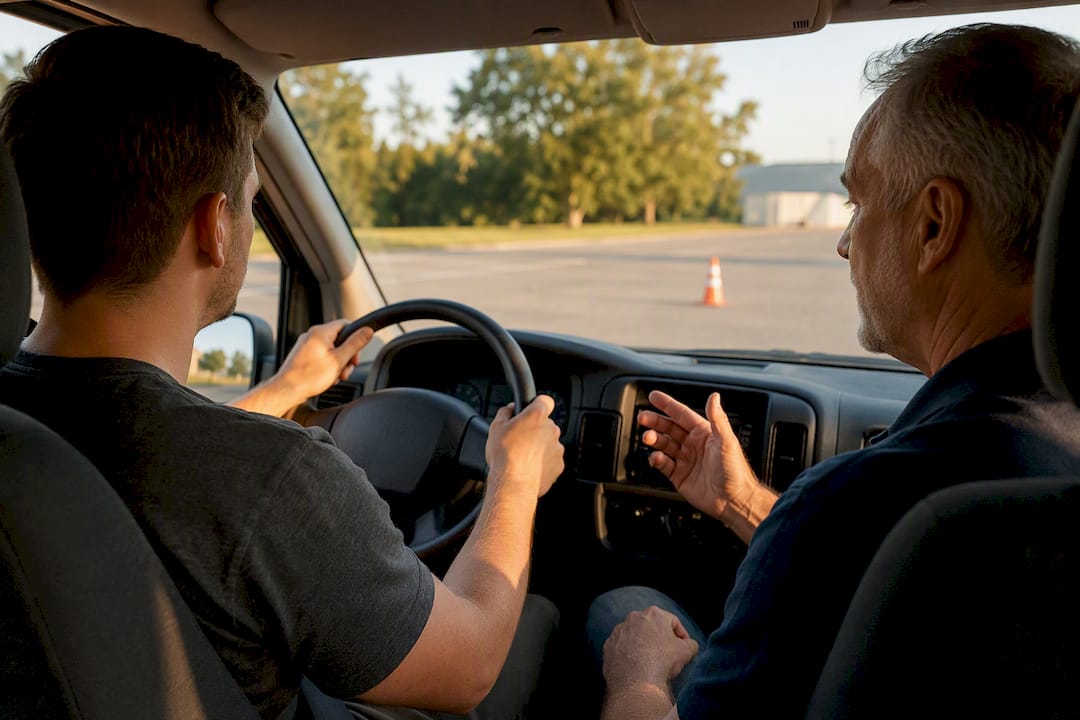
Watch driving hours, too. NHTSA guidance points to keeping any single driver under eight hours a day, since fatigue compounds every other risk on this list. Before you hand someone the keys, confirm they’ve driven the vehicle before, know its blind spots, and understand the loading rules.
What Fleet Operators Get Wrong About Van Safety
The mistakes I see repeated aren’t exotic. They’re the same three things: a spare tire nobody’s checked in years, tire pressure set once and forgotten, and passengers loaded rear-first because it seemed easier at pickup. None of that requires bad judgment, just a missed step. Fleets that catch these early, through routine maintenance schedules and driver coordination, see far fewer close calls than fleets that treat inspection as optional.
— Gabriel
Book a Well-Maintained Van Through My Van Rentals
You can rent a maintained, inspected 15-passenger van instead of leaving tire checks and pre-trip inspections up to a stranger’s fleet. Many vehicles go through routine tire pressure checks, brake inspections, and pre-rental walkthroughs before reaching renters, so the checklist in this article may be partially handled before you get the keys.

If you need more than a vehicle, ask about driver coordination support for your group, especially if you’re managing multiple drivers or a multi-day trip. Browse available vehicles like the 15-passenger Express in Los Angeles, or start from the main booking page to check availability in your city and reserve a van for your next group trip.
Where to Find Official Safety Guidance
For official standards beyond this article, these resources carry the most weight:
- NHTSA’s 15-passenger van safety page, covering rollover data and seat-belt recommendations.
- State safety guidance from the Texas Department of Insurance, with practical tire and speed tips.
- A vehicle inspection checklist useful for building your own pre-trip routine.
Sources
- 15-Passenger Vans | NHTSA
- Training: NHTSA 15 Passenger Van Safety Recommendations (CalVANS PDF)
- 5 Tips for 15-passenger van safety | Texas Department of Insurance (TDI)
FAQ
How hard is driving a 15-passenger van?
It’s harder than driving a car because of the higher center of gravity, wider turning radius, and longer stopping distance, but most drivers adapt within a few supervised trips. The main adjustment is slowing down and giving yourself more room for every maneuver.
Can you drive a 15-passenger van with a regular license?
In most states, a standard driver’s license covers personal, non-commercial use of a 15-passenger van, including in Texas. Frequent commercial use, such as paid transport, often calls for a CDL, so check your state’s specific rules before assigning a driver.
What is the biggest cause of accidents in 15-passenger vans?
Rollovers linked to unrestrained occupants and tire failure are the leading factors. NHTSA data shows 69% of people killed in rollovers between 2010 and 2019 weren’t wearing seat belts.
How many hours a day should someone drive a 15-passenger van?
NHTSA guidance suggests keeping any single driver under eight hours a day to manage fatigue, which becomes more dangerous in a vehicle this size and weight.
Does My Van Rentals provide a maintained 15-passenger van?
Yes. My Van Rentals performs routine tire, brake, and pre-rental inspections on its 15-passenger vans, and can help coordinate drivers for larger group trips.