Book U.S. Church Group Transport 3–6 Months Ahead: Rules & Checklists
Book U.S. Church Group Transport 3–6 Months Ahead: Rules & Checklists
For most church retreats, mission trips, and multi-site pickups, a dedicated 12 to 15-passenger Sprinter or a small minibus gives you the best balance of cost, accessibility, and fellowship time. Larger congregations moving 30 or more people should look at a full-size coach instead. Whatever your headcount, the next step is the same: gather your itinerary and passenger count, then request a quote from a vetted transporter.
TL;DR:
- Booking transportation three to six months in advance for peak seasons ensures availability and better rates for church retreats and mission trips.
- Smaller groups under 20 people typically benefit from 12 or 15-passenger vans, which are easier to park and more budget-friendly than full-size coaches.
- Detailed planning of pickup and drop-off locations, luggage, and itinerary is essential to obtain accurate quotes and prevent last-minute issues.
- Reputable operators should provide proof of DOT registration, vehicle maintenance, driver background checks, and ADA accommodations without hesitation.
- Getting a written confirmation of all costs, policies, and contingencies protects your church from surprise charges and contract disputes.
Table of Contents
- Why Private Church Group Shuttle Services Beat Caravans
- Which Vehicle Fits Your Church Trip?
- How to Plan Church Retreat Transportation Without Last-Minute Scrambles
- What Actually Drives the Price of Church Group Transportation
- Safety Checks Every Church Should Run Before Booking
- Booking Checklist: What to Confirm in Writing
- What Church Trip Planning Actually Teaches You
- Book Church Group Transportation With My Van Rentals
- Sources
- FAQ
Why Private Church Group Shuttle Services Beat Caravans
Sending five family cars to a retreat site scatters your group before the trip even starts. One vehicle keeps everyone accountable, especially with youth groups or mixed-age congregations where a chaperone needs eyes on the whole roster, not just the minivan they happened to ride in.
Private transportation for church groups also turns dead time into program time. A two-hour ride becomes a worship set, a planning session, or just unstructured fellowship instead of forty separate phone calls to coordinate a meeting point.
- One departure and one arrival time, with no cars lost to wrong turns or gas stops
- Easier headcounts before and after every stop
- Room for luggage, sound equipment, or mission supplies that would never fit in a trunk
- A quieter, more comfortable ride than five family vehicles driven back to back
Charter and group van travel also tends to run more cost-effective per person than everyone driving separately once you factor in fuel, parking, and wear on personal vehicles.
Which Vehicle Fits Your Church Trip?
The right vehicle depends on group size, luggage, and where you’re actually going, not just how many seats you need to fill.
12 to 15-passenger vans (Sprinter or Transit) work best for leadership teams, airport transfers, and short retreats under a few hours. They park easily at retreat centers and hotels where a coach can’t maneuver. Groups under 20 people, especially those needing easy venue access, often do better in a smaller van than a full coach.
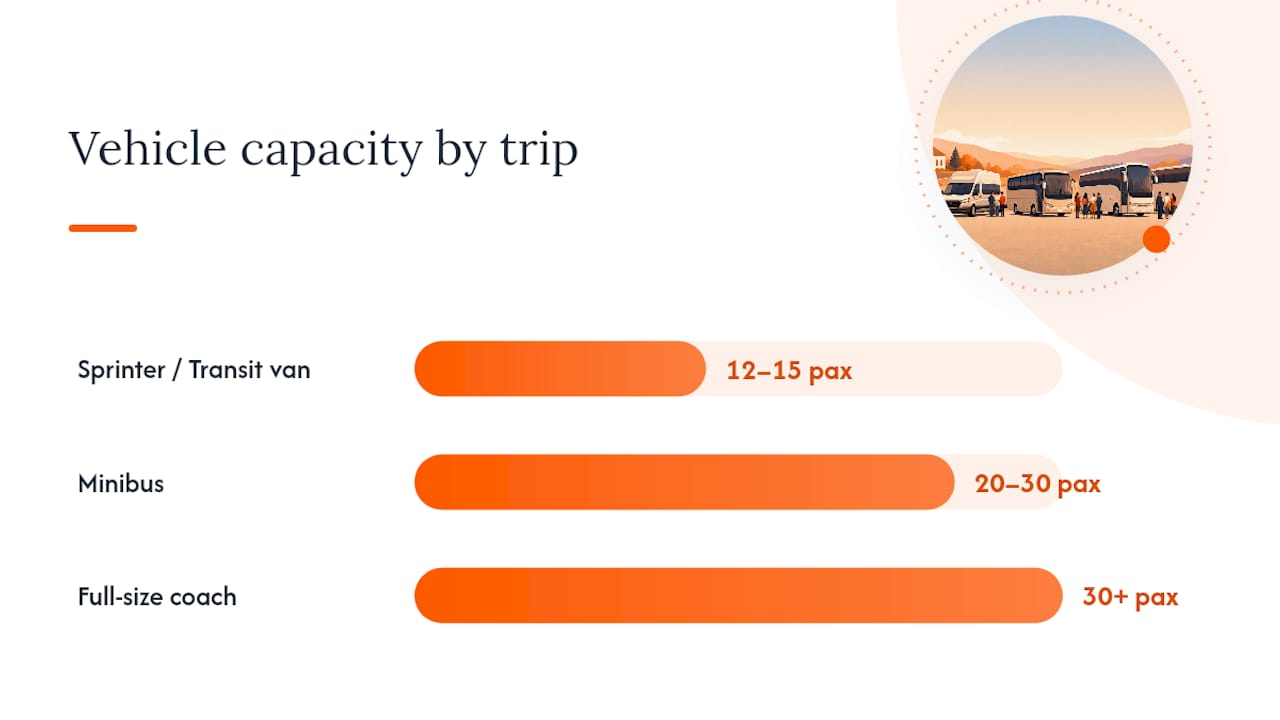
Minibuses step up capacity for medium-sized groups, typically 20 to 30 passengers, while still fitting into venues with tighter parking or narrower access roads than a full coach can handle.
Full-size coaches make sense for large congregations, interstate mission trips, or any ride long enough that an onboard restroom and real overhead storage stop being a luxury and start being a necessity.
- Day trip or airport run with fewer than 15 people: a Sprinter or Transit van
- Weekend retreat with 20 to 30 people and moderate luggage: a minibus
- Multi-day mission trip or interstate travel with 30-plus people: a full-size coach
How to Plan Church Retreat Transportation Without Last-Minute Scrambles
Booking early matters more than most planners expect. Providers recommend locking in transportation 3 to 6 months ahead for peak retreat seasons like summer and spring break, and at least 4 to 6 weeks out for regional day trips.
- Confirm your headcount by age group. Youth, adults, and any wheelchair users all affect seating and driver planning.
- Map every pickup and drop-off address, including any stops tied to service times or prayer windows.
- List luggage and equipment, from suitcases to sound gear to coolers, so the vendor quotes the right cargo space.
- Share the full itinerary with the operator, not just the outline. Vendors need complete stop and timing details to staff drivers correctly within hours-of-service limits and avoid a rushed schedule that risks a late arrival.
- Name one coordinator who confirms the driver’s contact info and stages pickup points the morning of the trip.
If your group boards from multiple church campuses, ask about a hub-and-spoke pickup plan or a short feeder shuttle into one main vehicle. It simplifies routing and often costs less than picking up at four separate locations.
What Actually Drives the Price of Church Group Transportation
Quotes swing on a handful of factors, and knowing them ahead of time keeps your budget conversation grounded in reality instead of guesswork.
- Vehicle class: a van costs less than a minibus, which costs less than a full coach
- Total service hours and mileage: an idle vehicle waiting at a retreat center still counts against your quote
- Number of stops: each additional pickup adds time and routing complexity
- Driver lodging, tolls, and permits: overnight trips often require covering a driver’s hotel room
- Peak-season demand: the same trip booked in March costs less than the identical trip booked the week before Easter
Consolidating pickups, scheduling outside peak weekends, and choosing a van instead of a coach for short shuttles all bring per-person cost down. On multi-day trips, letting the driver stay overnight near your retreat site instead of driving back and forth can save you from paying double mileage.
Pro Tip: Ask every vendor for an itemized quote broken out by hourly rate versus mileage rate. A vendor offering flat, transparent pricing through a digital quoting tool is far less likely to surprise you with add-on fees after you’ve already signed.
Safety Checks Every Church Should Run Before Booking
A low quote means nothing if the vehicle or driver isn’t properly vetted. Before you sign anything, confirm the basics that separate a legitimate operator from a broker just reselling capacity it doesn’t control.
- DOT registration and current safety inspection records
- Driver background checks and a documented DOT drug-testing policy
- A clear vehicle maintenance and inspection schedule, plus the general age range of the fleet
- ADA-accessible seating, wheelchair lift or ramp availability, and proper securement equipment
- Willingness to accommodate service animals or passengers with medical needs
Operators who take safety seriously will hand over this information without hesitation. Providers that specialize in church bus rentals typically list driver vetting and inspection routines directly on their booking pages, since congregations tend to ask about it first. It’s also worth a quick look at review platforms like Trustpilot to catch recurring complaints before you commit.
Booking Checklist: What to Confirm in Writing
A verbal quote is not a contract. Before your church commits, get these items in writing so trip day doesn’t turn into a negotiation.
- Included hours and mileage, plus the exact overtime rate if your event runs long
- Cancellation and change policies, including how close to departure you can adjust headcount
- Insurance coverage limits and who is liable for what
- Driver lodging responsibilities on overnight trips
- A named day-of contact at the company, not just a dispatch line
- Staging and loading plan, including where the vehicle parks and how boarding will work
- Restroom break and medical contingency plans for longer routes
Ask the vendor to confirm any itinerary changes by email rather than a phone call. A written record of quote details protects your church if a dispute comes up later about what was promised.
What Church Trip Planning Actually Teaches You
Most transportation headaches trace back to two things: a headcount that changes three days before departure, and a pickup plan nobody wrote down. Both are fixable with a single coordinator who owns the roster and confirms staging the night before.
Some van rental providers fit naturally into airport transfers, weekend retreats, and local shuttles where a 12 or 15-passenger van beats a full coach on cost and parking. The trick that separates a smooth trip from a stressful one is boring: run a quick boarding count at every stop, and assign that job to the same person every time.
— Gabriel
Book Church Group Transportation With My Van Rentals
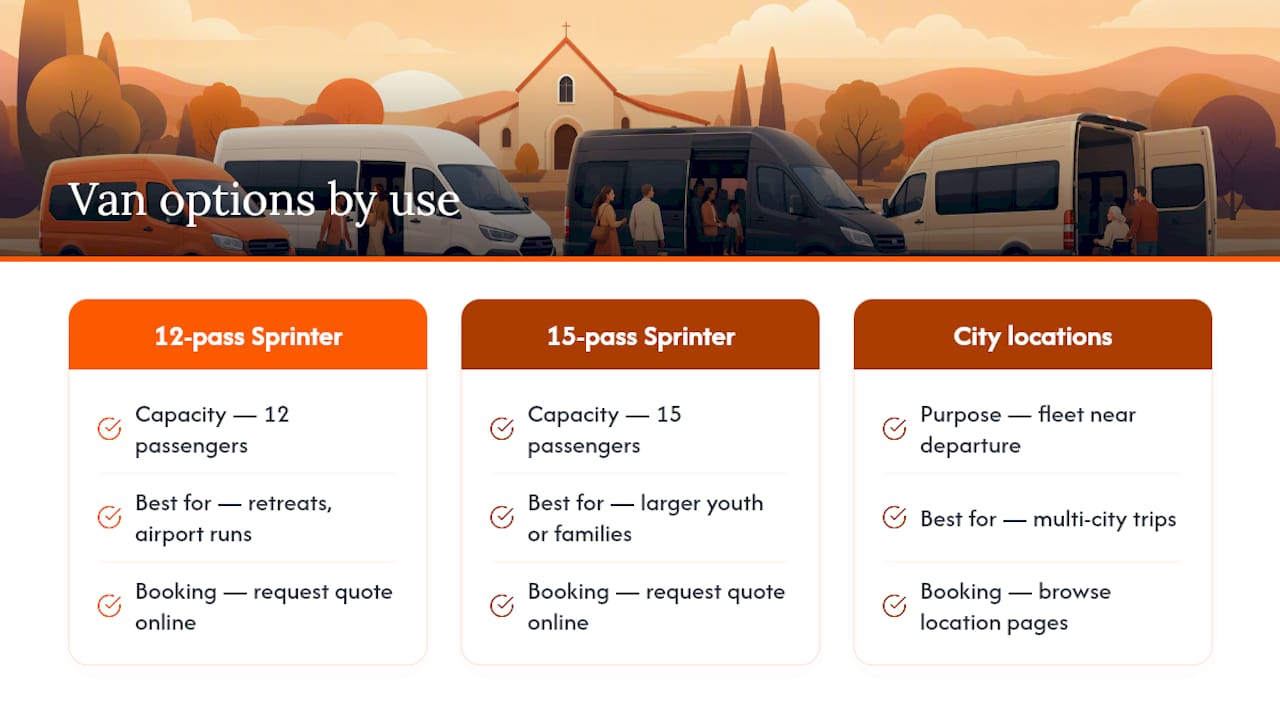
Some van rental providers give church leaders a direct way to book the right vehicle without waiting on a broker to find one for you. Send us your headcount, pickup addresses, and travel dates, and we’ll match you with a vehicle that fits your trip instead of forcing your group into whatever’s left on a lot.

For a leadership retreat or airport run, a 12-passenger Sprinter keeps the group together without the overhead of a full coach. Larger youth groups or multi-family trips often fit better in a 15-passenger Sprinter, and congregations coordinating trips across several cities can browse options through our city location pages to find a fleet near their departure point.
Ready to lock in a vehicle for your next retreat or mission trip? Visit My Van Rentals to check availability and request a quote for your dates.
Sources
The American Bus Association and the United Motorcoach Association publish operator standards and safety guidance worth checking before you sign with any transporter.
- TBN helps IMG launch new quote functionality — Metro Magazine
- Church Bus Rental - Charter Buses For Church Groups | GOGO Charters
FAQ
How far in advance should we book church group transportation?
Book 3 to 6 months ahead for peak retreat seasons like summer and spring break, and at least 4 to 6 weeks ahead for regional day trips.
What’s the biggest factor in transportation cost?
Vehicle class, total service hours, and mileage drive most of the quote, with peak-season demand and driver lodging on overnight trips adding to the total.
Do transporters accommodate wheelchair users and service animals?
Reputable operators offer ADA-accessible seating and wheelchair securement, and most will accommodate service animals or documented medical needs when you flag it during booking.
Can we change our headcount close to the trip date?
Get the cancellation and change policy in writing before you sign, since some vendors charge a fee for changes made within a set number of days of departure.
Is a van or a full coach better for a small church group?
For groups under 20 people, a 12 or 15-passenger van from a provider like My Van Rentals usually offers easier parking and lower cost than a full-size coach.